

Israel News
Al-Sharaa’s Offer to Israel: Withdraw First, Discuss Peace Later
The Syrian president seeks Israeli withdrawal and an end to military operations before considering full peace, while retaining Damascus’s claim to the Golan
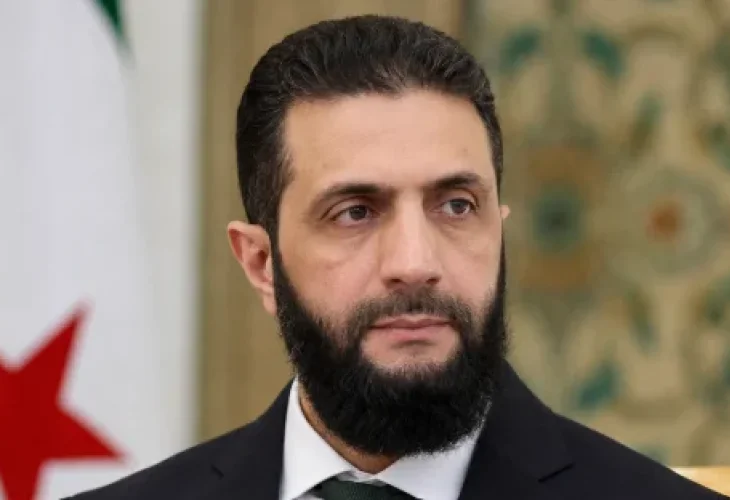
Syrian President Ahmed al-Sharaa has publicly outlined the arrangement he wants with Israel: an immediate security agreement that would restrict Israeli military activity and restore Syrian sovereignty, followed only later by possible discussions on comprehensive peace.
Speaking to Al Jazeera on Sunday, al-Sharaa said Damascus is avoiding confrontation and negotiating with Israel through several countries. “If the security agreement with Israel succeeds, it will pave the way for comprehensive peace without relinquishing Syria’s right to the occupied Golan,” he said.
His proposal is not immediate normalization or Syrian entry into the Abraham Accords. It is a phased process in which Israel would make concrete security and territorial concessions first, while peace and formal recognition would remain conditional on the agreement’s implementation.
Damascus wants Israel to withdraw to the positions it held before Bashar al-Assad’s government fell on December 8, 2024. Syria is also seeking a return to the 1974 disengagement framework, an end to Israeli airstrikes and ground incursions, and guarantees against Israeli interference in its internal affairs.
The talks have so far treated the positions Israel captured after Assad’s fall separately from Syria’s claim to the Golan Heights. Al-Sharaa is not demanding the return of the entire Golan as a precondition for the security agreement, but he is making clear that Syria will not abandon that claim.
Syria is offering Israel security coordination in return. Israel and Syria established a US-supervised communication mechanism in January to facilitate military de-escalation, intelligence exchanges, diplomatic contact and possible commercial cooperation. Al-Sharaa has also said that his government will not allow Syrian territory to threaten Israel.
“We are avoiding confrontation with Israel, and we have no interest in it,” he told Al Jazeera.
That position is closely connected to al-Sharaa’s domestic priorities. Syria remains economically devastated, militarily weakened and divided among competing armed forces and minority communities. The new government needs calm along the Israeli border as it seeks reconstruction funding, international legitimacy and control over the country.
Damascus is trying to bring all armed groups under government control, including Kurdish-led forces in northeastern Syria and Druze factions in Suwayda. But deadly clashes involving government-linked forces have deepened distrust among Syria’s minorities, especially the Druze and Alawites.
Suwayda, the Druze-majority province in southern Syria, is therefore one of the most difficult issues in the talks. Damascus insists the area must remain under Syrian government control and opposes lasting Israeli involvement there. Israel says it will not allow hostile forces to establish themselves near its border and has demanded guarantees that Syria’s Druze will be protected.
Israel’s publicly stated conditions go further than restoring the old disengagement lines. Prime Minister Benjamin Netanyahu has called for a demilitarized zone stretching from Damascus toward the Israeli border, including the approaches to Mount Hermon. Israel also wants to prevent Iran, Hezbollah and other hostile forces from rebuilding military positions in Syria.
Israel has not committed to withdrawing from all the territory it captured after Assad’s fall. Israeli officials have said troops will remain on the Syrian side of Mount Hermon because of the strategic advantage the position provides.
This leaves the two sides divided over what would replace Israel’s current freedom of action. Syria wants withdrawal, an end to strikes and recognition of its sovereignty. Israel wants demilitarization, protection for the Druze and enforceable guarantees that threats will not emerge near its border.
Al-Sharaa’s proposal could give Israel a quieter frontier, direct communication with Damascus and a Syrian government committed to keeping Iranian-backed forces away. But Israel would be asked to surrender territory and military flexibility before receiving full peace or recognition.
The emerging offer is therefore not peace in exchange for peace. It is Israeli withdrawal and restraint in exchange for Syrian security coordination, with comprehensive peace left for a later stage. The negotiations will depend on whether Israel believes Damascus can enforce its promises, and whether al-Sharaa is prepared to provide guarantees strong enough to replace Israel’s presence on the ground.

