

Personal Stories
Love of Torah: The Cow a Family Sold for Their Children's Education
A poor family in Lithuania made an extraordinary sacrifice so their sons could continue learning Torah. Their devotion inspired a lifelong love of Torah that would influence generations.
- Yonatan HaLevi
- | Updated
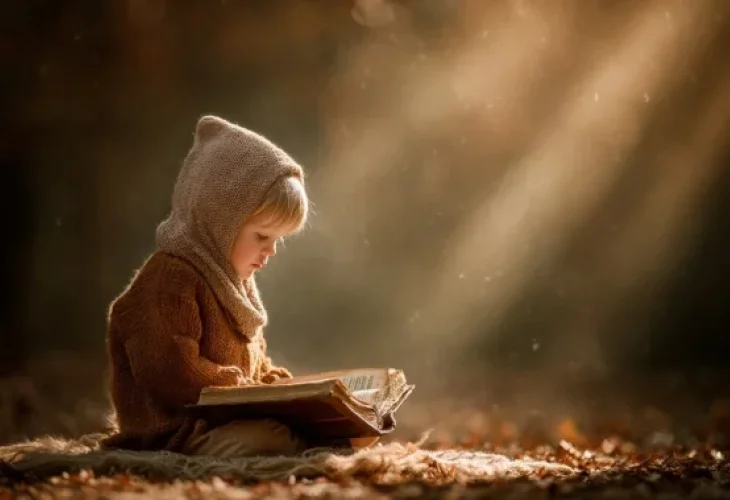
How is a lifelong love of Torah created? Is it taught through words alone, or is it passed from one generation to the next through the sacrifices children witness at home?
Rabbi Yosef Shlomo Kahaneman zt"l once shared a moving story that offers a profound answer.
A Spark of Torah in an Unlikely Place
During one of his visits to the United States, Rabbi Kahaneman arrived in Cincinnati and stayed with a respected member of the local Jewish community. His host was a successful businessman who had devoted himself wholeheartedly to establishing a Talmud Torah built on uncompromising Torah values.
His achievement was especially remarkable because Cincinnati was considered a center of the Reform movement. It was there that the movement established its first theological seminary, making the city a symbol of opposition to traditional Judaism. Building a Torah school in such an environment required exceptional courage and unwavering commitment.
When Rabbi Kahaneman came to visit the school, he paused outside one of the classrooms. From behind the door, he heard the community leader himself teaching young children, using the familiar sing-song melody with which generations of Jewish children had learned Torah in Lithuania.
The sound stirred him deeply.
With tears in his eyes, Rabbi Kahaneman turned to his host and said, "I envy you for the love of Torah you have been blessed with."
The man smiled gently and replied, "That love of Torah did not come easily."
The Cow That Paid for Torah
He began telling the story of his childhood.
"I grew up in a small town in Lithuania," he recalled. "There were seven children in our family. My father spent the entire week traveling from town to town selling merchandise and returned home only for Shabbat. We lived in severe poverty, and during the week we rarely had a hot meal."
When a melamed arrived in the town, his tuition was one ruble per month for each student. Since there were four boys in the family, paying four rubles every month seemed impossible.
Yet their parents refused to give up.
One by one, they sold their possessions. First went the silver wedding gifts, then jewelry, and eventually anything of value they still owned. Month after month, they found a way to pay the melamed because they believed nothing was more important than their sons learning Torah.
Then came an especially difficult winter.
Business was so poor that there was almost no money coming in, and nothing of value remained in the house.
One day, the children's mother quietly reminded her husband, "We already owe the melamed two months' tuition."
Without hesitation, he replied, "After Shabbat, we'll sell the cow."
The children were stunned.
The family cow was far more than an animal. She provided the milk they drank and the butter and cheese their mother prepared—their family's main source of nourishing food.
Still, on Sunday morning, the parents walked nearly six miles (10 kilometers) to the nearest town, leading the cow with them.
That evening they returned home carrying eight rubles.
What the children remembered most was not the money.
It was the joy on their parents' faces.
They carefully wrapped the coins and immediately sent the payment to the melamed.
"That," the community leader concluded, "is where I inherited my love of Torah."
The Greatest Lesson Parents Can Teach
Years later, that same child would build a thriving Talmud Torah in one of the least likely places imaginable, bringing authentic Torah education to a city where traditional Judaism faced tremendous challenges.
His story reminds us that children do not simply inherit their parents' values—they absorb what their parents are willing to sacrifice for. Long before they understand lofty ideas, they notice what truly matters at home.
A love of Torah is not built only through lessons. It grows when children witness parents who demonstrate, through their choices, that Torah is life's greatest treasure.

