

World News
AIPAC Accuses New York Times Podcast of False, Misleading Claims
The pro-Israel group says The Daily never sought comment before questioning its bipartisanship, Iran policy and approach to military aid
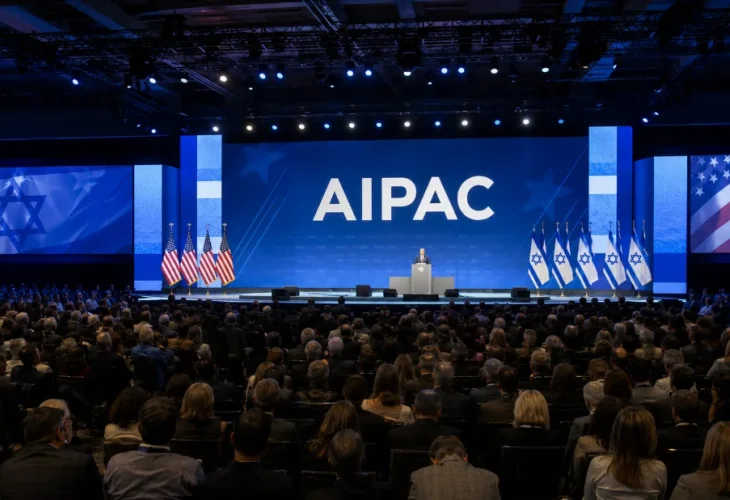
AIPAC accused The New York Times on Thursday of airing inaccurate and misleading claims about the organization in an episode of its podcast The Daily without first requesting comment or fact-checking the allegations with the group.
The July 29 episode, titled “Israel, AIPAC and Difficult Questions for Democrats,” examined AIPAC’s growing role in Democratic primary races as support for Israel and continued military assistance faces increasing opposition inside the party. AIPAC responded the following morning with a point-by-point rebuttal.
The first dispute concerned reporter Jonathan Mahler’s description of AIPAC as adopting a “fully partisan, aggressive, money-based posture.” AIPAC said its members include Democrats, Republicans and independents and that it supports pro-Israel candidates in both parties while opposing candidates from either party who challenge the US-Israel alliance.
AIPAC also rejected Mahler’s account of its opposition to the 2015 Iran nuclear agreement. The podcast said the organization faced a choice between Israel and the American president and “chose Israel.” AIPAC said it opposed the agreement because it believed the deal failed to protect American strategic interests, noting that congressional opposition included both Democrats and Republicans.
The organization issued its strongest criticism over the podcast’s discussion of antisemitism. Mahler argued that AIPAC’s political activity had “provided an opening” for people who were not only criticizing Israel but attacking Jews and Jewish influence.
“This is an outrageous accusation,” AIPAC said. “Antisemites are responsible for the rise in antisemitism.”
AIPAC also called it a “blatant lie” to say that it automatically describes criticism of the organization as antisemitic. “We have never said that criticism of AIPAC is inherently antisemitic,” it said. The podcast, however, also acknowledged that some attacks on AIPAC invoke antisemitic claims about Jewish money and political power.
Another disagreement centered on military assistance to Israel. The episode accused AIPAC of targeting candidates who would not support “unconditional” aid. AIPAC said it opposes placing new political conditions on the assistance, but noted that American arms sales are already approved and monitored by the State and Defense departments.
The dispute largely concerns how the word “unconditional” is being used. Critics generally mean assistance without additional restrictions tied to Israeli policy or military conduct, while AIPAC says the existing legal and monitoring requirements mean the aid is not literally without conditions.
AIPAC further accused The Daily of omitting its campaigns against Republicans. It cited former representatives Bob Good and Thomas Massie as examples of Republican lawmakers opposed by pro-Israel activists, arguing that its intervention is based on candidates’ positions toward Israel rather than their party affiliation.
The clash comes as AIPAC faces one of the largest tests of its electoral influence. The organization and its affiliated super PAC have spent nearly $30 million supporting Rep. Haley Stevens against Abdul El-Sayed in Michigan’s August 4 Democratic Senate primary. The race has become a major test of AIPAC’s influence as Democratic opposition to Israeli military aid grows.
A recent House amendment to eliminate $3.3 billion in annual military aid to Israel failed 314-104, although 103 Democrats supported it.
AIPAC said its 6.5 million members would continue participating in American politics despite the criticism.
“We are unapologetic, and we won’t be deterred,” the organization said.

