

Parashat Re'eh
"You Are Children of Hashem": A Bond That Can Never Be Broken
What does it truly mean to be a child of Hashem? Discover Rabbi Meir’s timeless teaching about the unbreakable bond between Hashem and the Jewish people.
- Rabbi Moshe Sheinfeld
- | Updated
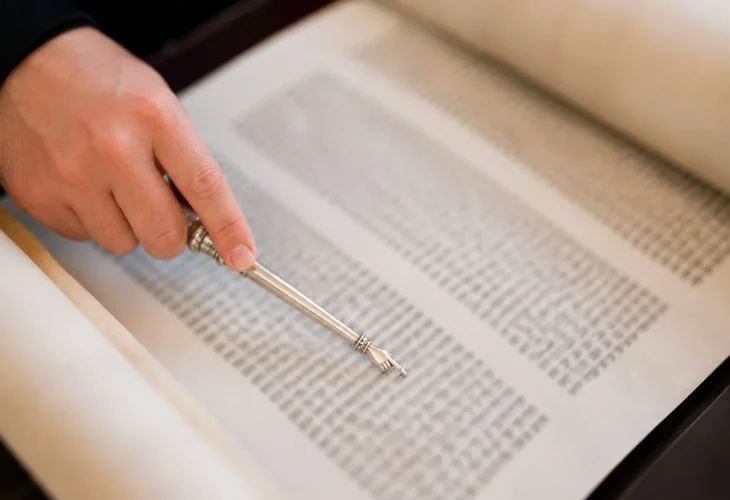
There is a beautiful verse in this week’s Torah portion: "You are children of Hashem your God" (Deuteronomy 14:1).
The Talmud (Kiddushin 36a) presents a famous disagreement about the meaning of this verse. Are the Jewish people always called Hashem’s "children," or does that title depend on how we behave?
According to Rabbi Yehudah, we are called children only when we behave like children and remain faithful to our Creator. If we do not behave as children, we are not called children. Rabbi Meir, however, teaches that regardless of our behavior, we are always called Hashem’s children.
"When you behave as children, you are called children; when you do not behave as children, you are not called children." These are the words of Rabbi Yehudah. Rabbi Meir says: "Either way, you are called children."
Are We Always Hashem’s Children?
Rabbi Meir supports his position with four verses: "For they are foolish children" (Jeremiah 4:22). "Children in whom there is no faith" (Deuteronomy 32:20). "A seed of evildoers, children who destroy" (Isaiah 1:4). And finally: "And it shall be, in the place where it was said to them, ‘You are not My people,’ it shall be said to them, ‘Children of the living God’" (Hosea 2:1).
Why does Rabbi Meir bring four verses instead of relying on just one? Each verse is necessary to show that the Jewish people remain Hashem’s children under different circumstances. The Maharal offers a deeper explanation of the Talmud’s words.
The first verse describes "foolish children": "For they are foolish children." Sometimes the Jewish people sin out of foolishness, as the Talmud teaches: "A person does not commit a sin unless a spirit of folly enters him" (Sotah 3a). Even in such a state, the Jewish people are still called children.
But perhaps they are called children only when their sins come from foolishness, since foolishness itself is the source of the wrongdoing. What happens when the Jewish people sin because of a lack of faith, when they cannot be trusted and do not place their trust in their Creator? Are they still called children?
For this reason, Rabbi Meir brings the second verse: "Children in whom there is no faith." Even in such a state, God forbid, Hashem nevertheless calls them "children."
Yet Rabbi Meir goes further. What if the Jewish people worship idols? Will Hashem still call them His children?
Rabbi Meir therefore brings another verse: "A seed of evildoers, children who destroy." "Destruction" refers to idol worship. Even though the Jewish people worshipped idols, the prophet still calls them "children."
But Rabbi Meir is still not satisfied. Even if the Jewish people remain children after worshipping idols, there are children and then there are children. There are ordinary children, and there are exceptional, beloved children.
Rabbi Meir asks an even deeper question: If the Jewish people repent after idol worship, can they once again be called exceptional children, "children of the living God"? Or does the stain of their past remain forever, leaving them children, but no longer exceptional children?
That is why Rabbi Meir brings the fourth verse: "And it shall be, in the place where it was said to them, ‘You are not My people,’ it shall be said to them, ‘Children of the living God.’"
When they repent, they are once again called "children of the living God," exceptional children. (According to Rashi there.)
A Bond That Can Never Be Broken
The Maharal of Prague (Netzach Yisrael, chapter 11) expands on Rabbi Meir’s teaching and reveals an essential principle for understanding the relationship between the Jewish people and Hashem.
A Jew’s connection to Hashem and the Torah is essential, absolute, and independent of any external factor. It is a love that does not depend on anything. It is a bond that cannot be severed.
Just as a child can never cease to be the child of his or her parents, the bond between the Jewish people and Hashem can never disappear. The Jewish soul is a divine part from above, connected to the Infinite. "For the Holy One, blessed be He, the Torah, and Israel are all one." Hashem, the Torah, and Israel are one (Nefesh HaChaim 4:1).
Something external or impure may sometimes cling to those children, like dirt that needs to be removed. But these are only outer layers covering the soul. This happens because the Jewish people do not always recognize the greatness of who they truly are or remember that they are children of the living God.
The Rambam (Hilchot Gerushin 2:20) sharpens this principle through a fascinating Jewish law.
There are circumstances in which a Jewish man who refuses to give his wife a get is compelled until he says, "I want to." At first glance, how can such a get be valid? After all, a husband must give a get willingly.
The Rambam explains that a Jew’s true desire is to fulfill the mitzvot. The resistance is external. Even when a Jew appears unwilling to follow the Torah, deep within his heart, his true desire is to fulfill Hashem’s commandments. Therefore, when he ultimately says, "I want to," he is expressing his deepest and most authentic will.
The Rashba, in his responsa (Part I, section 194), writes that although there is a general rule that the law follows Rabbi Yehudah when he disagrees with Rabbi Meir, in this discussion the law follows Rabbi Meir because he supported his position with verses.
Jewish History Reveals the Same Truth
We can add that in our generation, the history of the Jewish people itself seems to demonstrate Rabbi Meir’s teaching: "Either way, you are called children."
Jew haters throughout history have looked at the Jewish people without distinguishing between different kinds of Jews. When the Nazis murdered Jews, they did not ask what kind of kippah a person wore, or whether he wore a kippah at all. It made no difference whether a Jew believed or did not believe, or whether he fasted on Yom Kippur.
To them, a Jew was a Jew, and that alone was enough to condemn him to death.
The same has been true of the enemies of Israel throughout the generations. We experienced this again when Hamas terrorists breached Israel’s borders and murdered Jews. They did not distinguish between one type of Jew and another. From their perspective, the same principle applied: "Either way, you are called children."
When a Jew is in distress, there is a spiritual practice of praying to Hashem with the words, "God of Meir, answer me," referring to Rabbi Meir.
Why specifically "God of Meir"? Why invoke Rabbi Meir rather than another Tanna?
One answer is that Rabbi Meir is the one who teaches that the Jewish people are called Hashem’s children even when they sin. We therefore ask Hashem to have mercy on us and awaken a father’s compassion for His children, even when we have strayed from the path.
Parashat Re'eh is usually read before Rosh Chodesh Elul, the beginning of the month of repentance, mercy, and forgiveness. As Elul approaches, let us remember who we truly are: children of Hashem our God.
And with that knowledge, let us strive to behave like His children.

