

Parashat Re'eh
Free Will or Divine Decree: What Does the Torah Teach?
Are our choices truly our own, or is everything predetermined? Rabbeinu Bachya explains why free will is one of the fundamental principles of Jewish faith.
- Amiti Hania
- | Updated
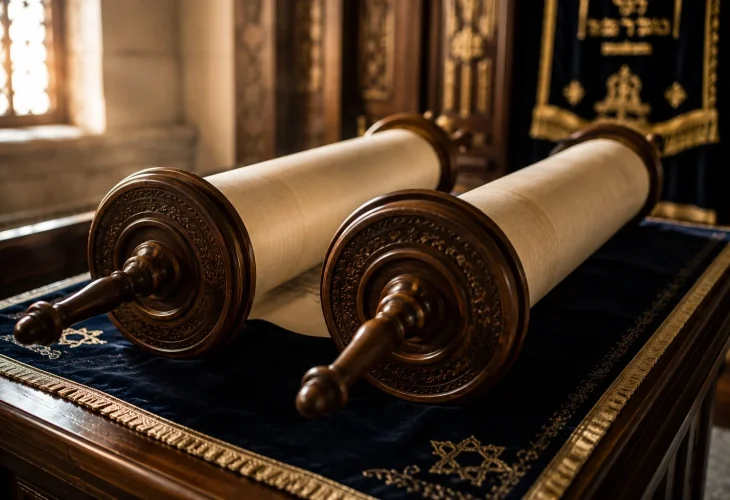
"See, I set before you today a blessing and a curse" (Deuteronomy 11:26).
Every day, we make countless choices, some seemingly small and others that can shape the direction of our lives. Parashat Re'eh opens with a powerful reminder that the path we take is not predetermined. Hashem places blessing and curse before us, but the choice of which path to follow is ours.
From this verse, we learn one of the fundamental principles of Judaism: free will. A person can choose to follow a good and upright path, or choose a path that leads in the opposite direction. Our decisions and actions are ultimately placed in our own hands.
Rabbeinu Bachya explains:
"This verse makes clear that permission and choice are in a person’s hands. If he wishes, he may guide himself on a straight path or stand on a path that is not good; everything is entrusted to his will, and everything depends on his choice."
Hashem Does Not Force Us to Choose Good or Evil
Rabbeinu Bachya cites another verse that demonstrates this principle: "If only their hearts would remain this way, to fear Me" (Deuteronomy 5:26).
These words teach us that Hashem does not decree that a particular person must be righteous or wicked. Nor does He force someone to choose good or evil. The choices a person makes belong to that individual, and each of us is responsible for our own actions.
As Rabbeinu Bachya explains:
"This is what Scripture means when it says, ‘If only their hearts would remain this way, to fear Me,’ teaching that Hashem does not decree that a person be righteous or wicked, to do good or evil; rather, everything is entrusted to that person’s own hands."
This means that there is no predetermined decree forcing us to behave in a particular way. We are given the ability to choose, and with that freedom comes responsibility for the choices we make.
Free Will or Divine Decree?
Rabbeinu Bachya then raises an important question.
What if Hashem had already decreed that a particular person would be righteous or wicked? Or what if a person’s natural character and inborn traits were so powerful that they compelled that individual to follow only one possible path?
If that were the case, how could Hashem command us to choose what is good?
A commandment has meaning only if the person receiving it has the ability to choose whether or not to obey. If our behavior had already been determined from the moment of our creation, commanding us to act differently would serve no purpose.
Rabbeinu Bachya writes:
"For if Hashem had decreed that a person be righteous or wicked, or if anything rooted in that person’s nature pulled them toward one of the paths, good or bad, how could Hashem command us through His prophets to act in a certain way, when from the beginning of that person’s creation it had already been decreed for them, or their nature would draw them toward something from which they could not move?"
Our personalities, circumstances, and natural tendencies may influence us, but they do not eliminate our ability to choose.
Why Free Will Is a Foundation of Jewish Faith
Rabbeinu Bachya concludes by taking the argument one step further.
If human beings had no genuine freedom to choose their actions, what meaning would there be in reward and punishment?
How could a person be rewarded for choosing what is right if there was never any possibility of choosing otherwise? And how could someone be held accountable for wrongdoing if that behavior had been predetermined?
"What place, then, would there be for the entire Torah, to punish the wicked or to reward the righteous with good? This is a great and mighty principle, and it is the foundation of faith."
Free will is therefore not simply one concept among many in Judaism. It is essential to understanding the Torah itself.
Hashem places the paths before us. He teaches us what leads to blessing and warns us about what leads in the opposite direction.
But the decision remains ours.
"See, I set before you today a blessing and a curse."
The choice is in our hands.

