

Facts You Didn't Know
This Egg Hasn’t Gone Bad: Why Its Yolk Is Completely White
Why are some Japanese egg yolks white instead of yellow or orange? The surprising answer has nothing to do with food coloring or genetic engineering.
- Shira Dabush (Cohen)
- | Updated
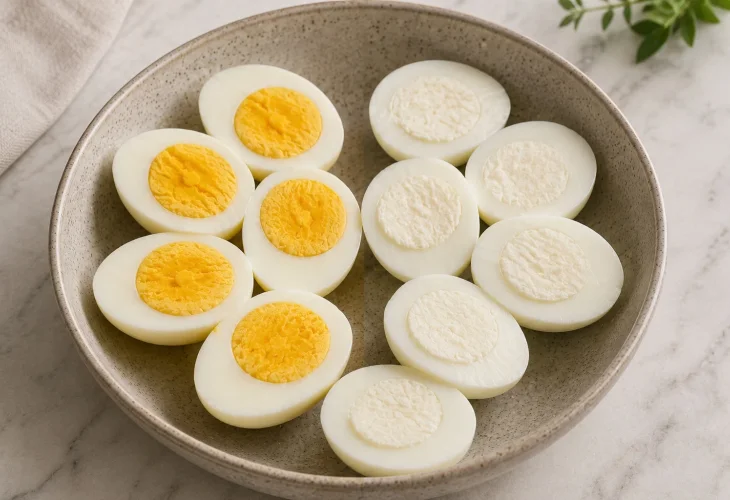
Imagine cracking open a fresh egg, expecting the familiar yellow or orange yolk, only to find one that is almost completely white. Most people would probably assume something was wrong with the egg. In Japan, however, these unusual white yolk eggs are considered a premium product.
Known as Kometsuya eggs, they have attracted attention for their striking appearance, delicate texture, and distinctive flavor. They have also sparked plenty of curiosity online, with many people wondering whether their unusual color is natural.
Despite appearances, the white yolks are not the result of food coloring or genetic engineering. The explanation is surprisingly simple: It all comes down to what the hens eat.
Why Are the Egg Yolks White?
The yellow and orange colors we normally associate with egg yolks come largely from natural pigments called carotenoids. These pigments are found in foods such as yellow corn, carrots, pumpkin, grasses, and leafy plants.
The amount and type of pigments in a hen's diet can significantly affect the color of the yolk. A diet rich in carotenoids generally produces a deeper yellow or orange yolk. When a hen consumes very few of these pigments, the yolk becomes much paler and can even appear almost completely white.
At Takeuchi Farm on Japan's northern island of Hokkaido, a special feeding method is used to produce Kometsuya eggs. The hens are given a carefully formulated diet based largely on rice grown in Hokkaido, along with regional fish, rice bran, scallop shells from Lake Saroma, salt, vitamins, lactic acid bacteria, and other beneficial bacteria.
Because the diet contains very few of the pigments that normally give egg yolks their familiar color, the resulting yolks are white or a very pale cream.
According to the producers, the precise combination of ingredients is part of what gives the eggs their distinctive qualities. Beyond their appearance, the eggs are described as having a smooth, silky texture and a mild, slightly sweet flavor.
Their unusual color also makes them particularly interesting to chefs.
The eggs can be used in well known Japanese dishes such as tamago kake gohan, hot rice topped with a fresh egg; tamagoyaki, a Japanese rolled omelet; and omurice, an omelet served with seasoned rice.
For chefs, the pale yolks offer another advantage: They can create a clean, striking appearance that would be difficult to achieve with a conventional yellow or orange yolk.
Are White Yolk Eggs Healthier?
Their dramatic appearance naturally raises another question: Are white yolk eggs healthier than ordinary eggs?
Despite the difference in color, the producers say the nutritional profile of Kometsuya eggs is generally similar to that of conventional eggs. They still provide protein, fats, vitamins, and minerals. The most obvious difference is the lower level of the pigments responsible for yolk color.
There has been discussion online about whether differences in the hens' diet could affect antioxidant levels in the eggs. However, there is currently no clear evidence that white yolk eggs are inherently healthier or less healthy simply because of their color.
In fact, yolk color alone is not a reliable measure of an egg's overall nutritional quality.
A deep orange yolk does not automatically mean an egg is healthier, just as a pale yolk does not necessarily indicate poor quality. In most cases, the color simply reflects what the hen has been eating.
That is why egg yolks around the world can range from pale yellow to deep orange, and in this unusual Japanese example, almost completely white.
So while Kometsuya eggs may look as though they came from a completely different kind of chicken, the secret behind their appearance is remarkably straightforward: Change what the hen eats, and you can change the color of the yolk.

