

Magazine
When Tuition Becomes Too Much, He Steps In
Zack Kaplun has spent four years helping Jewish families find a way to keep their children in Jewish schools
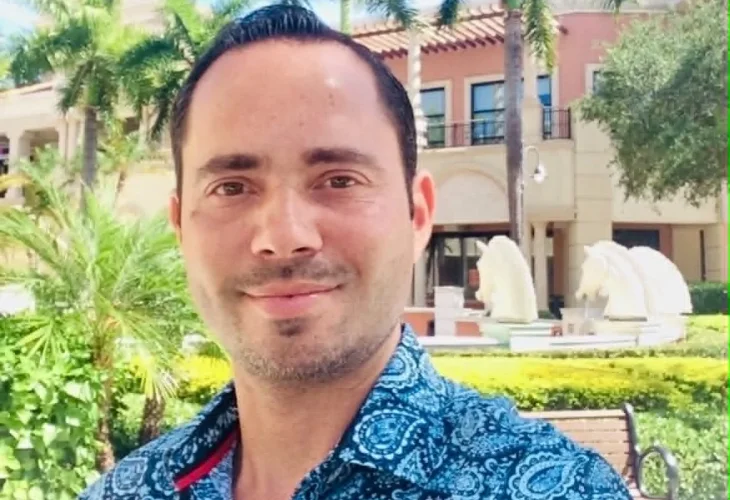
For the past four years, Zack Kaplun of Miami has helped hundreds of families struggling to afford tuition at yeshivas and Jewish schools. Much of the assistance comes from his own pocket, and he does not actively fundraise. But for him, money is only part of the story. From helping families find the right school to navigating admissions and locating scholarships, his goal is clear: to make sure financial hardship does not determine the future of a Jewish child.
For many Jewish families, choosing a Torah education is about far more than deciding where their child will study math, English, or history. It is a choice that touches on values, Jewish identity, Torah, and the environment in which parents want their children to grow up.
But alongside that desire is a reality many families in the United States know all too well: tuition at Jewish schools can become an enormous financial burden.
For some families, there comes a point when the numbers simply no longer add up. From there, it can be a short road to complete despair. But just before these families give up, or turn to organizations that in many cases simply refer them elsewhere, Zack Kaplun steps into the picture.
Kaplun, who lives in Miami, Florida, works as a senior business analyst in the healthcare industry. Outside his regular working hours, however, he has spent the past four years helping Jewish families deal with one of their most significant financial challenges: paying for their children’s Jewish education.
Through the Yeshiva Tuition Organization, he has already helped several hundred families, not only in Florida or across the United States, but around the world. Families from across the globe reach out to him through a landing page he created specifically for this purpose.
Yet there is one particularly unusual aspect of Kaplun’s work: he personally provides a significant portion of the financial assistance these families receive.
He says he does not actively fundraise, although he would certainly not turn down donations if people approached him wanting to contribute.
“The more resources we have, the more impact we can make,” he says, while insisting that he does not go out looking for donations.
Instead, the Yeshiva Tuition Organization page he created brings families to him.
As for why he feels such a strong connection to this particular mitzvah, he has a great deal to say.
“In my opinion, this is one of the most important forms of tzedakah,” he explains. “It doesn’t only support Torah learning. It also positively shapes the child’s entire future.”
Helping a Jewish child receive a Torah education, he believes, should be a high priority.
“It is tzedakah in every sense of the word. If you ask me, it is difficult to think of a more meaningful spiritual investment in the Jewish children living here.”
More Than Financial Assistance
Since his initiative began taking shape four years ago, Kaplun has helped hundreds of Jewish families from communities across the United States and beyond.
“We’ve received requests from families in Florida, New York, California, and even from places much farther away, like Australia.”
The financial circumstances differ from one family to another, he explains, but one thing remains constant: parents are deeply concerned about their children and want them to remain in Jewish educational institutions in the Diaspora, a concern that is perhaps even easier to understand against the backdrop of rising antisemitism.
What makes Kaplun’s approach distinctive is his determination to help each family beyond the financial aspect alone.
After families submit a request through his website, Kaplun speaks with them personally by phone and works with them to think through possible solutions.
“I would say that after more than four years of doing this, I’ve become an SME, a Subject Matter Expert,” he says. “I’ve dealt with all kinds of unique situations.”
That experience matters because there is almost never one solution that works for every family.
For one family, the answer may be direct tuition assistance. Another may qualify for a scholarship they did not even know existed. A third may need help finding a different school or navigating the admissions process.
“I don’t just help with tuition,” he says. “I offer 360-degree support.”
One family, he recalls, was not initially looking for tuition assistance at all. Kaplun came across them on Facebook and realized that their children were not attending a Jewish school. The parents were hesitant and, in his words, stubborn about making the change. For months, he continued speaking with them and encouraging them to consider Jewish education. Eventually, they agreed, and their children were enrolled in a Jewish school.
For Kaplun, the case illustrates why his work cannot be measured only in dollars. Sometimes the greatest obstacle is not tuition, but helping parents believe that another path is possible.
What else does that involve?
“Sometimes it means encouraging parents who feel they have reached their limit and can no longer deal with institutional rigidity. In other cases, I help families understand which choices will be best for them, which schools will be the best fit for their children, and how to locate scholarships and financial assistance programs.”
Money Is Only Part of the Solution
Kaplun adds that sometimes the first thing a struggling parent needs is not money at all, but someone who understands the system and can hold their hand through a process that can feel almost impossible to navigate alone.
“There is guidance and positive support,” Zack says. “Money is only part of the solution. I am much more than just money.”
One of the parents who experienced that support firsthand is Anna, whose daughter is now in her second year at a Jewish school. Anna says she first learned about Kaplun’s tuition assistance through an advertisement in a local Jewish newspaper. The message was simple: no Jewish child should have to attend public school because of financial hardship.
“That message caught my attention because the cost of Jewish private education was a very real concern for me,” Anna says. She contacted Zack and, with his assistance, was able to enroll her daughter in a Jewish school.
But the support did not end once her daughter was admitted. Anna says Kaplun has continued helping to fund her daughter’s education throughout the past year and still assists the family today. She even has PayPal records documenting the financial support she has received from him.
“This isn’t something I heard about secondhand or something that happened once in the past,” she says. “I have firsthand, ongoing experience with what Zack is doing.”
Over time, Kaplun has also connected other parents with Anna when they wanted to understand how the process works. She has been able to speak with them directly and explain what his assistance meant for her own family.
How does this work affect you personally?
“My children also attend yeshiva, and that allows me to see firsthand how quickly the costs associated with receiving a Jewish education can add up. Even families who appear financially stable from the outside can suddenly find themselves under significant pressure, with nowhere to turn. It’s painful to see.
“Sometimes it is no longer a question of which other expenses a family can cut. A family may reach the point where they begin asking themselves whether they can even continue sending their children to Jewish schools.
“As surprising as it may sound, there are scholarships in the United States for children who move from public schools into Jewish schools. We help families find those scholarships as well and determine whether they qualify.”
Kaplun strongly believes in the importance of bringing Jewish children into Jewish educational settings. But, he says, there is another group that cannot be forgotten: the children who are already there.
What happens when a family’s children already attend yeshiva, but their parents can no longer afford the tuition? What happens when those parents are preparing to move their children to public school simply because the money has run out?
According to Zack, that is exactly the moment when he wants to step in.
“It’s painful to see children who are already in yeshiva being pulled out and transferred to public school because of a lack of money. When I get involved in cases like that, I do everything I can to prevent it.”
Are there cases where you fail and simply cannot make it happen?
He pauses for a moment before answering.
“Failure is not an option. Because I’m using money from my own pocket, there is no political bureaucracy involved, and that eliminates a lot of headaches. It gives me room to look at the unique circumstances of each family and decide where my assistance can have the greatest impact.”
“We Haven’t Tried Everything Yet”
But what happens when he knows he could help one family, while the same amount of money might potentially preserve the Jewish education of three other families?
That is one of the difficult dilemmas built into his model.
“When resources are limited and there are many requests, generosity alone is not enough. You also have to make difficult decisions, and I always try to look at the bigger picture.”
For example, if a family can obtain part of the money from another source, he would rather help them access that funding and preserve additional resources for the next case.
In that sense, he does not want to be merely the person who pays the bill. He tries to be the person who lays out the available options, connects the family with the right resources, and stays with them until a solution is found.
Families who approach him sometimes do so only after becoming convinced that there is simply no way for them to meet the costs. From their perspective, the choices have narrowed to two: somehow find money they do not have, or remove their child from the school.
Zack tries to introduce a third possibility. “I look at what has already been done, who they have approached, what scholarships are available, whether an arrangement can be reached, and what else we can try before giving up.”
This is perhaps the less visible part of his work. A family that reaches out to him does not receive only a possible solution. It encounters someone willing to listen and enter that difficult situation alongside them.
At this point, the conversation with Zack shifts. Because behind all the numbers, scholarships, and tuition bills is the reason he does any of this in the first place: the children.
For him, a yeshiva is not simply an educational institution.
“The years a child spends receiving a Jewish education can influence the identity they develop, their relationship with Torah and the Jewish community, and the kind of home they may want to build when they grow up,” he explains, describing the deeper reason his own children are educated in Jewish institutions.
“The future of these children is at stake,” he says, “and so is the future of Klal Yisrael.”
For Zack, the true impact of his assistance will not necessarily be measured at the end of the current school year. It may only become apparent years later, when a child whom he helped remain in Jewish education grows up, starts a family, and decides what kind of Jewish home to build.
After four years of work and hundreds of families, that remains the central reason he continues putting so much effort into this mission.
“The real story is the child behind all of this, waiting for someone to see them. That’s why, as I’ve already said, failure is not an option.”

