

Magazine
Adi Ran: "My Songs Saved Marriages, Changed Lives, and Brought People Back to Judaism"
Pioneering Jewish rock musician Adi Ran reflects on his childhood during the Six-Day War, his deep connection to Rabbi Nachman of Breslov, the power of hitbodedut, his musical journey, personal loss, and his dream of bringing his songs to millions while helping people discover their relationship with God
- Avner Shaki
- | Updated
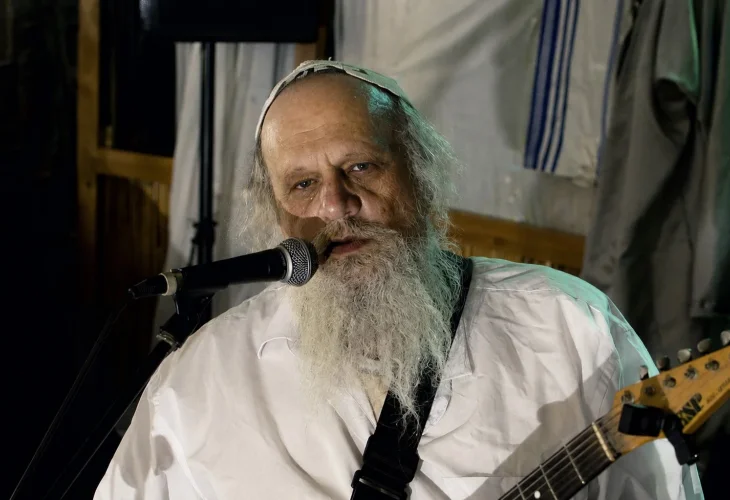 Adi Ran (Photo: Adar Rubin)
Adi Ran is a poet, composer, singer, guitarist, and father of four.
Is there a childhood memory that has stayed with you?
"During the Six-Day War I was six years old. My mother told me that during Israel's War of Independence, their home in Jerusalem had no running water. Because of the fear left over from that war, along with the grim predictions surrounding the current one, the atmosphere was incredibly tense.
"I even remember that in kindergarten we dug trenches so we would have somewhere to hide if shells started falling. My kindergarten was in Ramat Gan, and the parents actually came to fill sandbags and place them around the shelters we had dug.
"The entire country was on edge. Many people believed the days were coming when there would be no food or water. Thank God, that never happened, and as everyone knows, Israel achieved a tremendous victory.
"I remember as if it were yesterday traveling through the newly captured territories after the war: the Old City of Jerusalem, Hebron, Shechem, and more. The Arabs were actually happy to see us because we bought from them. To this day, I can still picture the unique colors and smell the unforgettable scents I encountered there for the first time."
Which figure from the Jewish world inspires you most?
"Rabbi Nachman of Breslov. In my eyes, he was a sage and a tzaddik on a level that is difficult to describe. He understood reality from every possible angle. Whatever inner struggle a person faces, Rabbi Nachman has already addressed it. Anyone who embraces the practice of hitbodedut (personal prayer), as he recommended, immediately connects to something profound.
"In earlier generations, people attached themselves to great ideologies and sweeping public movements such as communism, the Zionist immigration waves, underground resistance groups, and similar causes. Those movements were, in many ways, easier because they pushed aside a person's private inner work. It is comfortable to serve something much bigger than yourself because then you don't have to confront your deepest personal questions. Your self-examination remains largely external.
"But in recent years, reality has become far more personal. Today, people can no longer lean completely on any outside force, whether society, community, or ideology. Every individual now stands directly before God. And that is actually the ideal state, because that is how Adam stood in the beginning. He accepted responsibility for his own life.
"In the generation preceding Mashiach, our generation, the essential task is to humble ourselves before God and understand our true place. Today it is no longer enough to fight the battles of a group and feel completely fulfilled by that alone. Every person must also address their own inner world and cultivate a personal relationship with the Creator.
"Ultimately, this leads to the deepest possible self-examination. We can already see that the great ideologies have faded, while the significance of the individual has grown. This does not mean becoming self-centered. Rather, it means using personal growth to improve both yourself and society as a whole. True concern for the community begins with sincere personal refinement."
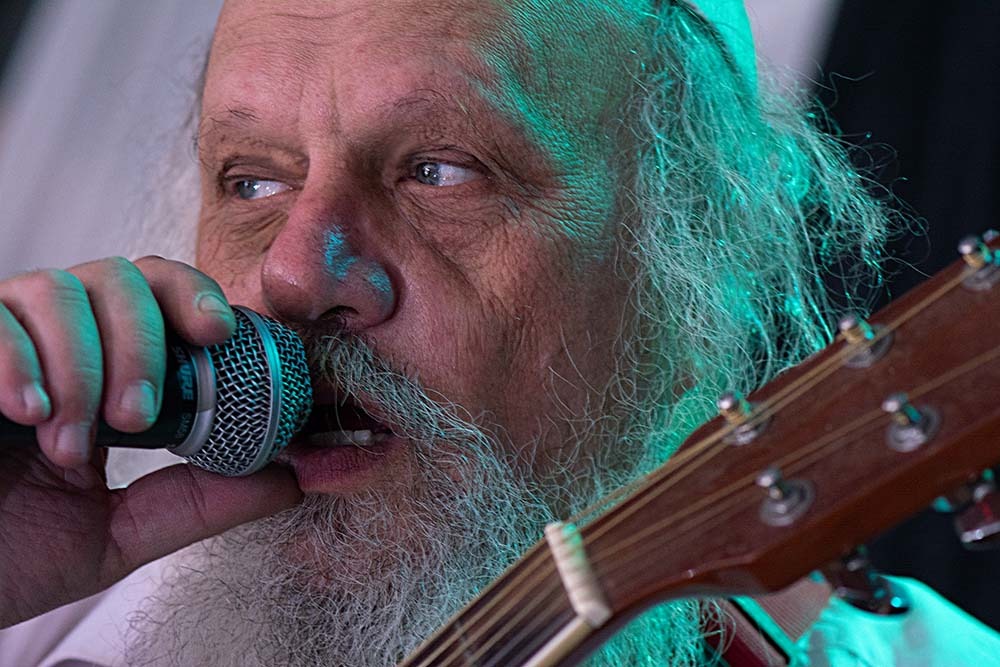 (Photo: Adar Rubin)
What does Judaism mean to you?
"Judaism is the religion of truth. Not only because it is true while others are false, but because its central purpose is the pursuit and revelation of truth. That is its essence."
Can you share a meaningful experience connected to a mitzvah?
"Hitbodedut opened countless locked doors in my life. During the many times I have practiced it, I have experienced incredibly powerful moments: overwhelming tears, walls coming down, life-changing insights. Rabbi Nachman says that tears are the drainage system through which falsehood leaves a person. They wash it away."
What are your greatest dreams?
"My dream is to reach wholeness. The kind of wholeness associated with our forefather Jacob. A state where you feel complete, at peace with every part of yourself, where you truly know who you are, what your purpose is, and why you are here.
"That sense of completeness naturally touches every area of life, including livelihood and career.
"Thankfully, I feel that at this stage of my life I am drawing closer to it. I understand myself better than I ever have. I feel it especially in my artistic work.
"True wholeness also means recognizing that you are absolutely unique. There has never been, and never will be, another person exactly like you. You are God's masterpiece. Nothing could be added to you, and nothing could be taken away. That is the greatest aspiration I have."
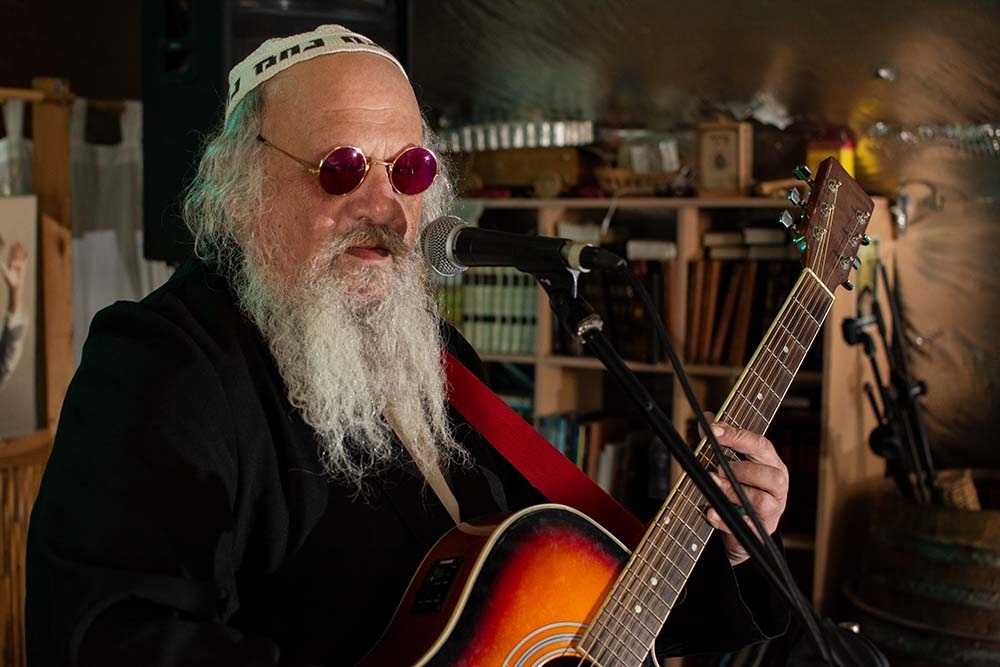 (Photo: Adar Rubin)
How present is God in your life?
"God is deeply present in my life and has a tremendous influence on it. But my aspiration is to experience His presence as tangibly as I experience this conversation with you right now. That is the closeness I long for."
Professionally, are you where you imagined you would be?
"Even as a young man I believed there was a good chance I would work in music, although I wasn't completely certain until I was about twenty.
"When I began taking music seriously, I wanted to remain on the fringe. I took rock and roll very seriously and absorbed its messages from the greatest artists in the genre. They may have been mainstream stars, but they carried the spirit of outsiders.
"Back then I felt there was room in the world for authentic music to become mainstream, but in Israel it seemed different. Even before I became religious, I performed in pubs, and people came without any help from the media or public relations. I was the king of the underground.
"To be honest, lately that idea has started to frustrate me because there really is no fringe anymore. So many people are making music today, each at their own level, and everyone uploads their work to YouTube. There is so much content that it is difficult to tell what is mainstream and what is not. People release one song and a half and are thrilled because it gets radio play.
"Thank God, I still perform, and many people continue to come to my concerts. For the first time in my life, though, I am also taking the traditional route. I am working seriously with public relations and trying to bring my music to a much wider audience. If it is meant to happen, it will happen, and the people who need my music will find it.
"There are people who have lived with my songs for years. Some have even told me that certain lines I wrote literally saved their lives."
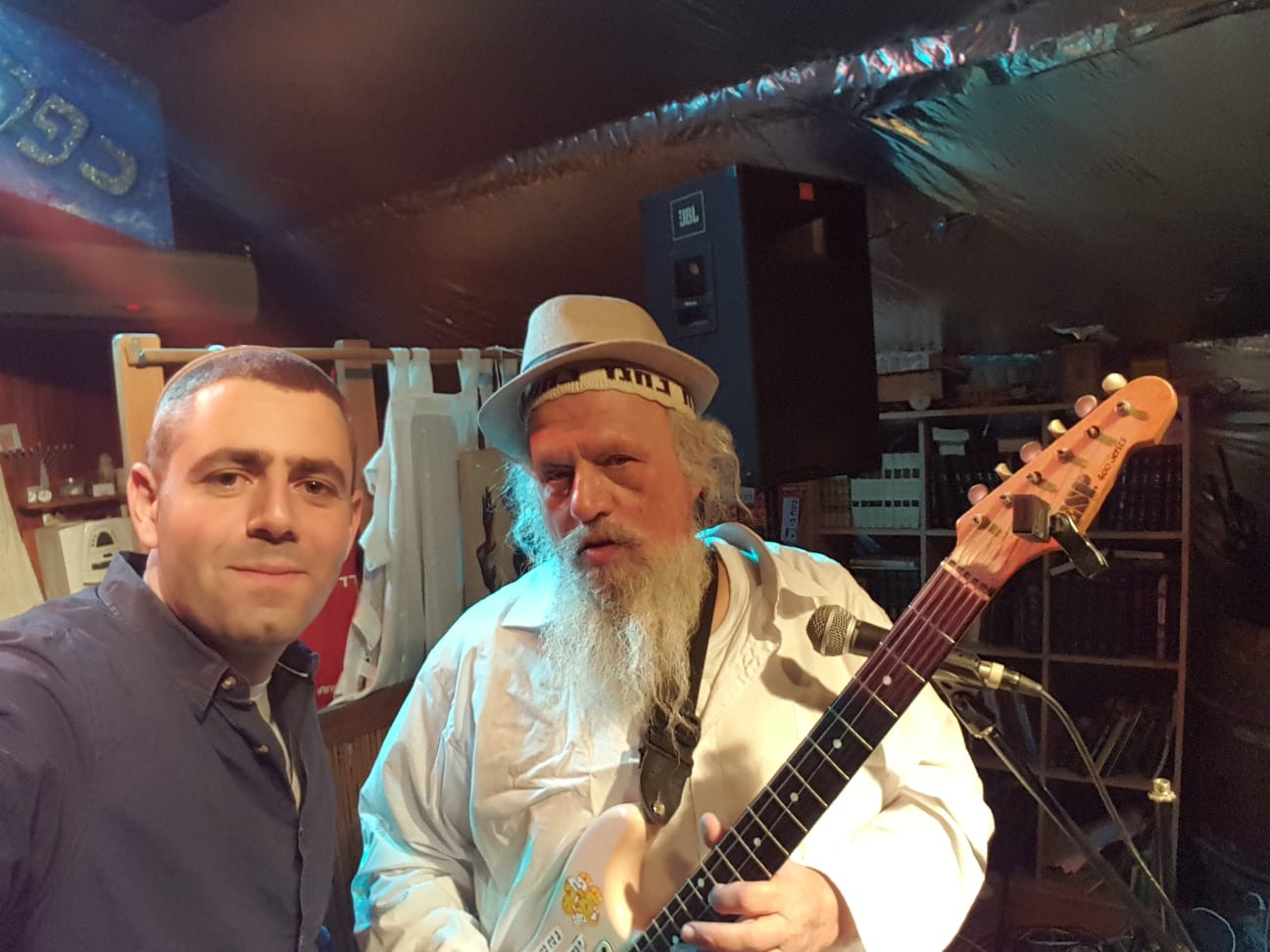 Adi Ran and Avner Shaki (Photo: Avner Shaki)
Can you share some of those stories?
"One man told me that he and his wife were driving to the rabbinical court to finalize their divorce. On the way they heard my song Harei At Mekudeshet Li. They changed their minds and went home together.
"Another person told me he was in severe financial distress. A few of my songs restored his confidence, and that gave him the strength to rebuild his life.
"Another young man, living in Hong Kong, said he returned to Judaism after hearing my song Nekudot Shel Kisufim.
"Those stories keep me going. Hardly a day passes without someone sharing what my music has meant to them. When I write songs, I go through an almost mystical experience. There are tears, moments of intense elevation. Over time, I become accustomed to the songs. But when people hear them, they often experience the same emotions I felt when I first wrote them. That is the most moving thing in the world."
Where do you hope to be in ten years?
"I hope my songs will finally reach the wider audience I have always dreamed of. I also want my service of God to become more structured and consistent. I want to feel truly redeemed.
"There are still things that trouble me from time to time, but alongside them there is an inner awareness that is not always visible externally. Even now, I experience waves of that wholeness I spoke about."
What does a typical day look like?
"Sometimes I merit to wake up at sunrise. After that I follow a regular learning schedule that includes Likkutei Tefillot, halachah, Chok L'Yisrael, Tikkun HaKlali, Gemara, and sometimes Mishnah. Beyond that, I continue learning and writing essays, some of which are published.
"At the same time, I am always trying to innovate and create something new. Thank God, I was privileged to introduce elements into Jewish music that had not really existed before. Electric guitars were almost unheard of, humor was rare, and there was very little original material when I entered the field.
"At first, many people opposed what I was creating because it had such a strong influence on listeners across every sector of society, including other musicians. My work encouraged people to be bolder. Ironically, some of the very people who criticized me back then, including well-known figures, later became great admirers of my work."
What moves you most about Judaism?
"The most emotional moments of my life happen during my concerts. Sometimes, in the middle of a performance, something suddenly opens up. You realize you have reached a new level and brought the audience there with you. In those moments, there is incredible electricity in the air.
"It is always a risk because you raise the intensity without knowing whether the audience will follow you.
"Thank God, almost every concert reaches that point. After two or three songs, something shifts and everything enters a different dimension. Sometimes it becomes deeply spiritual, both for me and for the audience.
"The main task is simply to do your part and wait. Those are the moments that make me tremble. They are moments when I touch the point of truth."
Can you share something meaningful about your family?
"My parents came from religious families, but at a certain point they stopped observing Judaism.
"My mother returned to religious observance immediately after I did. I believe she had been waiting for that moment her entire life without ever saying a word to me. The moment I came back, she joined me."
What is one painful lesson life has taught you?
"I have learned many painful lessons. One of the hardest concerns my mother.
"Shortly before she passed away, our family debated whether she should be hospitalized. Some believed she should, while I believed she should remain at home. Many people end up dying in hospitals after being exposed to illnesses there.
"Today I know I should have fought much harder for my position. In the end she was hospitalized, and that is where she died.
"It tears me apart because I believe I could have done more. My mother wanted me to be her legal guardian, but I did not want to create conflict within the family. Now I deeply regret that decision. The sense of missed opportunity has been devastating. I feel I should have saved her."
Is there something people do not know about you?
"Many people think I am mainly funny, entertaining, and lighthearted. But I am actually a very serious person. Even within that seriousness, there is room for humor. It is an essential part of who I am and how I see the world. Still, I am deeply serious about my work and the way I live. Sometimes I can even be quite intense. Ironically, that is the exact opposite of my public image.
"There is something else people usually don't know. I had a very strong interest in politics from a young age. I constantly listened to the news and read every newspaper I could find. For a period of my life, I was deeply involved with the political left. Looking back, who would have believed it?"
Adi Ran, one of the pioneers of contemporary Jewish music, is best known for songs such as "Abba, I Became Religious," "Ata Kadosh," and "Niggun Shel Tikvah." His distinctive style blends Chassidic themes with rock music, creating a unique voice that has influenced both audiences and fellow artists for decades.

