

Raising Children
“If You Do This, You’ll Get a Prize”: Are Rewards Really Teaching Your Child?
Rewards can motivate children, but do they teach lasting values? Parashat Re’eh offers an important lesson for parents.
- Rabbi Hananiah Mans
- | Updated
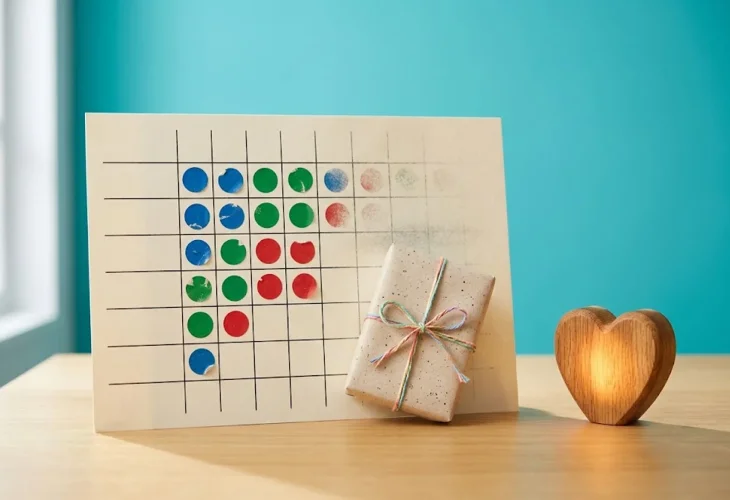
“If you wash the dishes, you’ll get a prize.” “If you brush your teeth, you’ll get a treat.”
Sound familiar? Sometimes it can feel as though every basic task requires a promise, reward, or consequence to get children moving. Rewards can certainly motivate children, but are they actually teaching them anything?
This week’s Torah portion offers a powerful insight into the difference between external rewards and genuine internal motivation.
In Parashat Re’eh, the Torah says: “See, I set before you today a blessing and a curse” (Deuteronomy 11:26).
Rabbi David of Lelov offers a striking interpretation. After 40 years in the desert, after everything the Jewish people had experienced and everything Hashem had done for them, did they still need an incentive system of “blessing and curse” to motivate them?
Rather, the answer can be found in the verses themselves: “The blessing, if you listen.” The very fact that you listen to Hashem and serve Him is itself the blessing.
“And the curse, if you do not listen.” Not listening is itself the curse.
The message is that there comes a point when we should no longer need an external reward to recognize the value of doing what is right. Serving Hashem is not merely something we do in order to receive a blessing afterward. The opportunity to serve Him is itself a blessing.
The same idea can teach us something important about the way we motivate our children.
“A Prize Does Not Educate—It Merely Motivates”
Rabbi Yechiel Yaakovson expresses the idea in a memorable line: “A prize does not educate—it merely motivates.”
When a child does something only to receive a sticker, candy, or prize, the reward may successfully produce the desired behavior. But that does not necessarily mean the child has learned to value the behavior itself.
The child has not necessarily discovered the satisfaction of helping at home, the importance of taking care of their teeth, or the value of studying. Instead, they may simply have learned how to make a deal: I do this, and I get that.
And when the reward disappears, the motivation may disappear with it.
That doesn’t mean parents should eliminate rewards altogether. Incentives can be extremely useful when they are treated as a temporary tool rather than the ultimate goal.
Rewards can be particularly helpful during transition periods or unusual circumstances, such as vacations, Bein Hazmanim, or significant changes in routine, when parents may need a quick way to establish stability and cooperation.
They can also help create the initial spark for a new habit that feels particularly difficult to a child. Learning to read, establishing a tooth-brushing routine, or overcoming a specific challenge may initially require some extra motivation. A small reward can lower resistance and help the child get started.
The important question is what happens next.
Our goal as parents is to gradually move the child from external motivation to internal motivation—from “What will I get if I do this?” to understanding why the action itself matters.
Instead of focusing only on the prize, we can help children recognize how good it feels to contribute to the family, how satisfying it is to master something difficult, and how their actions help them become responsible and capable people.
The prize may get a child started, but it should not become the reason they continue.
The lesson of Parashat Re’eh gives us a powerful model: eventually, we want our children to recognize that doing what is good and meaningful is not merely a path toward a reward. Sometimes, doing what is right is itself the reward.

