

The Month of Elul
Elul and Selichot: What to Know Before the High Holidays
When should Selichot be recited, and what if there is no minyan? learn the key laws and customs of Selichot as Rosh Hashanah and Yom Kippur approach.
- Behalacha Uvaggadah
- | Updated
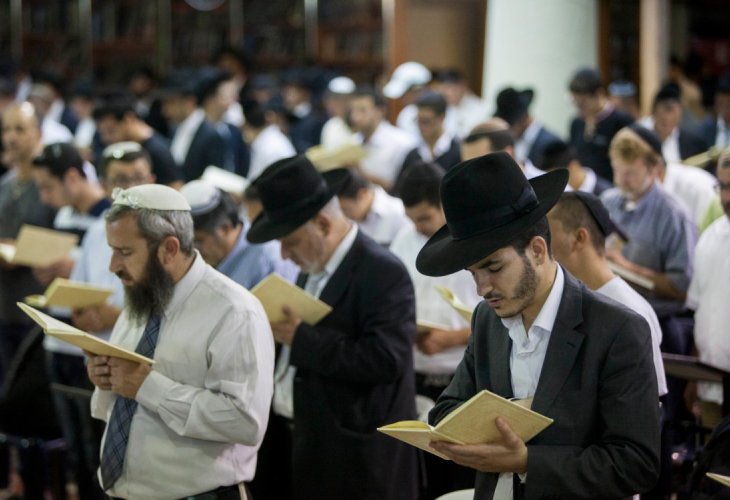 (Illustration photo: Flash 90)
The month of Elul is a time of teshuvah, reflection, and preparation for Rosh Hashanah and Yom Kippur. One of its most meaningful traditions is the recitation of Selichot, special prayers asking Hashem for forgiveness and mercy. But when should Selichot be recited, what should a person do without a minyan, and what is most important when saying these prayers?
The custom among Sephardic Jews is to recite Selichot from the beginning of Elul, except on Rosh Chodesh, through Yom Kippur. Among Ashkenazic Jews, the custom is to begin reciting Selichot at the beginning of the week in which Rosh Hashanah falls. However, if Rosh Hashanah falls on a Monday or Tuesday, they begin at the beginning of the preceding week.
Ashkenazic Jews also have the custom of sounding the shofar from Rosh Chodesh Elul after Shacharit to awaken people to repentance, as the verse says: “Can a shofar be sounded in a city, and the people not tremble?” (Shulchan Aruch, 581:1)
The Right Time for Selichot
Our rabbis of blessed memory taught that Hashem initially created the world through the attribute of judgment. When He saw that the world could not endure through judgment alone, He joined it with the attribute of mercy.
There are times when the attribute of judgment is more dominant and times when the attribute of mercy is more dominant. At the beginning of the night, from sunset until halachic midnight, the attribute of judgment prevails. Therefore, Selichot, which are prayers for mercy and favor, should not be recited during these hours.
In particular, one should be careful not to recite the verses beginning with Vaya’avor, which contain Hashem’s Thirteen Attributes of Mercy, before halachic midnight. It is permissible to begin Selichot about ten minutes before midnight if the congregation will reach Vaya’avor at midnight.
Those living outside Israel should preferably recite Selichot according to halachic midnight in their own location. However, those who are lenient and follow midnight in Israel have authorities upon whom to rely.
From halachic midnight onward, Selichot may be recited throughout the night and during the following day until sunset.
Fortunate are those who rise to recite Selichot during the predawn hours, when the kindnesses of the blessed Creator are especially awakened in the world. Those who find it difficult to rise during the night should try to arrange a minyan in the morning before Shacharit or before Mincha.
When Selichot are recited during the day, it is good for the chazzan to wrap himself in a tallit. Our rabbis taught (Rosh Hashanah 17b) that Hashem wrapped Himself like a prayer leader and told Moses, “Whenever Israel acts before Me according to this order of the Thirteen Attributes, I forgive them.”
Don't Let One Mitzvah Lead to a Transgression
Those who wake early to recite Selichot must take care not to disturb other members of the household. They certainly should not wake someone else simply to prepare tea or coffee for them.
Doing so turns the attempt to perform a mitzvah into the cause of a transgression, and the loss outweighs the gain.
Blessings on Torah Study
Someone who wakes from sleep to recite Selichot should say the blessings on Torah study before beginning because Selichot contain verses from the Torah.
If time is extremely limited, however, those who are lenient and recite the blessings on Torah study after Selichot have authorities upon whom to rely.
Choosing a Prayer Leader
The prayer leader should be free of transgressions, humble, accepted by the congregation, forgiving of personal slights, and blessed with a pleasant voice.
If no one possesses all these qualities, the congregation should choose the person who is greatest in wisdom and good deeds. The decision should not be based solely on who has the most beautiful voice.
A Torah scholar is preferable as prayer leader even if his voice is less pleasant than that of someone who is not a Torah scholar. (Shulchan Aruch, 53:4–5)
The True Purpose of Selichot
The essence of Selichot is not simply getting through the words. The prayers should be recited with intention, calmly, deliberately, and with genuine humility, for “the poor person speaks with supplications” and Hashem does not despise a broken and crushed heart.
Rushing through Selichot misses their purpose.
While reciting the confession and Selichot, a person should examine their actions, return to Hashem through sincere teshuvah, and increase their mitzvot and good deeds as the Day of Judgment approaches, when every person’s merits and sins are weighed.
It is a beautiful custom to sound tashrat during the recitation of the Thirteen Attributes of Mercy in Selichot. Similarly, after the half Kaddish at the conclusion of Selichot, tashrat, tashat, and tarat are sounded.
However, if Selichot are being recited late at night and the shofar blasts could disturb neighbors, particularly families with young babies who might be frightened awake, the shofar should not be sounded.
Getting the Words Right
Care should be taken to recite Selichot with the proper pronunciation of letters and vowels.
When saying “Hashem melech, Hashem malach,” the word melech should be stressed on the first syllable, with the emphasis on the letter mem. Malach, however, should be stressed on the final syllable, with the emphasis on the letter lamed.
Likewise, care should be taken to pronounce Hashem’s Name with the stress on the final syllable rather than the first. One should also distinguish between a mobile sheva and a silent sheva.
Our rabbis were very particular that when reciting Vaya’avor, a slight pause should be made between “Hashem, Hashem.” When saying these words, one should bend slightly, as the Torah says following the Thirteen Attributes: “Moses hurried and bowed to the ground and prostrated himself.”
The entire Thirteen Attributes should be recited aloud. (Maharik, Shalmei Tzibbur, Birkei Yosef, Chesed LaAlafim, Minchat Aharon, Ben Ish Chai, and others.)
Grammar Matters
Those reciting Selichot at midnight, upon reaching the words, “Master of the Universe, I will confess my minor and major transgressions,” should say “at night, during the watches,” rather than “at night, at the end of the watches.”
Those reciting Selichot during the day should omit this entire passage.
Likewise, in the phrase, “We have come to ask You for atonement, awesome and exalted refuge in times of trouble,” the melody has led some people to place the emphasis of the words “atonement” and “trouble” on the first syllable. Care should instead be taken to stress the final syllable.
What If There Is No Minyan?
If there is not yet a minyan in the synagogue, the congregation may not recite Vaya’avor or the Aramaic passages of Selichot, including Rachmana, Marana DiVishmaya, Mechei U’Masei, and similar passages.
Instead, they should recite the other Selichot passages that are in Hebrew. Once a minyan has gathered, they can complete the sections they skipped.
If they know in advance that there will not be a minyan, Vaya’avor should be recited with the Torah cantillation rather than omitted entirely.
Tikkun Chatzot
Reciting Tikkun Chatzot has greater merit than reciting Selichot. Therefore, someone who says Selichot at night should also take care to recite Tikkun Chatzot.
If time is limited and it is impossible to say both, Tikkun Chatzot takes precedence.
Someone who is awake at midnight but does not have a minyan for Selichot should recite the permitted portions of Selichot individually, as explained above, as well as Tikkun Chatzot.
Following Selichot Through a Live Broadcast
Someone reciting Selichot at home while following a live Selichot service over radio or satellite may respond along with the congregation, even if there is a slight broadcast delay. This includes responding “Amen,” “May His great Name be blessed,” Vaya’avor, and similar responses. This is considered reciting Selichot with a congregation.
However, if the broadcast is prerecorded rather than live, one may not respond.
This ruling is cited in the names of Minchat Elazar, Chazon Ish, Igrot Moshe, Rabbi A. I. Kook, Rabbi Tzvi Pesach Frank, Maaseh Choshev, Yerushat Pleitah, and others. It was also ruled this way by Maran Rabbi Ovadia Yosef, z”l.
Ultimately, Selichot are much more than a series of prayers leading up to the High Holidays. They are an opportunity to stop, examine our actions, ask Hashem for mercy, and begin the work of teshuvah. Whether recited before dawn, during the day, with a congregation, or under less than ideal circumstances, the goal remains the same: to approach Rosh Hashanah and Yom Kippur with greater awareness, humility, and a sincere desire to return to Hashem.

