

Torah Personalities
Rabbi Baruch Toledano: The Legacy That Shaped Moroccan Jewry
From the mellah of Meknes to the yeshivas of Israel, Rabbi Raphael Baruch Toledano devoted his life to preserving Torah education through a period of extraordinary change.
- Erez Navon
- | Updated
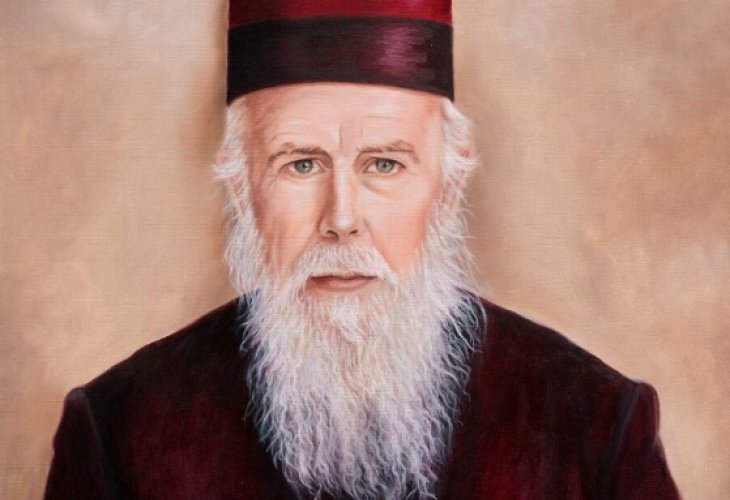 Photo by Ruth Galia
The Toledano name occupies an important place in the history of Moroccan and Sephardic Torah life. For generations, members of the family served as rabbis, Torah scholars, and community leaders, leaving an influence that continued long after Moroccan Jewry dispersed around the world.
Among the family’s most influential figures was Rabbi Raphael Baruch Toledano, ztz”l, a leader whose life became closely intertwined with the struggle to preserve traditional Jewish education during a period of enormous cultural change.
In a conversation with Rabbi Raphael Baruch Toledano, a descendant of the family and author of Kadosh U’Baruch, we explored the remarkable history of the Toledano dynasty—and the rabbi whose efforts helped shape generations of Sephardic Torah life.
From Spain to Morocco
“The roots of the Toledano family go back to Toledo, Spain, a city known for its great Jewish scholars,” Rabbi Raphael explains.
Among the prominent early members of the family were Rabbi Joseph, described by his contemporaries as “the holy Kabbalist,” and his son Rabbi Daniel, known as the “Head Rabbi of Castile.”
Following the expulsion of the Jews from Spain, members of the family settled first in Thessaloniki and later in Fez, Morocco, where Rabbi Daniel established an important yeshiva.
Two major branches of the Toledano family descended from Rabbi Daniel’s sons, Chaim and Joseph. Eventually, both branches moved from Fez to Meknes, where the family remained deeply rooted for generations.
Despite periods of persecution and hardship, Moroccan Jews remained strongly attached to Torah and halacha. Much of that religious life centered around the mellah, the traditional Jewish quarter.
“The mellah was surrounded by a thick wall,” Rabbi Raphael explains. “It was a boundary both physically and spiritually, helping preserve Jewish life from outside influences.”
The community was so self-contained that, according to Rabbi Raphael, when local Jews said, “Everyone knows,” they effectively meant, “Everyone in the mellah knows.”
Within those walls flourished synagogues, Torah study, traditions, and a strong sense of Jewish identity.
Rabbi Raphael Baruch Toledano was born in Meknes in 1890 to Rabbi Yaakov Toledano and Hana Sudri. Meknes was home to a deeply rooted Jewish community, including many descendants of the Jews expelled from Spain, and became renowned as an important center of Moroccan Torah life.
When the Outside World Entered the Mellah
For generations, Jewish life in Meknes had remained relatively insulated from many outside cultural influences. The Toledano family synagogue, known as Tzalet Shmuel Toledano, stood at the heart of the community’s religious life.
But the early 20th century brought enormous changes.
With the establishment of the French Protectorate in Morocco in 1912 came greater exposure to European culture and education. One of the most influential forces was the Alliance Israélite Universelle, a Jewish organization that had established schools throughout North Africa and the Middle East.
The Alliance promoted French-language and Western-style education. While its schools offered opportunities that many families valued, traditional rabbinic leaders were deeply concerned about the weakening of Torah education and religious observance that could accompany the cultural transformation.
For them, education became one of the central battlegrounds over the future identity of Moroccan Jewish children.
The question was no longer simply what children would learn in school. It was what kind of Jewish lives they would lead as adults.
Fighting to Preserve Torah Education
Rabbi Baruch became one of the figures at the forefront of the effort to strengthen traditional Jewish education during this period of rapid change.
He worked alongside other rabbinic leaders, including Rabbi Avraham Kalmanowitz, ztz”l, of the Mir Yeshiva in the United States, to preserve and expand Torah education in Morocco.
Rabbi Baruch helped open doors for Rabbi Kalmanowitz, who became deeply involved in efforts to strengthen Jewish education in North Africa.
One dramatic episode took place in Paris in 1953, when Rabbi Kalmanowitz met with Alliance leaders to discuss educational policies affecting Moroccan Jewish children.
According to accounts of the meeting, Rabbi Kalmanowitz became overwhelmed with emotion as he described his fears for the spiritual future of a generation of Jewish children. Although those present did not understand the Yiddish in which he spoke, his tears communicated what words could not.
The meeting ultimately led to compromises that helped strengthen opportunities for Torah education.
A Generation of Enormous Change
Moroccan Jewry would soon face yet another transformation.
As Jews began leaving Morocco in large numbers, families dispersed across Israel, France, England, and elsewhere. For those who immigrated to Israel, the transition could bring an encounter with a society dramatically different from the traditional communities they had left behind.
Rabbi Raphael describes the period as one of extraordinary upheaval.
Within only a few decades, Moroccan Jews had experienced changes that earlier generations could scarcely have imagined: European modernization, new educational systems, mass migration, Zionism, and the rebuilding of their communities in entirely new countries.
For rabbinic leaders such as Rabbi Baruch, the question remained the same throughout these changes: How could Torah life be preserved and passed on to the next generation?
Building Torah in Israel
In 1964, Rabbi Baruch immigrated to Israel. Though already in his seventies, he did not consider his work finished.
He initially lived in Beersheba with his son-in-law, Rabbi David Martzbach, and later settled in Bnei Brak.
There, he threw himself into strengthening Sephardic Torah education.
Working with leading rabbis, including Rabbi Chaim Greineman, he helped establish and support institutions dedicated to developing a new generation of Torah scholars.
Among the early institutions was Ohel Moshe in Bnei Brak, founded by Rabbi Moshe Malca with Rabbi Baruch’s assistance.
Students remembered not only Rabbi Baruch’s Torah teachings, but also the intensity of his prayers and his passionate concern for their spiritual futures.
A Legacy of Sephardic Yeshivas
Rabbi Baruch’s influence ultimately extended far beyond a single institution.
He helped lay foundations for a growing network of Sephardic Torah education, supporting yeshivas and Torah institutions that would produce future rabbis, teachers, and community leaders.
Institutions associated with this broader legacy included Ohr Baruch, Ahavat Shalom in Jerusalem, Dvar Jerusalem, and others.
His influence can therefore be measured not only through the institutions themselves, but through the generations of students who emerged from them and went on to build Torah communities of their own.
Rabbi Baruch, however, did not attribute his accomplishments primarily to organizational ability or leadership.
He spoke instead about prayer and tears.
For a man who had witnessed the traditional Jewish world of Morocco encounter unprecedented cultural change, preserving Torah was not merely an educational project. It was a mission to ensure Jewish continuity.
Preserving the Story for Another Generation
That history is at the heart of Kadosh U’Baruch, Rabbi Raphael Baruch Toledano’s book about his distinguished ancestor.
Across approximately 460 pages, the book traces Rabbi Baruch’s life, his struggles on behalf of Jewish education, and the wider story of a Moroccan Jewish world undergoing dramatic transformation.
It also preserves the memory of a community whose physical walls have largely disappeared but whose Torah continues to live through its descendants.
The mellah that once protected Jewish life in Meknes belongs to another era. The Jewish communities of Morocco have dispersed across continents, and the challenges facing younger generations have changed.
But Rabbi Raphael Baruch Toledano’s life offers an enduring lesson: Jewish continuity does not happen automatically. It is built through education, commitment, prayer, and the determination to pass Torah from one generation to the next.

