

Personal Stories
“Mom, Is That You?”: The October 7 Journey That Changed Everything
After October 7 shattered everything she thought she knew, Neta began an unexpected journey toward her people, her country, and a faith she never imagined finding.
- Inbal Idan
- | Updated
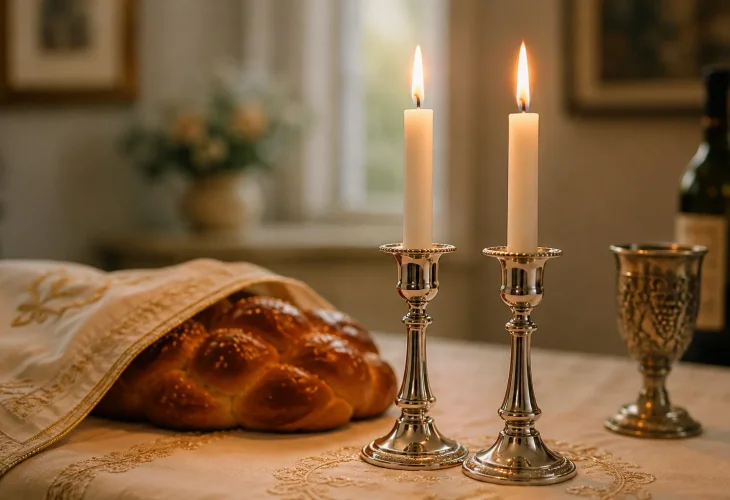
For Neta, October 7 marked the beginning of a profound personal transformation. Raised in a secular kibbutz environment and deeply disconnected from religious life, she never imagined that the events of that day would reshape not only how she saw the Jewish people, but also her relationship with Judaism, Israel, and Hashem.
The Day Everything I Believed Began to Change
My name is Neta. My parents chose my name because they wanted to help grow a new generation. They were Holocaust survivors who knew more than most about the horrors human beings are capable of, about limitless hatred, and, above all, about rebuilding life after devastation. They were living proof that the people of Israel live.
They emerged from the Holocaust changed. Their connection to Judaism was primarily Israeli and Zionist. I grew up in the largely atheist environment of a Hashomer Hatzair kibbutz, and that became my worldview as well.
Sadly, I felt more empathy for those on the other side of the border than I did for my own people. Politically, I identified as center-left. Eventually, I moved to central Israel and absorbed the Tel Aviv mindset. My workplace included people from many different backgrounds, but I consistently gravitated toward those who felt familiar and comfortable. If someone was very different from me, I might exchange a polite “hello,” but little more. Why? Perhaps it was arrogance. Perhaps it was fear. Whatever the reason, there was no real connection.
Then came October 7, 2023.
The sirens that tore through that morning struck something deep inside me. Terrified, I began receiving messages, names, and desperate pleas for help. I had family members and many friends in the kibbutzim near the Gaza border, and suddenly I was seeing their homes transformed into scenes of devastation and destruction. I tried to encourage them and offer support, until, one by one, some of the voices and messages fell silent.
I wrung my hands, unable to comprehend that there seemed to be no one who could help and nowhere to turn. The mourning that followed was unbearable. It belonged to all of us, to the entire Jewish people.
I became anxious, frightened by both what we knew and what we still did not know. My only son was living abroad at the time, which at least gave me some relief. There was one less person to worry about. Everything that had seemed secure collapsed before my eyes. The beliefs and theories I had held onto so firmly began to fall away.
I Just Needed to Do Something
Several days later, we tried to return to work, or at least pretend that we could. Battles were still raging on Israeli soil. The death toll continued to climb. Funerals were taking place throughout the country. Everyone seemed to be mourning, deeply sad and turned inward.
I desperately wanted to do something. I needed to feel useful. I could not bear the helplessness.
That was when I overheard a religious colleague, someone I probably would barely have noticed under ordinary circumstances, talking about an initiative she and her husband had started. They were finding out where bereaved families were sitting shiva, publicizing the information, and making sure people went to comfort them. She asked whether I wanted to help, and I said yes.
I began visiting at least 10 families a day. It was difficult to comprehend that in our country, after such an enormous tragedy, there might be grieving families with no one coming to comfort them.
My colleague and I went from house to house. There, I encountered different faces, lifestyles, and ways of thinking. I saw every color of the Jewish spectrum, and that was when I realized that I had not really been seeing those colors before. Something inside me opened. Their political views no longer interested me. I simply wanted to listen, comfort them, and get to know them.
The First Shabbat Candles of My Life
At one shiva house, the mother of one of those killed asked people to light Shabbat candles in memory of her son. It was Thursday, and outside the home was a pile of packages containing candles, matches, and the blessing, lovingly prepared for visitors to take.
I saw this mother’s longing, and something inside me softened. I was completely distant from mitzvot, but as I left, I took one of the packages with me. I did not really know what to do with it, but later, at home, I saw that the instructions were written on the enclosed page.
For the first time in my life, I lit Shabbat candles.
I experienced a feeling I had never known before. For a few moments, I sensed that there was something greater here, some kind of connection beyond what I could explain. I still did not call myself a believer, but in those moments, I understood that perhaps I did not understand everything.
“I’m Leaving Israel”
As I became more involved in helping bereaved families, my circles expanded. I donated to additional initiatives and volunteered wherever I could. I did not allow myself a moment to stop, breathe, or process what was happening.
I encountered tragedy after tragedy, unimaginable depths of suffering alongside extraordinary acts of courage. Slowly, I began to drown in the pain. There were days when everything felt dark and bitter. I could see no hope.
Eventually, I broke down. I felt myself sinking into despair and could not carry the pain anymore. Out of that pain came a decision: I was leaving Israel.
I made inquiries and bought a one-way ticket to Thailand. I wanted to tell my son, but I could not bring myself to send the message. I had raised him to love this country. How could I now tell him that I was abandoning it? Day after day, I postponed telling him while continuing to work and prepare to leave.
One Sentence in an Elevator
One morning, exhausted on my way to work, I stepped into the elevator of the high-rise building where I worked. My eye caught the digital screen displaying the hourly headlines, and one sentence appeared:
“Yair Ansbacher: Since returning from the battlefield in the south, I feel the need to hug every Jew.”
Something about those words stopped me. I knew of Yair Ansbacher. I knew that he was a decorated fighter and the grandson of Holocaust survivors. Although there was a deep divide between us politically and ideologically, that connection to the Holocaust spoke to me. His words reminded me of things my own father had said after emerging from the camps, so I searched for Ansbacher’s full post.
He described the battles in the south, going from door to door with his fellow soldiers searching for survivors, for a beating heart, for someone they could save and embrace. In those moments, it did not matter whether the person standing before him was right-wing or left-wing. He saw a Jew.
Everyone shared the same fate. Those who came to murder did not distinguish between religious and secular, right and left. Every person who survived was an entire world. He wanted to hug them, to love them. The realization was simple: We had to be together, not only in death.
“Think Again, Mom”
I had chills. That sentence stayed with me throughout the day. It sounded so much like what my father had expressed after surviving the camps. Every Jew was an entire world.
And here I was, preparing to leave the land of the very people I was mourning simply because I had fallen into despair. Could I really do that? What would my parents have said? If a man who had fought and witnessed such horrors could emerge wanting to embrace every Jew, perhaps I needed to reconsider.
That evening, I finally sent my son a message. But instead of telling him that I was leaving, I told him I was considering moving to Thailand.
He answered immediately: “Think again, Mom. Things may be calm here, but they are not good. I am torn apart by longing for Israel. I cannot stay here like this. And yes, antisemitism is starting to surface abroad too. I’m not sure this is the right thing.”
I was stunned. This was not the response I expected from my son. I had not realized how deeply the events in Israel had changed him too.
Learning to Embrace Every Jew
I put my plans to leave on hold and continued visiting mourners, but now there was another layer to what I was doing. I made a decision to embrace, at least metaphorically, every Jew I encountered. I would look for the good in them. I would try to approach them with love.
The colleague wearing a headscarf. The settler in Shoresh sandals. The bearded man handing out books at intersections. The downstairs neighbor who left garbage bags in the shared space. Even the driver who cut me off at a green light. Everyone.
It was not always easy, but slowly, the world became more colorful and expansive. And I began to feel better.
Eventually, I permanently canceled my plans to leave Israel.
Then My Son Sent Me a Message
The day after I canceled my plane ticket, I received a message from my son.
“I’m coming back to Israel. I’m enlisting.”
Tears filled my eyes. It felt as though Someone above was reading my thoughts.
I was immensely proud of him, even as my heart raced at the realization that my only son would soon be entering Gaza. Without thinking too much, I picked up a small book of Tehillim that had been distributed at one of the shiva houses.
I opened it and began to read. I recited each psalm slowly, encountering for the first time words that seemed to express everything I needed to ask for, and even things I did not know how to put into words myself.
Something real was beginning to take shape inside me.
“Mom, Is That You?”
A few weeks ago, my son sent me a video from Selichot at the Western Wall. He was there in uniform.
I shivered as I watched. The singing, the unity, the powerful connection to one God, and perhaps most moving of all, the realization that my son knew the melody.
Tears filled my eyes, and I sent him back an emoji with tear-filled eyes.
He was stunned.
“Mom, is that you?”
“It’s me,” I replied.
And in that moment, I knew that I had reconciled with myself, with my people, and with my God.

