

Hot on the Web
Six Endangered Sea Turtles Return to the Wild After 30 Years
Six endangered hawksbill sea turtles have been released into the Gulf of Eilat after nearly 30 years, equipped with satellite transmitters to track their journey.
- Yuval Aviv
- | Updated
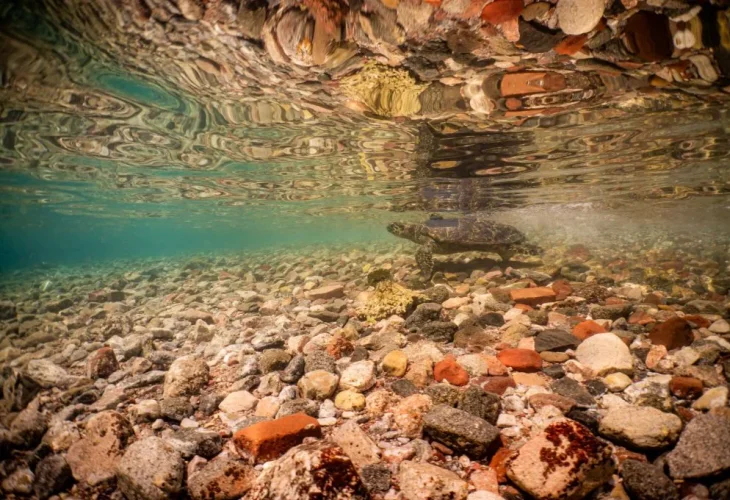 (Photo: Omri Amosi, Israel Nature and Parks Authority)
Six adult female hawksbill sea turtles, a critically endangered species, have been released into the Gulf of Eilat after spending nearly 30 years at Eilat’s Underwater Observatory Park. Equipped with satellite transmitters, the turtles are now beginning a new chapter in the wild while researchers closely follow their journey.
Returning to the Sea After 30 Years
The six turtles made their way from the Underwater Observatory Park to the waters of the Gulf of Eilat on Sunday evening. They were released at the nearby Coral Beach Nature Reserve as part of a joint initiative by the Underwater Observatory Park and the Israel Nature and Parks Authority.
The turtles hatched at the observatory approximately 30 years ago and have been raised there ever since. Before their release, they underwent a series of thorough medical examinations, which found that they are fertile and healthy enough to integrate into the wild.
The six turtles released into the sea are Morris, Shonit, Arava, Eilat, Amit, and Eli. Morris was named after the late Morris Kahn, the entrepreneur and founder of the Underwater Observatory, who passed away this year. The observatory he established remains unique of its kind.
Each turtle was fitted with a satellite transmitter, allowing professionals to monitor her movements and see how she adapts to life in the open sea.
A Critically Endangered Species
The release is especially significant because hawksbill sea turtles face a serious threat of extinction. Only about one in every thousand sea turtle hatchlings survives to adulthood, while sea turtle populations around the world face numerous threats.
Human activity is one of the major causes of their decline. Coastal development has damaged feeding and nesting areas, while fishing and marine pollution continue to threaten sea turtles and their habitats.
In Israel, hawksbill sea turtles are found only in the Gulf of Eilat, making efforts to strengthen the local population particularly important.
Dr. Yaniv Levy, director of the Sea Turtle Rescue Center at the Israel Nature and Parks Authority, explained that the satellite transmitters will provide valuable information about the turtles’ survival and movements.
“The joint project with the Underwater Observatory is only the beginning, and it will allow us to monitor the survival of these individuals in the wild,” he said. “In the coming days, we will receive initial information about the sea turtles’ locations and share it with the public, so that all of us can follow their journey in the wild.”
Although the turtles have spent their lives at the observatory, the Gulf of Eilat is not entirely unfamiliar to them.
According to Aviv Levy, “All of our turtles hatched here and are raised in conditions that simulate the Gulf of Eilat. Previous satellite monitoring showed how the turtles returned to visit the nearby beach where they hatched.”
A New Hope for the Local Turtle Population
The timing of the release was particularly important because some of the turtles are carrying eggs.
“They are about 30 years old, and some of them currently have eggs in their bellies,” Levy said. “It was important to us to bring them into the gulf before their next egg-laying season.”
Researchers will now closely follow the turtles as they adjust to life in the wild. The information gathered could also contribute to conservation efforts beyond Israel by helping experts better understand the conditions needed to raise sea turtles successfully and prepare them for release.
“We will excitedly follow their new journey, which will continue to give us important information on a global level about optimal turtle-rearing conditions and the right way to transfer them to the sea and strengthen the local population,” Levy added.
The Israel Nature and Parks Authority and the Underwater Observatory hope that introducing these mature, fertile females into the wild will help strengthen the hawksbill sea turtle population in the Gulf of Eilat and the wider Red Sea.
Their return to the sea is important not only for the survival of the species. Sea turtles also contribute to healthy marine ecosystems, helping support biodiversity and the delicate balance of life beneath the water.
The sea turtle is released. Video: Miron Segev, Israel Nature and Parks Authority

