

Beginners Guide
Can You Undo the Past? The Ramchal’s Powerful Teaching on Teshuvah
The Ramchal explains how sincere regret can uproot the will behind a sin, how Divine mercy makes repentance possible, and what true teshuvah requires when another person has been hurt
- Amitai Chanaya
- | Updated
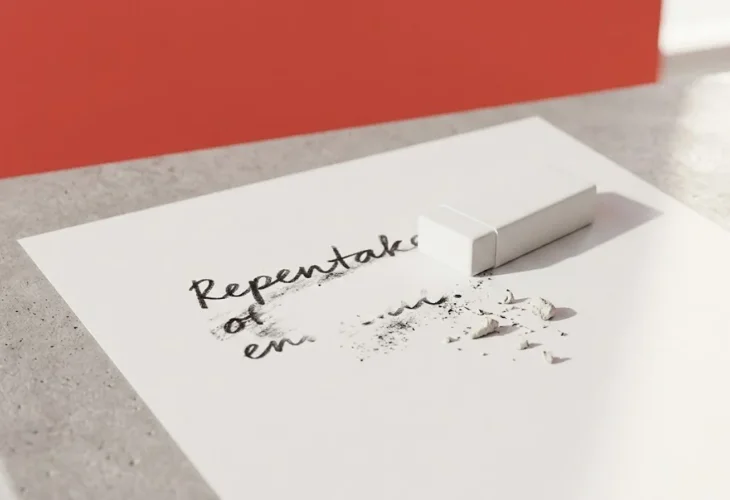
Hurtful words or actions that have caused pain to others can sometimes seem like irreversible damage. Logic tells us that they cannot simply be taken back. How can damage that has already occurred ever be erased? For severe sins such as murder, is it even possible to turn back the clock?
According to the strict Attribute of Justice, it would also seem appropriate for a sinner to be punished immediately after committing a sin, and for that punishment to be severe and final, with no possibility of repair. The reasoning is simple: once an act has been committed, there is no way to “remove it from reality.” Why, then, should there be an opportunity to correct it?
These questions are raised by the Ramchal in Mesillat Yesharim, Chapter 4:
“According to the strict letter of justice, it would have been fitting for the sinner to be punished immediately upon committing his sin, without any delay whatsoever. The punishment itself should also have been administered with wrath, as befits one who rebels against the word of the Creator, blessed be His Name. Furthermore, there should have been no possibility whatsoever of repairing the sin. For in truth, how can a person repair what he has corrupted, once the sin has already been committed? If a person murdered another, or committed adultery, how can he repair such a thing? Can he remove an act that has already been done?”
The Ramchal explains that this is where the Attribute of Mercy enters the picture. Mercy does not simply cancel justice or arbitrarily make it more lenient. Rather, it creates the conditions that allow the world to continue to exist and justice to operate within it.
The Attribute of Mercy changes the situation in three ways: it gives the sinner time rather than punishing him immediately; it ensures that the punishment is not necessarily absolute and final; and it opens the door to teshuvah, repentance. From the perspective of strict justice alone, the possibility of repentance cannot be taken for granted. It is itself an act of Divine kindness.
As the Ramchal writes:
“However, the Attribute of Mercy brings about the opposite of the three things we have mentioned: namely, that the sinner is given time and is not immediately destroyed from the earth when he sins; that the punishment itself is not one of complete destruction; and that repentance is granted to sinners as an act of complete kindness, so that the uprooting of the will is considered like the uprooting of the deed.”
How Can We Erase the Past?
How, then, can we repair something that has already happened? The Ramchal presents a remarkable and encouraging principle that every person engaged in teshuvah should remember: “The uprooting of the will is considered like the uprooting of the deed.”
Since the act itself cannot literally be undone, teshuvah addresses the will that stood behind it. When a person experiences deep regret and genuinely wishes that the sin had never occurred, he uproots his original desire for that act. He no longer wants what he once chose to do.
This inner transformation is so significant in Hashem’s eyes that the uprooting of the desire can be considered as though the deed itself had been uprooted.
How does a person uproot that original will? The Ramchal describes several elements:
Recognition of the sin: The person recognizes what he did and acknowledges it.
Understanding its severity: He reflects upon the wrongdoing and recognizes the harm and evil contained within it.
Complete regret from the outset: He does not merely regret the consequences. He regrets the original decision itself, to the point that he genuinely wishes the act had never taken place.
Genuine pain: He feels sincere sorrow that the deed was committed.
Abandoning the sin: He resolves to leave the wrongdoing behind and not return to it in the future.
The Ramchal explains: “When the person who repents recognizes his sin and admits it, reflects upon its evil, and regrets it with complete regret from the outset, like the regret involved in the annulment of a vow, so that he completely regrets it and wishes and longs that the deed had never been done, and he feels intense sorrow in his heart that it was already committed, and he abandons it for the future and flees from it, then the uprooting of the matter from his will is considered like the uprooting of the vow, and he receives atonement.”
Consider, for example, someone who deeply hurt another person with harsh words. The words cannot literally be taken back. They were spoken and heard. But if the person truly understands the pain those words caused, regrets them so deeply that he wishes he had never said them, sincerely grieves over the harm he caused, and resolves never to behave that way again, then the inner will that produced the hurtful act has been uprooted at its source.
When Another Person Has Been Hurt
There is, however, an essential distinction when the wrongdoing involves another person.
The Mishnah teaches: “For sins between a person and God, Yom Kippur brings atonement. For sins between one person and another, Yom Kippur does not bring atonement until he appeases the other person” (Yoma 8:9).
When a sin has harmed another person, regret and the other stages of teshuvah are therefore not enough. The person must seek forgiveness from the one he harmed and make restitution for the damage where applicable.
The Ramchal connects his teaching to the verse in Isaiah (6:7): “Your iniquity shall depart, and your sin shall be atoned for.” The word “depart” indicates that through genuine teshuvah, the sin itself can be removed, not merely its punishment.
The physical act itself cannot be undone. It happened, and history cannot literally be rewritten. But teshuvah reaches deeper than the external act. It reaches its spiritual and moral root.
When the will that produced the wrongdoing is genuinely uprooted through recognition, understanding, profound regret, sincere sorrow, and abandonment of the sin, the person himself is no longer standing in the same place from which the sin was committed. Through the extraordinary gift of teshuvah, Hashem allows even a past that cannot literally be changed to be spiritually repaired.

