

Magazine
Longing for the Beit Hamikdash: A Journey from Secular Kibbutz to Jerusalem
Rachel Sela once came to a Judaism class determined to challenge everything she heard. Decades later, she leads women and girls through Jerusalem, inspiring a personal connection to the Beit Hamikdash and a deeper longing for the final Redemption.
- Michal Arieli
- | Updated
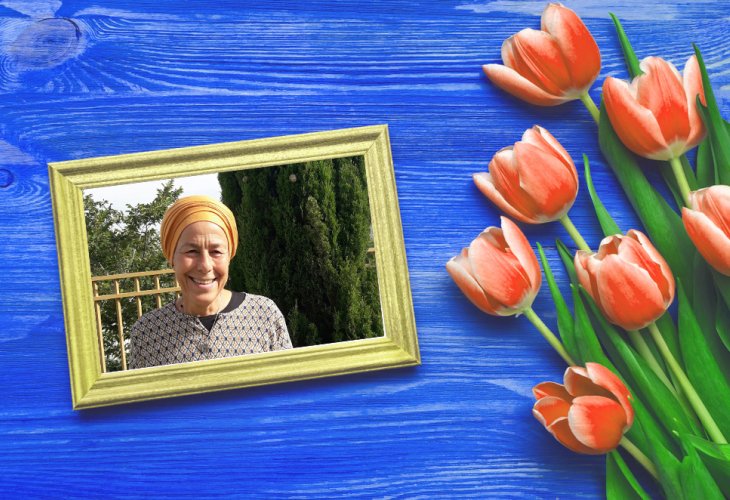 Rachel Sela
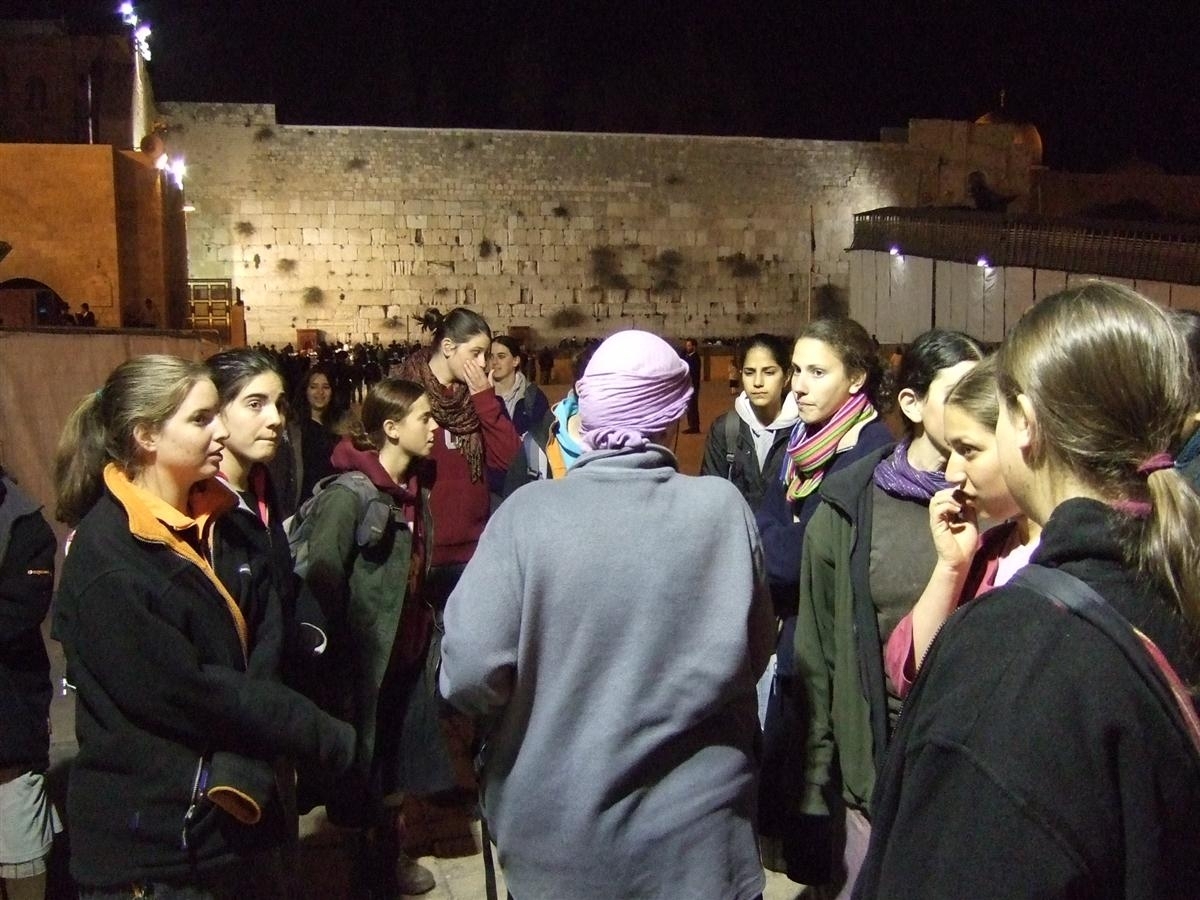
If you happen to meet Rachel Sela one day in Jerusalem’s Jewish Quarter, surrounded by a group of excited teenage girls and leading them toward the Western Wall, don’t be surprised. It is true that she lives outside Jerusalem. It is also true that she is no longer young and does not have the same energy she once did. But none of that stops her from organizing trip after trip through the Jewish and Muslim Quarters, all with one goal: to draw closer to the subject of the Beit Hamikdash, to learn about it, and above all, to experience it as directly as possible.
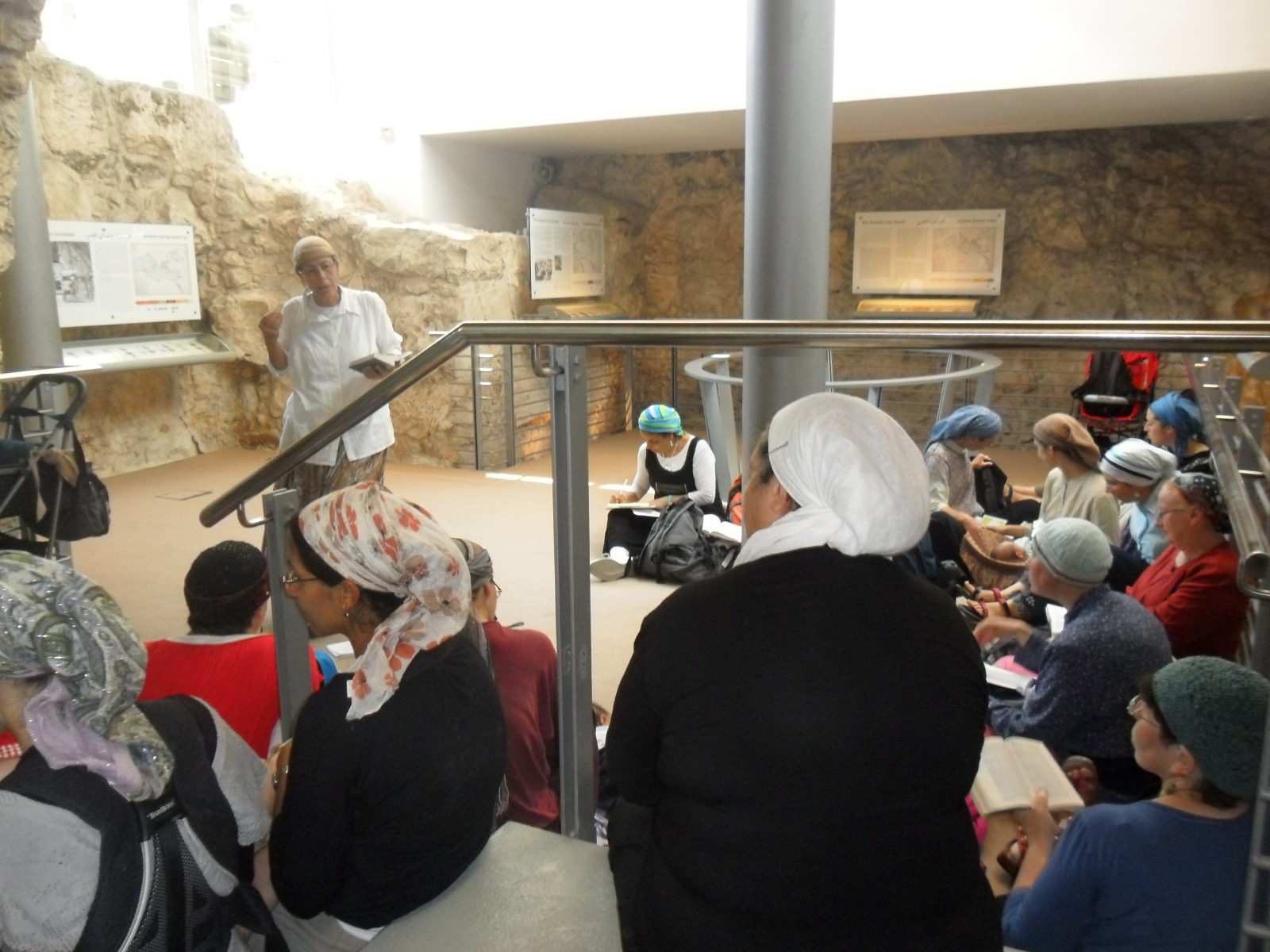
Several times a year, she takes groups of girls and women on what she calls “Temple Days.” Together they visit different personalities and sites in Jerusalem connected to the Beit Hamikdash. At each stop, they sit and study verses from Tanach and prepared source sheets, hold discussions, sing, and ultimately make their way together to pray at the Western Wall.
But perhaps the most surprising part of Rachel’s story is that until the end of high school, she herself had barely even encountered the concept of the Beit Hamikdash. More than that, she had no belief in Judaism at all. Only Divine Providence, she says, guided her along the remarkable path that brought her to where she is today.
“I Came to Fight the Spread of Judaism”
“I was born into a very nonreligious family,” Rachel begins. “As a teenager, I was anti-religious in the most extreme sense of the word. I lived on a kibbutz in the Beit She’an Valley and received a deeply socialist education. There was hardly a Tanach class in which our teachers did not make it clear to us that these were primitive stories that were supposed to disappear from the world. It is no wonder that I grew up fighting against religious people, even though, as a kibbutz girl, I had never actually had a conversation with a religious person. I lived in such a closed environment that I did not even really know what religious Jews looked like.”
One day, Rachel left the kibbutz to visit relatives in Beersheba. On the bus, she met a young woman she did not know. For some reason, they began talking, and the woman told Rachel that she was traveling to a Judaism class in Jerusalem to hear a rabbi speak.
“I immediately changed my plans,” Rachel recalls. “I told her I was coming with her. I abandoned my plan to visit my relatives and traveled with her to the class, with the explicit intention of fighting the spread of Judaism. I was certain that I was going to ‘destroy’ every word the rabbi said. And that is exactly what I did. For every sentence he said, I had something more ‘intelligent’ and ‘enlightened’ to say.”
“The next month, I came back again to attack and argue, and I did the same at the third meeting. But at some point, I suddenly noticed that in addition to attacking, I had also started listening.”
Rachel says she remains grateful to this day to the rabbi who brought her closer and never threw her out of the classes. “I know that even the first time I came, some of the women asked him to remove me because I did not belong there. But he said, ‘Leave her alone. Everyone has their own pace and their own time.’ And he was right. Somewhere between one attack and the next, I began hearing things I had not intended to hear. Suddenly I noticed that the ideas were actually interesting. Not only interesting, but deep and meaningful.”
From Practice to Faith
At the next stage, Rachel began observing some mitzvot. “I did not do it out of faith at all,” she emphasizes. “I saw it almost as a form of self-discipline. I felt there was something very right about not simply pouncing on food, but first washing my hands and making a blessing. I also felt that Birkat Hamazon was a valuable habit, not getting up from the table immediately, but first stopping to give thanks.”
“I believed that by training myself to behave in these ways, I was also contributing to making society more refined, more disciplined, and more values-oriented. But apparently, as our Sages teach, from doing something not entirely for its own sake, one can eventually come to do it for its own sake. In the end, I found myself drawing closer to Judaism and to God. And yes, eventually I also came to believe.”
Learning to Long for Redemption
Rachel has now spent 50 years teaching Jewish studies, particularly Tanach. She has taught in colleges and high schools and gives classes in different communities. From the beginning, she never limited her teaching to the classroom. She frequently combined study with tours and field trips. Especially during the years when she served as a Tanach coordinator, she made a point of taking her students out into the places they were studying about so that they could connect more deeply with the material and experience it firsthand.
As the years passed, however, Rachel began to feel that there was one subject that was not being taught enough and was almost never explored through focused educational tours: the Beit Hamikdash.
“I felt that it could not be right that we were studying so many different subjects, while the topic that is supposed to be one of the most central in our lives, and which we mention constantly in our prayers, was barely receiving any attention at all,” she explains. “We were not learning about it. We did not know much about it. In many ways, people felt alienated from it or even uncomfortable with the subject.”
At the time, Rachel was teaching at a high school in Tiberias. Before summer vacation, she hung a small note on the bulletin board announcing that she was organizing a trip to Jerusalem focused on the Beit Hamikdash.
“To tell you the truth, I was sure no one would come,” she says. “There were obviously much more exciting things girls could do during vacation. To my surprise, the minibus filled up.”
The group spent a full day touring Jerusalem, particularly the Jewish Quarter, visiting several sites connected to the Beit Hamikdash. “The excitement was tremendous, and it encouraged me to continue.”
The following year, Rachel approached the school principal and asked to organize a full “Temple Day” during school hours. “This time we filled a large bus. Again we traveled to a number of sites and places connected to the Beit Hamikdash. We met interesting people, learned, and sang. From there, the idea kept growing. Every year more and more girls joined, and they came back not only full of knowledge, but above all with excitement, with a personal connection to the Beit Hamikdash, and with a deeper longing for Redemption.”
When One Day Became Two
Eventually, the Temple Day became an annual event on the fast of the Tenth of Tevet. “Every year I was moved all over again. The girls would not give it up. They came even when there was pouring rain. They simply refused to miss Temple Day.”
After several years, the one-day program expanded into two full days. “The girls would come to Jerusalem for two packed days of tours, discussions, and lectures about the Beit Hamikdash. At night, they slept with relatives, which meant that the entire budget we had could be invested in the educational content. The Temple Days became one of the highlights. The girls came home deeply moved.”
Some students connected so strongly that they continued attending the two-day programs for years after graduating. “Today, many of them are grown women and mothers, and I know that they continue to feel connected to the Beit Hamikdash.”
Why do so many girls feel such a powerful connection to the subject?
“I have only one explanation. It is exactly like the verse in Song of Songs: ‘I am asleep, but my heart is awake.’ Even if we sometimes feel immersed in the distractions of this world, the truth is that our heart is awake. It wants to engage with something so essential to the Jewish people.”
“And this is not only happening in Israel. In recent years, many communities abroad have also wanted to draw closer to the subject. All of us feel that after 2,000 years of exile, the time has truly come for complete Redemption. And yes, we are willing to make an effort for it.”
Still Moved Every Time
The girls who joined Rachel on that first Temple Day are now grandmothers themselves. Rachel, too, is no longer young, but she continues organizing these programs. Today, she does not work only with high schools. She also organizes Temple Days through different colleges and for private groups looking for meaningful family experiences.
“Sometimes families contact me and ask for a bar mitzvah journey or a bat mitzvah program, led by the young celebrant. Of course, I suggest a Temple Day. The children first learn the material with me, and then we take a tour through the relevant sites. Afterward, they themselves help guide their families during the journey through the Quarter and in the area near the Beit Hamikdash.”
Rachel says that her own emotional connection to Jerusalem has never faded. “Every time I enter Jerusalem, even if I am only coming to buy shoes, I stop at the entrance to the city and recite the Psalm: ‘A Song of Ascents. I rejoiced when they said to me, Let us go to the House of Hashem.’ And I feel tremendous excitement in my heart.”
“I feel that I am truly privileged to fulfill a commandment that applies to all of us: to anticipate salvation and Redemption and to help advance the rebuilding of the Beit Hamikdash. Because it is clearly not enough merely to speak about it or mechanically recite the blessing ‘Who rebuilds Jerusalem.’ Someone who truly longs for it also tries to do something. They learn about the Beit Hamikdash. They experience it. They connect with it in every way they can. And they allow themselves to long for it.”
“Today, it may sometimes seem that we are strong in our land. At times, we may feel that life is good and that we have everything we need. But we cannot be satisfied with that feeling, because nothing will truly be complete without the Beit Hamikdash and Mashiach ben David.”

