

Magazine
From a Secular Kibbutz to a Life of Faith: Efrat Nava’s Remarkable Journey
Raised in the communal children’s houses of a secular Israeli kibbutz, Efrat Nava Kuperman spent years searching for spiritual meaning. From her first encounter with Shabbat to her return to Judaism, she shares the powerful journey that transformed her life and led her to inspire other women through faith and music.
- Arik Navon
- | Updated
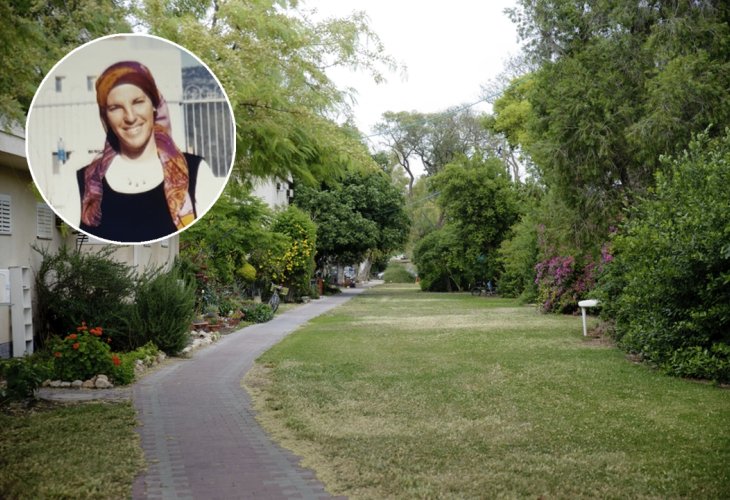 (Inset: Efrat Navah Kopperman)
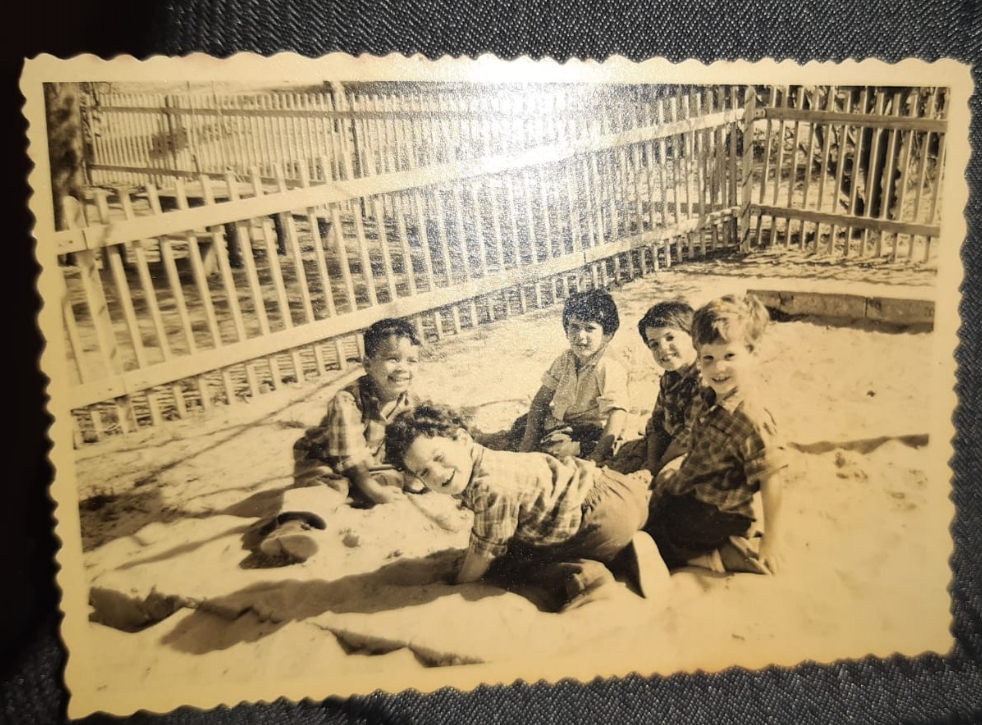
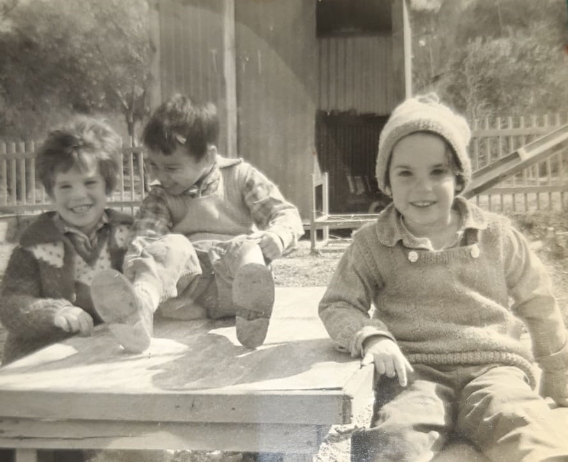
“We would visit our parents’ room once a day,” Efrat Nava Kuperman tells me. When I ask what she means by “the parents’ room,” she explains: “Today, children normally grow up in their parents’ home. But in the kibbutzim of the past, a child’s home and warm corner was the children’s house. All the children grew up together, with each age group living in its own children’s house and caregivers assigned to each group. Then there was the room where the parents lived, which we would visit in the afternoon. Everything was reversed. The parents’ home was called a ‘room,’ while the children were raised in a ‘house,’ the children’s house.”
Efrat Nava was born on Kibbutz Gevar’am in the northern Negev and grew up in the communal children’s houses, as was customary on kibbutzim at the time. From an early age, she felt drawn to spirituality. At 18, she completed a year of national service before joining the army, and afterward she continued searching for meaning in life. She married and eventually became religious while still living on the kibbutz. Today, she leads spiritual and musical gatherings for women, drawing on the remarkable journey that brought her back to Judaism.
Do you think the particular kibbutz where you were born made a difference?
“Yes, definitely. Some kibbutzim belonged to Hashomer Hatzair and were traditionally much more strongly opposed to religion. Hashem was kind to me in that at least I didn’t grow up on a Hashomer Hatzair kibbutz. In the legendary clothing storeroom where kibbutz members once got their clothes, and where I myself worked before becoming religious, there is now a modest and beautiful synagogue. It was established several years ago, and a beautiful Torah scroll was brought there at the instruction of Rabbi Chaim Kanievsky. Who would ever have believed it? My husband always jokes that Hashem wasn’t ‘watching television’ when He decided that I should grow up specifically on a kibbutz.”
“The atmosphere on the kibbutz was Zionist and pioneering. I remember a beautiful childhood surrounded by greenery. As a little girl, I especially loved the Friday night meal that all the kibbutz members ate together in the communal dining room, as well as the holidays, which were celebrated according to kibbutz tradition.
“Every Jewish holiday was celebrated with great festivity, but it was a mixture of Jewish tradition and secular culture. On Pesach, for example, we held a Seder using a Haggadah specially created for kibbutzim, with an emphasis on spring and blossoming. Only when I became religious was I astonished to discover that this wasn’t the original Haggadah. Throughout Pesach, chametz and matzah were placed side by side in the dining room, and everyone chose whatever they wanted.
“Sukkot represented the harvest festival, with a strong emphasis on agriculture. Sukkot were built for the children and we ate in them, but there was no connection at all between Sukkot, the Exodus from Egypt, and the Clouds of Glory. Shavuot was an especially colorful celebration held in a field of wheat, primarily representing the festival of the first fruits, again centered around agriculture. There would be a procession representing all the branches of the kibbutz economy: the dairy farm, chicken coops, field crops, and more. Every child carried a decorated basket of first fruits and wore a flower wreath, while the kibbutz tractors displayed the finest produce of that year. Near the stage, which was constructed from bales of hay, wheat was harvested with an old-fashioned sickle, apparently reflecting the ceremony described in the Mishnah concerning the harvesting of the Omer after the first day of Pesach.”
Were your parents completely secular?
“My mother was born in Israel into a secular Zionist family, and she was very respectful of me when I became religious. My father grew up in a religious family in Germany. He was fortunate to immigrate to Israel two years before the Holocaust. He continued observing Judaism and putting on tefillin, but sadly, after the Holocaust, when he learned what had happened and that his family had perished, he abandoned it all.
“Still, he always retained a warm place in his heart for religion and rabbis. Whenever we encountered Jewish ceremonies, such as weddings or funerals, he was actually the one who provided us with information and a connection to Jewish tradition. After he passed away, I found the siddur he had received in Germany, and to this day I treasure it with great reverence. When I became religious, I felt that I was completing a circle.”
But if I understand correctly, you didn’t have very much contact with your parents?
“I don’t know exactly how to define it. We would see our parents only from four in the afternoon until eight in the evening. Afterward, our parents would put us to bed in the children’s house. There was a separation from family life and a rejection of the value of tradition and family. The trauma we carry from those experiences can still be felt today. It isn’t simple to separate children from their parents and have them sleep alone all night.
“Yes, there were guards watching over the children, but they weren’t stationed inside each children’s house. They made rounds among all the children’s houses on the kibbutz. What happened if a baby began crying just after they had left? What if a five-year-old was afraid of the dark? It was a genuine trauma that many kibbutz children carried with them. Our parents weren’t there to protect or comfort us. Personally, I remember lying awake for hours at night. There was no one to come say a comforting word or calm me down, and I was very frightened. Everything depended on the woman making rounds among numerous children’s houses. Naturally, the children would often stay awake and have their own ‘celebrations’ late into the night when no adult was around.”
What happened if a baby cried in the middle of the night?
“Usually the woman on duty, each week another mother from the kibbutz, would care for the baby rather than disturb the child’s mother, who was sleeping and gathering strength for another hard day of work. Work was considered a supreme value, and that was how we were raised. Looking back, however, I have tremendous appreciation for my parents and for the important interpersonal values they instilled in me: truth, honesty, and respect. Those values became a very significant part of who I am.”
“There Was an Emptiness Inside Me That I Didn’t Know How to Fill”
Efrat Nava tries to convey the atmosphere that prevailed on kibbutzim at the time. “We had this sense of belonging to a new, native-born Israeli world that had nothing to do with the supposedly miserable and ‘primitive’ Diaspora Jew of the past. Our parents were the pioneers of this new era. Kibbutz members were considered the salt of the earth, the elite. Many of Israel’s pilots and commandos came from kibbutzim and moshavim. We had a kind of unit pride, a feeling that we were several levels above everyone else and that we were partners in the great vision of building and settling the Land of Israel.
“At the time, there wasn’t much room for the individual or for personal aspirations. There was a feeling that you had to be the best, and that the collective came before everything. Being different simply wasn’t an option.”
When did you begin to feel that you wanted to become closer to religion?
“I was always drawn to spirituality. There was an empty space inside me that I didn’t know how to fill. For example, when I was 16, I decided that I wanted to fast on Yom Kippur.”
But how did you even know what Yom Kippur was?
“That’s a very good question. As children, we were taught about the Jewish holidays and their customs, but not as something that actually belonged to our lives. There was a group of older people who remembered the traditions from their parents’ homes and fasted every year. There were also kibbutz members who had come from cities and felt less alienated from Jewish customs. I heard about fasting from them and decided to do it.
“I signed my name on the ‘traditional’ list that hung on the bulletin board in the dining room. That meant that anyone fasting would receive a warm pre-fast meal and another meal after the fast. I didn’t ask my parents, but I don’t think they minded that I was fasting.
“I felt an emptiness inside me,” Efrat emphasizes. “I didn’t know how to fill it. I would sit and write songs, searching for every fragment of spirituality and meaning I could find.”
Efrat hesitates before revealing just how far her spiritual search took her, but then decides to continue.
“At the time, there was a kibbutz program that brought groups of young people from around the world to live and work with us. Some were Jewish, but most were not. One of the groups that came was Christian and missionary. Because of my intense inner spiritual search, I was automatically drawn to them. I was fascinated by everything about them. I spent a lot of time with them and, unfortunately, even sang Christian songs with them. It was the only thing I had at the time to satisfy my spiritual thirst.”
Then Efrat suddenly remembers something.
“No, actually, that wasn’t the only spiritual thing I had,” she says excitedly. “There was a book in the kibbutz library about the Jewish holidays, and I was deeply drawn to it. Through that book, I learned a little more about the Jewish festivals and began to realize that they contained incredible depth.”
How did you progress from there?
“I don’t know if I would call it ‘progress,’” Efrat replies. She explains that in order to move forward, she first had to go a little further down another path.
“At 18, I had to decide whether to join the army immediately or first complete a year of service, as was customary on kibbutzim in those days. Until then, the service year could only be done through the kibbutz youth movement, HaNoar HaOved VeHaLomed. But that exact year, an option opened to do the service year through the Reform movement as well. In my innocence, I thought I had finally found what I was looking for and would receive the spirituality I had been searching for.
“I moved to Haifa and lived in an apartment for youth counselors. There, for the first time in my life, I went to a synagogue.”
But Efrat quickly qualifies that statement.
“It wasn’t the kind of synagogue you’re thinking of. It was a Reform synagogue, where people drove to services on Shabbat. For me, though, it was incredible. There was a siddur, Shabbat songs, prayers, a whole spiritual world. I was particularly intrigued that Reform women also wore a tallit and were called to the Torah.
“At the same time, I occasionally wandered into a monastery in Haifa. That gives you some idea of just how intense my spiritual search and thirst were. Those places opened a window into spirituality for me. Haifa became my second exposure to Judaism.”
You call that your second exposure, but you haven’t told me about your first exposure to Judaism.
“My first exposure came around my bat mitzvah. On the kibbutz, there was something called the ‘bar mitzvah year,’ for all the boys and girls entering seventh grade. It was really about reaching maturity rather than becoming obligated in mitzvot.
“As part of the year, we were given various assignments and challenges designed to demonstrate maturity. One involved wilderness skills: two children would be dropped off somewhere in nature and would have to manage for an entire day, setting up a tent, cooking, and taking care of themselves. Another challenge might involve preparing dinner for the entire kibbutz.
“As part of these activities, we were sent to spend Shabbat at Kibbutz Sha’alvim, a religious kibbutz. We stayed with a religious family, and for the first time in my life, I experienced a real Shabbat. At the end of the visit, they gave me a small siddur. I guarded it carefully because it was the only Jewish book I owned. After I became religious, I prayed from that siddur on many mornings, with an enthusiasm that I still miss today.”
Let’s return to Haifa, your service year, and the Reform synagogue. What happened afterward?
“After my service year, I joined the army. There, my spiritual feelings and inner search seemed to disappear. I became deeply immersed in the material world.
“After the army, I studied at Seminar HaKibbutzim in Tel Aviv. But there my spiritual search began burning inside me again. I was attracted to various non-Jewish spiritual courses that were popular at the time. They were considered very fashionable, and many famous and prominent people attended them. At the same time, I began studying alternative medicine, shiatsu, and reflexology. But I still hadn’t touched the true point of spirituality.”
So when did you finally feel that you had found it?
“After finishing my studies, I returned to the kibbutz and built a home with a man who was also very spiritual. Through him, I was introduced to various newsletters that were sent to us. Among them was one Jewish publication, Lehava, by Rabbi Erez Moshe Doron.
“I simply wrote to Rabbi Erez and told him everything my soul was feeling, all my questions and doubts, and above all, my enormous thirst to connect with something real. That was how I began my journey back to Judaism.
“Rabbi Erez invited me to his workshop in Tel Aviv, where I met other women who were also becoming closer to Judaism. Getting there every week was a major undertaking. I would travel to Tel Aviv at night for the workshop, sleep there, return early in the morning, and then work on the kibbutz while raising two small children. But it was my lifeline.”
How did your religious transformation affect the way you dressed?
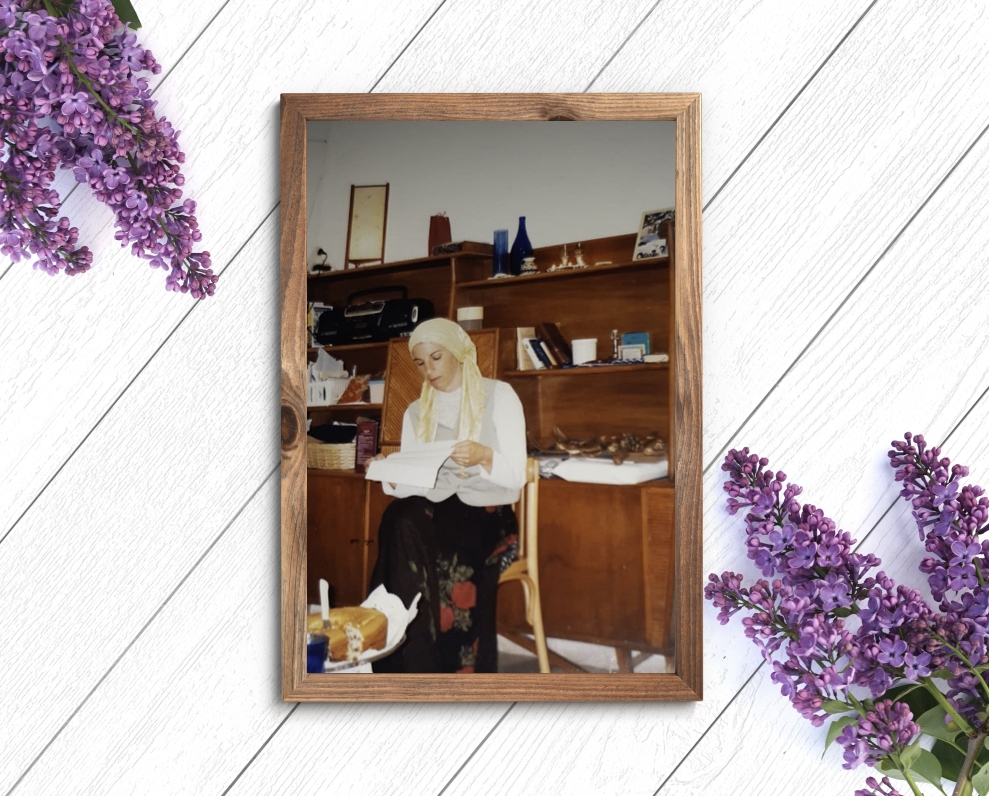
“Gradually, I began wearing skirts, which I found in the kibbutz’s secondhand store. They had old-fashioned skirts that nobody else wore except me. My first head covering was a green hat. One bright day, with tremendous determination and courage, I bought it and put it on.
“That evening, I went to visit my parents wearing the hat over my hair. I was very nervous about what they would say because it was already a very visible sign that I had become religious,” Efrat says, pausing for breath.
“The day after I first covered my hair, my father suddenly died of a heart attack. It was as though he had waited to see me return to Judaism. And so, wearing my very first head covering, I entered the days of shiva. Many people came to comfort us and looked at me with surprise, but I was determined that I would keep covering my hair from then on.”
Efrat continues: “I connected deeply with the teachings of Rabbi Nachman of Breslov and gathered a group of men and women who were searching for spirituality and Judaism. On the porch of our home on the kibbutz, my husband built an amazing treehouse. We would climb up there, drink tea, and study together from the material Rabbi Erez sent me.
“To this day, there is a truly righteous Jew who insists on telling me that he returned to Judaism because of those classes. Over time, of course, we made our kitchen kosher, began observing Shabbat and the laws of family purity, and did everything we could with tremendous dedication.”
How did the people around you react to the transformation?
“I was already considered something of an odd bird, but generally the people around me didn’t interfere with my observance of mitzvot or with the fact that I was dressing more and more modestly. What bothered them greatly was that I stopped shaking hands with men.
“Overall, they accepted it fairly well. And if anyone said something behind my back, by then I was already far too deeply committed for it to bother me. I simply ran after Hashem almost blindly.
“I left the kibbutz after two years of taking my first steps toward a religious life. I spent a year at Kibbutz Chafetz Chaim, but I didn’t feel that I belonged there. I then moved to Ramat Beit Shemesh, where I truly became fully religious.”
Singing From the Heart
Today, Efrat Nava lives in Modi’in Illit and remains determined never to lose the soul and inner spirituality she discovered in Judaism.
“When I became religious, I returned to playing guitar, writing, and composing songs. Today I lead workshops called Shirat HaLev, ‘Song of the Heart,’ where I use my guitar to touch the heartstrings of women from all different backgrounds.
“I combine the ‘kibbutznik’ inside me with the sweetness of Judaism, helping every woman connect with the Holy One, blessed be He, in the most personal and inner way possible. I don’t know if there is anything more important than that.”

