

Magazine
Tamir Goodman: The Basketball Star Who Chose Shabbat Over His Dream
From becoming a top-ranked American basketball player to giving up a major scholarship rather than play on Shabbat, Tamir Goodman shares how faith, perseverance, and Kiddush Hashem shaped his remarkable career and life
- Avner Shaki
- | Updated
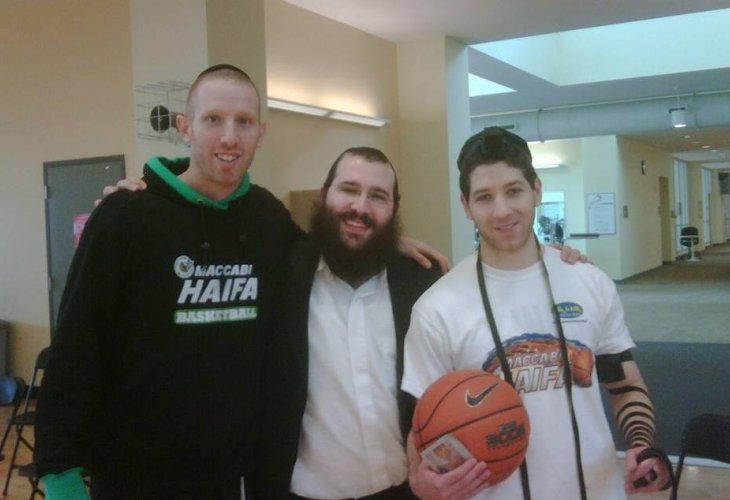
“I started playing basketball at a very young age,” recalls Tamir Goodman, who would later become the first observant Jewish player to compete at the highest levels of American basketball and break numerous barriers along the way. “But I will never forget one particular moment. I was nine years old, my team had reached the league championship, and I had the ball on our final possession. In the last seconds of the game, I scored the winning basket. Right afterward, I made a gesture with my hands that basically said, ‘Look how amazing I am. I’m the greatest player.’
“After the game, on the drive home in my father’s car, we had a conversation that I still remember clearly. He told me how happy he was with the way I had played and praised me again and again. But he also wanted to make a point about that gesture of pride. After all the compliments, my father told me that a Jew does not boast like that. It was one of the most important lessons I ever received. He told me that everything we have comes from Hashem and that we must remain humble, both on the court and off it.”
Goodman is married to Judy and is the father of five. Today, he is involved in several basketball-related ventures, but he says the lesson his father taught him has remained with him throughout his life. The challenges to his values, however, began early.
“I grew up in Baltimore, in the United States, in a religious family. As I said, I began playing basketball when I was very young, and by 17, I had been ranked among the top 25 players in the United States.
“Every year, there was also a very famous game organized by Michael Jordan for the best players graduating from high school. I was the first Jewish player in history to be invited to participate. It was an enormous honor. Thank God, I was also named the game’s Most Valuable Player, and I played wearing a kippah.
“As a result of that and other achievements, I received an offer to play for Maryland, which at the time was one of the best teams in the league. They also offered me a substantial scholarship, but I told them I would join only on the condition that I would not play on Shabbat. At first they agreed, but later they changed their minds, so I left and returned the scholarship.
“Maryland went on to win the championship that year, which was an incredible achievement, but Shabbat was much more important to me. After leaving, I transferred to another team where I could avoid playing on Shabbat and even wear a kippah during games. I finished my studies at another school that also did not play on Shabbat, and I even studied Torah every day with the school rabbi.”
Later, when Goodman attended university, he found support for his religious observance in an unexpected place.
“My roommate was a Muslim named Mohammed, and he actually helped me tremendously in living as a Jew. He would help me with all kinds of things. Once, for example, he even brought my food to the sukkah because there was no eruv.
“In fact, many non-Jews I met throughout my career helped me remain faithful to the values I believed in. Many times, when my kippah fell off during a game, my non-Jewish teammates would run to pick it up and bring it back to me. It was a simple act of help, but it also had tremendous symbolic meaning.”
Missing the Most Important Game of His Career
More than once, Goodman gave up opportunities he had dreamed about since childhood because of his commitment to Torah and mitzvot. Yet he says he does not regret those decisions for a moment. On the contrary, he believes they only strengthened him.
“I never felt that Torah was holding me back,” he says. “Actually, it was the opposite. For example, if I had a great game, an ordinary player might tell himself, ‘I don’t need to go to practice tomorrow. I’m already a great player.’ But I couldn’t say that because I wasn’t playing only for myself. I was playing for the Jewish people.
“I was playing to make a Kiddush Hashem, to sanctify God’s Name, so Torah always pushed me forward. On the other hand, if I was going through a difficult period professionally, I couldn’t allow myself to become sad and discouraged. I had to strengthen myself and try to improve because I knew that I represented a people and that I was doing what I was doing for the Jewish people.
“Many times, people also respected me specifically because I remained committed to Torah and mitzvot. For example, when my teams played on Shabbat without me, there were several occasions when the players came to my hotel room afterward and told me that they were dedicating the victory to me. Because of Shabbat observance, I even missed what was, at the time, the most important game of my life.”
Goodman says his Jewish identity gave him an even greater sense of purpose while playing college basketball in the United States during the difficult years of the Second Intifada.
“There were constantly negative and inaccurate things being said about Israel. I truly felt that if I played well, behaved properly, and appeared publicly wearing my kippah and tzitzit, I could represent Israel and the Jewish people positively. I could show people something good and perhaps even change their opinions. That, too, was a Kiddush Hashem.”

In what way do you think your career created a Kiddush Hashem?
“The story of returning my scholarship because they would not agree to let me avoid playing on Shabbat made a tremendous impact in the American media. It was a lot of money, and playing there had been a huge dream of mine. There were also times when game schedules were changed because of me. All of that generated a great deal of attention, and that was literally a Kiddush Hashem.
“I can’t say that I’m a tzaddik, but I genuinely tried to play wearing my kippah, not to play on Shabbat, and to make sure I ate only kosher food. When people see someone behaving properly, living a full life and pursuing his dreams while still standing firmly by the principles of Torah and mitzvot, it makes an impression. It creates a Kiddush Hashem.
“I also wanted to show that Judaism doesn’t tell you to give up your dreams and aspirations. It teaches you how to pursue them in the right way.”
Bringing Holiness Onto the Basketball Court
Throughout the conversation, Goodman’s deep connection to Hashem, Torah, and mitzvot repeatedly emerges. He also sees physical activity itself as something that can be elevated and used positively.
“I think Hashem is happy when people play and participate in sports. Ultimately, our role is to make this world a dwelling place for Hashem, to bring Him into every area of life, obviously in a positive way.
“The real greatness is taking physical things and elevating them to holiness. Beyond that, when a person feels good physically, feels strong and fit, he will naturally be more patient and positive. Sports do things for our bodies that help us feel better, and that can enable us to help other people more as well.”
Helping others has become a central part of Goodman’s life after professional basketball.
“After several successful years in the United States, David Blatt brought me to Israel in 2002, and I played here until an injury cut things short relatively quickly.
“After about a year in Israel, I began having knee problems. Still, I feel that I succeeded. I don’t live with a sense of failure because my career ended too soon. I kept moving forward and didn’t give up, even when playing through the injury became difficult. A successful person is someone who gives everything he can. To me, that is the definition of success.”
Finding Purpose After Injury
Goodman acknowledges that the injury came at the height of his career and was deeply painful.
“It happened at my peak, and it was very sad because I loved the game so much. I still have pain every day, all the time. But because of the injury, I learned so much about myself. I became a better coach, and all kinds of positive things emerged from me.
“Today, partly because of what I went through, I use basketball to help children with special needs. It is essentially occupational therapy through the game.”
Goodman has also developed a basketball training device called Zone 190, designed to help players practice receiving the ball from different angles and improve their shooting. He says the device has been sold to numerous organizations and individuals, including in the NBA.
“I feel that it is a tremendous privilege. Even today, I meet with very senior people while wearing my kippah and tzitzit. In addition, once a year I organize a major basketball camp and bring in 40 players from abroad.”
“It Was a Dream I Never Thought Could Happen”
Despite the many extraordinary experiences of his basketball career, Goodman says two moments stand above the rest.
“The most exciting moment I ever had in basketball was when they told me I had been accepted to one of the best teams in the league, that they would give me the scholarship, and that I wouldn’t have to play on Shabbat.
“Before that, something like this had never happened. An observant Jewish player simply couldn’t reach that level while maintaining those requirements. So when they told me it was going to happen, I was incredibly excited.
“For one year, it worked. Then the coach was fired, and the new coach would not agree to let me sit out games on Shabbat. So I left. It was extremely disappointing.”
But looking back, Goodman sees the disappointment very differently.
“If that coach hadn’t arrived, I wouldn’t have left. And if I hadn’t left, I might never have come to Israel and met my wife.”
That leads him to what he calls, by far, the most meaningful moment of his life.
“My Wife Is the Source of Blessing in My Life”
“The most exciting moment of my life was my wedding, and of course the relationship that grew from it. Every single day, I feel that my wife is the source of blessing in my life.
“There are so many people in the world, and it is incredible to me how Hashem brought the two of us together. It is truly an open miracle.
“I feel that we are two parts that came together to become one, and that Hashem wanted it to be exactly this way. We found ourselves as partners completely connected to one another. Every day, I still can’t believe that we are there for each other one hundred percent.
“It looks and feels as though Hashem created her for me and created me for her.”

