

Magazine
The Voice of Selichot: Rabbi Moshe Habusha on Prayer, Music, and the High Holidays
Renowned cantor Rabbi Moshe Habusha reflects on his decades alongside Rabbi Ovadia Yosef, the spiritual power of Selichot and Yom Kippur, and why he would choose the holiness of Jerusalem’s High Holidays over even the most prestigious musical stage
- Miriam Solomon
- | Updated
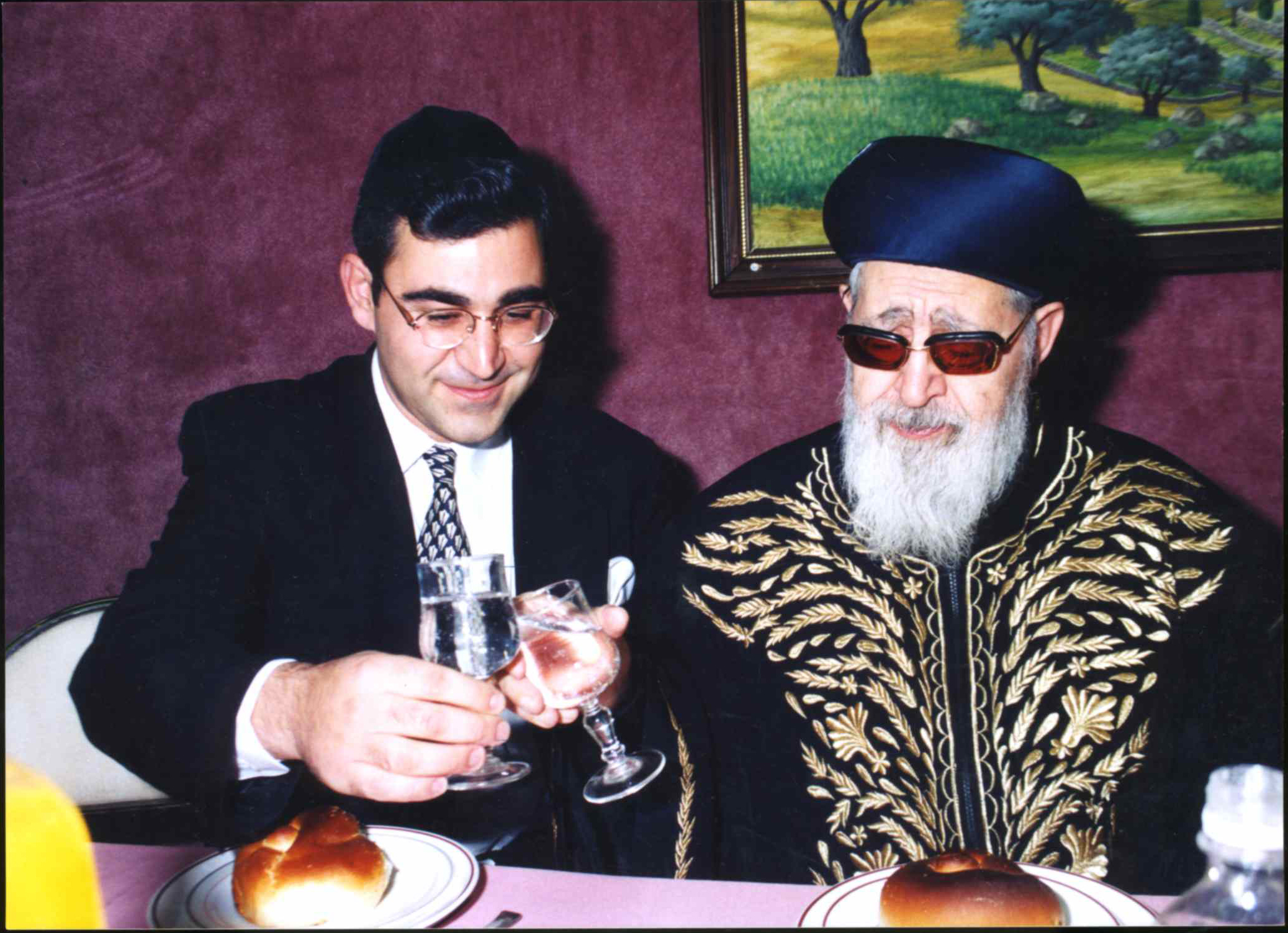
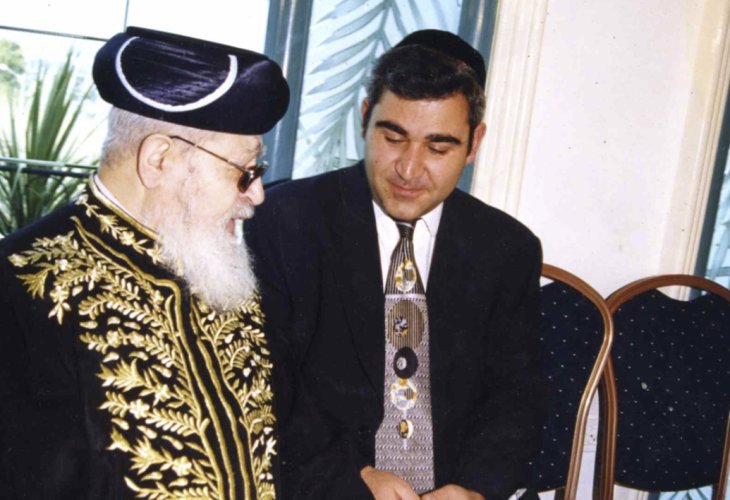 Cantor Moshe Habusha with Rabbi Ovadia Yosef
From the beginning of the month of Elul, the haunting melodies of Selichot begin to fill the air, touching the heart: “Master of forgiveness, Examiner of hearts... We have sinned before You; have mercy upon us.” At the head of the congregation pleading for forgiveness stand the chazzanim, the cantors whose voices give expression to the prayers and stir hearts yearning for atonement.
Rabbi Moshe Habusha, one of the most renowned cantors and paytanim (liturgical poets and singers), shares his memories and reflections on the month of mercy and forgiveness from the unique perspective of a lifelong cantor.
Rabbi Moshe, when did you first become involved in cantorial singing?
“I began singing piyutim when I was just eleven, although I could only serve formally as a cantor after my bar mitzvah. A cantor who lived near my parents, Rabbi Eliyahu Barazani, heard me one night during the traditional singing of bakashot and was very impressed. He was the first person to recognize my cantorial abilities.
“‘Listen, young man,’ he told me, ‘you have a beautiful voice. I want you to join me for the prayers.’
“I was very surprised and immediately agreed. He had me stand beside him during the prayers at the Caucasian synagogue in Jerusalem’s Beit Yisrael neighborhood and allowed me to lead from Pesukei Dezimra through Nishmat. On Shabbat, I also participated in a boys’ choir that sang together and accompanied him during the prayers. After my bar mitzvah, I was frequently invited to lead the entire service.”
Does cantorial talent run in your family?
“Years later, I researched my family history and discovered that my maternal grandfather had been a famous cantor in Baghdad. My family knew about it, but they never made a big issue of cantorial singing.
“In fact, my mother was upset that I would wake up so early to attend the bakashot. Every Friday night, the synagogue attendant would come and knock on my window at two in the morning, and I would jump out of bed and run eagerly to the synagogue. I absolutely loved the sacred piyutim.
“My mother, however, was concerned that getting up so early would harm me and interfere with my studies at Porat Yosef Yeshiva. I was only twelve years old, the youngest student in the yeshiva. Once she went to the synagogue attendant’s spice shop in the Bukharan Market and demanded that he stop calling me for the bakashot. But he wasn’t intimidated. He told her, ‘Mrs. Habusha, I know who I’m investing in...’
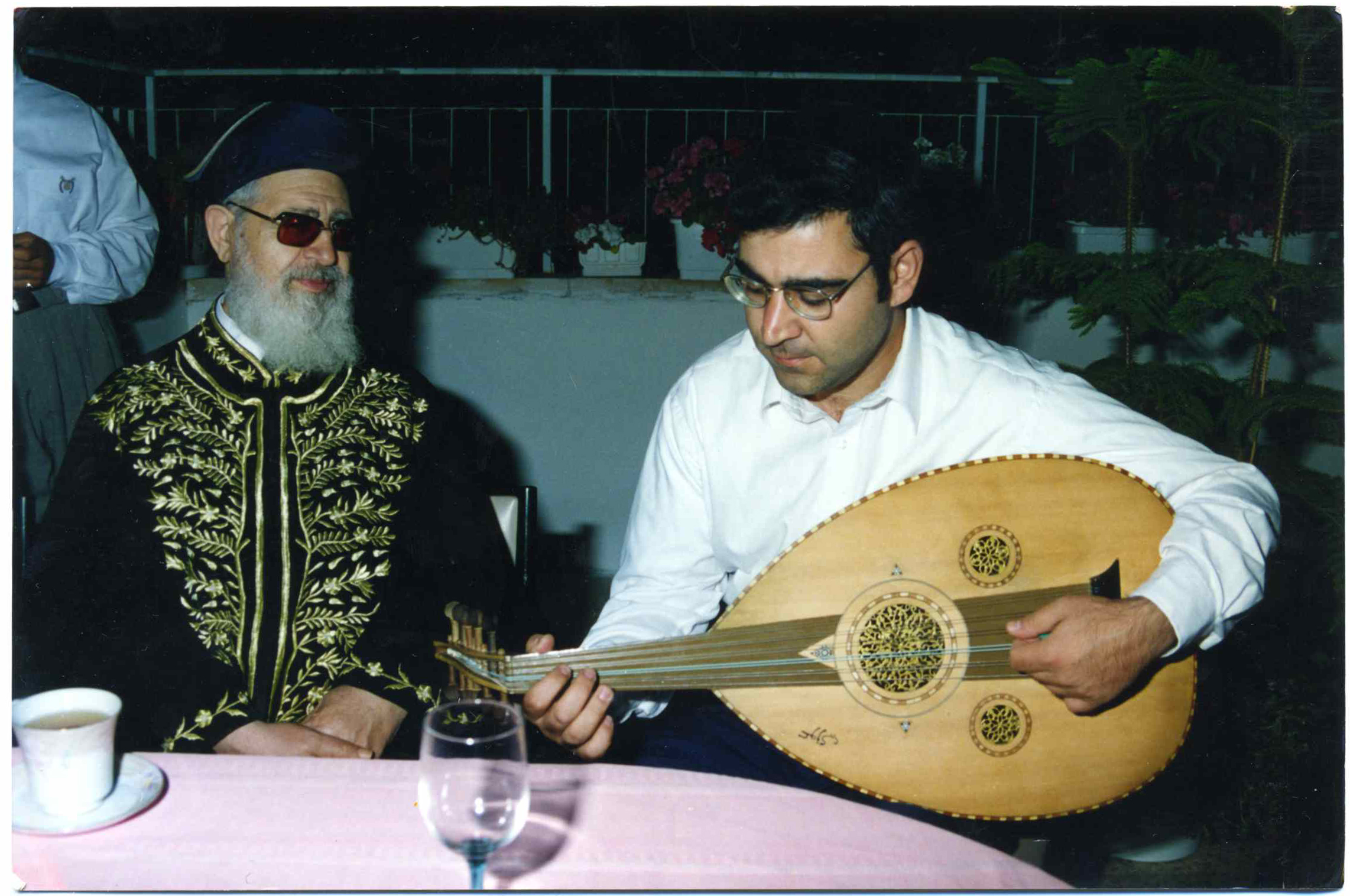
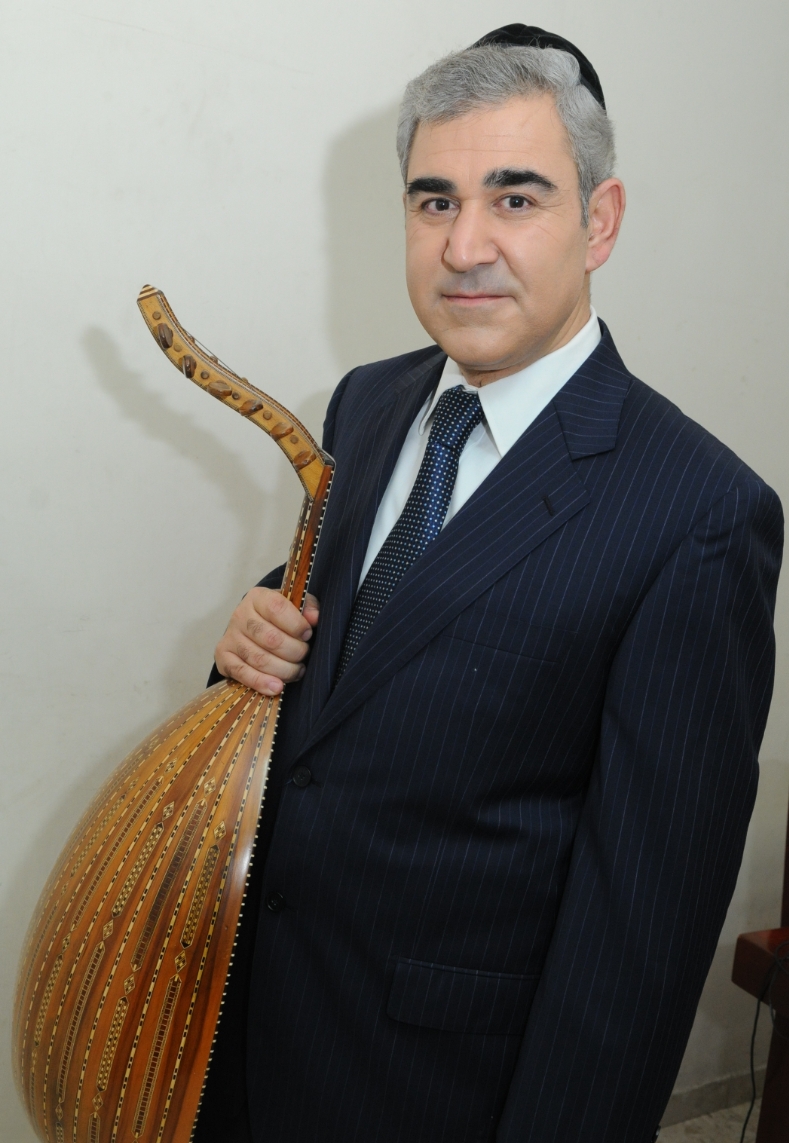
“When I was sixteen, I began learning a little about musical instruments. I studied with an oud player and immediately connected with this unique instrument. Four lessons were enough for me to continue learning and developing on my own. Later, I twice won oud-playing competitions. Today I’ve come full circle, and I serve as a judge in such competitions.”
Thirty-Five Years with Rabbi Ovadia Yosef
Rabbi Moshe Habusha had the privilege of serving as both cantor and musician for Rabbi Ovadia Yosef.
How did that relationship begin?
“When I was around eighteen, Rabbanit Margalit heard that I played the oud and knew that Rabbi Ovadia loved the instrument. It was shortly before the wedding of their son, Rabbi David Yosef, and she asked me to come play at the Sheva Brachot celebration in their home.
“It was an extraordinary and moving occasion. Sitting alongside Rabbi Ovadia Yosef were Rabbi Shlomo Zalman Auerbach, Rabbi Yosef Shalom Elyashiv, Rabbi Yosef Messas, and Rabbi Eliezer Waldenberg, author of Tzitz Eliezer. Five Torah giants were sitting side by side with tremendous mutual respect.
“Thank God, Rabbi Ovadia enjoyed my playing. He told me, ‘From now on, you will be with us at all our celebrations and events.’
“For the next thirty-five years, I attended the celebrations in Rabbi Ovadia’s home, as well as special occasions on Lag BaOmer, Sukkot, and Passover.
“After I had played at several events in his home, Rabbi Ovadia asked me, ‘Moshe, where do you serve as cantor during the High Holidays?’
“I told him that I traveled abroad to lead services in Jewish communities. From the age of sixteen, I had been invited to lead Rosh Hashanah and Yom Kippur services in affluent communities overseas. I served as cantor at Shaare Zion in New York, Har HaLebanon in Brooklyn, and the Jewish community in Panama, and I was paid considerably more than was customary in Israel.
“Rabbi Ovadia looked at me and said, ‘Come pray with me.’
“I immediately changed all my plans and happily remained in Israel. From then on, every Rosh Hashanah I walked from my home in Beit Yisrael all the way to Har Nof. It took an hour and ten minutes each way, but I did it happily for many years, until Rabbi Ovadia’s final year, when he was hospitalized.”
Habusha vividly remembers the final Rosh Hashanah of Rabbi Ovadia Yosef’s life. Every word his revered teacher said remains etched in his heart.
“On the eve of Rosh Hashanah, the rabbi called me from the hospital. He said, ‘Listen, some members of the congregation are coming to my synagogue at home. I cannot abandon them and leave them alone this year. I know how much effort you make for me every year, but please lead the prayers for them this year as well, and give them my regards.’
“Rabbi Ovadia had tremendous gratitude toward those who prayed in his home, and I could see how important this was to him. So that year too, I walked there and led the prayers in his synagogue, even though he wasn’t there. It was difficult to make that long walk knowing that the rabbi would not be with us, but I knew that by doing so, I was fulfilling his wishes.
“On Yom Kippur he prayed with us, but he was suffering terribly. After Yom Kippur, I had the privilege of entering his room and saying goodbye to him personally. I remember his final words to me to this day. He said, ‘Thank you, thank you, thank you for everything you have done for me,’ and he blessed me.
“I never had the privilege of seeing him again. May his merit protect us.”
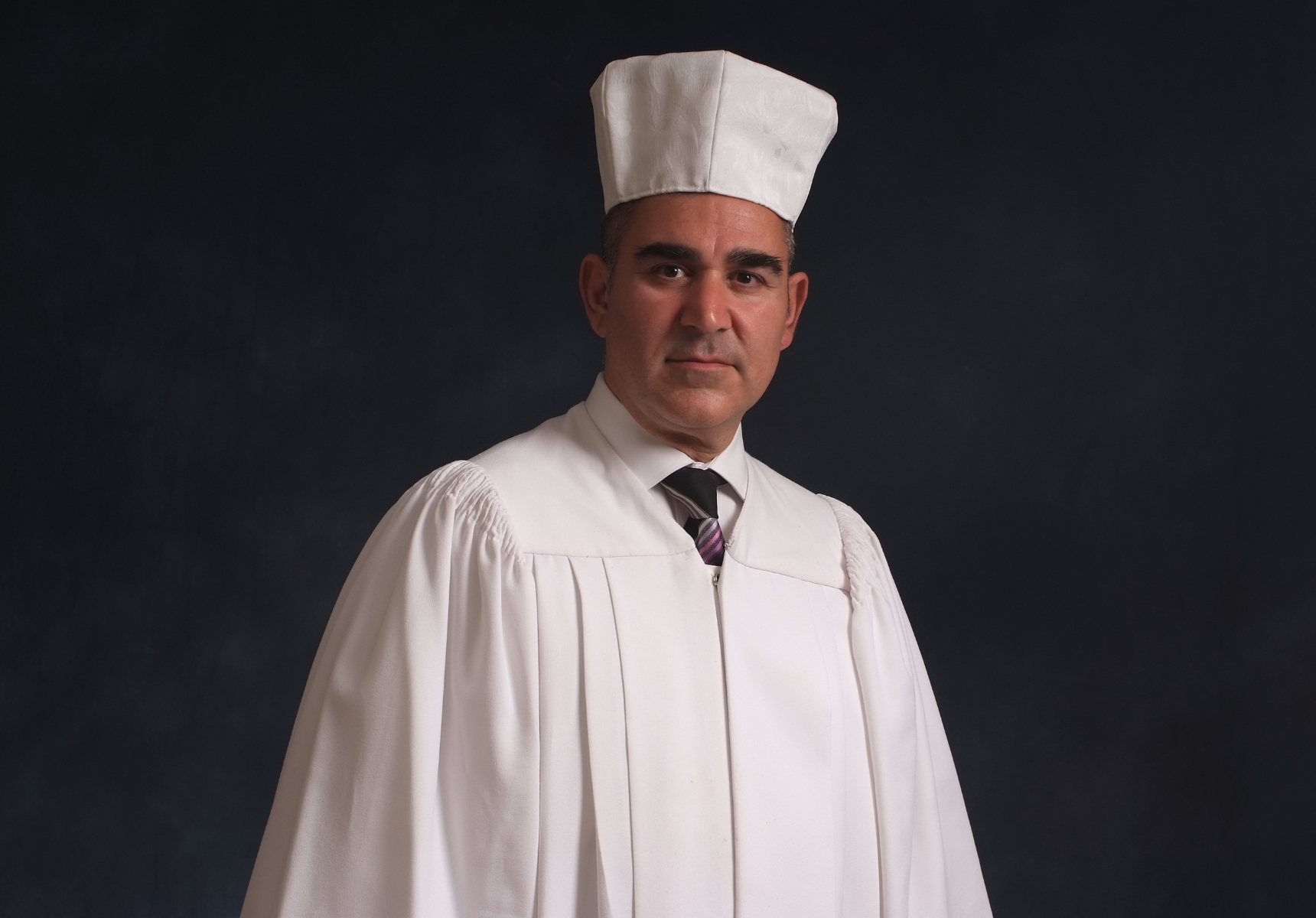
A cantor stands before the congregation and leads its prayers toward the Throne of Glory. Do you feel fear because of the tremendous responsibility?
“Absolutely. Being a cantor is an enormous responsibility. When I served as Rabbi Ovadia’s cantor, I was constantly afraid that I wasn’t worthy of such a privilege.
“After the Mussaf prayer on Rosh Hashanah, he would invite me into his home for Kiddush and something to eat before I began the long walk home. He would be in a particularly joyful mood then. Once, I took advantage of the opportunity and asked him, ‘Rabbi, what should I improve in my prayers?’
“He answered immediately, ‘Nothing. Everything is one hundred percent. You pray exactly as you should.’
“I then shared my deeper concern with him: ‘I’m not worthy of being your cantor.’
“He dismissed the thought and reassured me: ‘God forbid. Don’t say such things. I know whom to choose as a cantor.’
“That was how encouraging he was. But I always worried about the magnitude of the responsibility.
“After Rabbi Ovadia passed away, I was asked to serve as cantor at Ohr HaChaim Yeshiva. I told Rabbi Reuven Elbaz, ‘I’m not worthy of being the cantor. I’m beneath all of you. Who am I to lead your prayers?’
“Rabbi Elbaz replied, ‘Precisely because that is how you think, you are the one who is worthy of serving as cantor.’
“I understood that a cantor must always have a sense of awe. He must never become arrogant, God forbid, and must always remember the tremendous responsibility resting on his shoulders.”
Can a cantor concentrate properly on the meaning of the prayers while also focusing on the melodies?
“A cantor has to think simultaneously about the melody and the words. For an inexperienced cantor, that can be difficult. He has to pay attention to the tune, pronounce the text correctly, stay on pitch, and maintain the proper musical mode. If he hasn’t practiced extensively, he can lose sight of the most important part of prayer.
“Thank God, I have been doing this for many years, so the melodies come naturally to me. I no longer have to concentrate on the tune itself and can focus entirely on the sacred words.
“Sometimes a crowded congregation makes it difficult for me to concentrate properly. People stand very close to me, and if someone hums in the wrong key or sways vigorously, it can be extremely distracting. It becomes difficult to concentrate on the words while continuing the melody without being thrown off by the people around me.”
Preserving the Traditional Torah Melodies
In recent years, Rabbi Moshe Habusha has undertaken another ambitious project: recording the Haftarot with the traditional cantillation notes and melodies. Countless hours of painstaking work have gone into recordings that are distributed free of charge.
What is the purpose of this enormous project?
“I’m not officially a baal koreh, a Torah reader,” Habusha explains. “As a cantor, it is very difficult to both lead the prayers and read the Torah. But thank God, I know how to read the Torah and chant it properly according to the cantillation notes.
“For a long time, I noticed people being called to the Torah who didn’t know how to read properly. Knowledge of the traditional cantillation was gradually being lost. About twelve years ago, I decided to do something about it, completely free of charge. I sat down and recorded myself reading all the Haftarot for Shabbat and the holidays, using the correct cantillation and melodies.
“It was exhausting work. For four months, I barely left the house except to attend prayers. I recorded, edited, cut, and organized everything so that it would sound as clear and precise as possible.
“Afterward, I recorded all five Megillot. Then I recorded the beginning of every weekly Torah portion through the second aliyah so that those reading the Torah on Mondays and Thursdays could learn to read correctly. At the beginning of the recordings, I explain the cantillation notes and teach listeners how they are sung.
“Later, I also recorded all six orders of the Mishnah so that anyone wishing to memorize Mishnayot could listen and learn more easily. Thank God, I have already recorded thousands of hours, and I receive a great deal of positive feedback. I am happy that through my work, people can learn to read the Torah properly according to the traditional cantillation and memorize their studies more easily.”
Returning to your role as a cantor, what does the month of mercy and Selichot feel like to you?
“Elul is an extraordinary month. Forty days of piyutim and Selichot humble the heart and open it in preparation for Rosh Hashanah.
“When Rabbi Ovadia was alive, he would call me every Rosh Chodesh Elul and say, ‘Our congregation is relying on you. I hope to see you at the Yazdim synagogue. Will you come on Saturday night?’
“I would answer, ‘Yes, with great pleasure,’ and come to lead Selichot at the synagogue. Every week, I led Selichot following the rabbi’s lesson, and the prayers were broadcast live.
“Throughout the week, I wake early in the morning for Selichot. Sometimes I serve as cantor and sometimes another cantor leads, but that doesn’t change the experience for me. The Selichot prayers have such tremendous power to awaken a person to repentance.
“The words are stirring: ‘We have sinned, we have transgressed, Master of forgiveness.’ Every word was written by great spiritual figures and helps us humble ourselves before the Creator. Through Selichot, we have the privilege of arriving at the High Holidays prepared, or at least we make the effort to prepare.
“If a person doesn’t have Elul, how can he arrive at Rosh Hashanah and Yom Kippur? When you love God, you recognize what a privilege it is to cleanse yourself of sin and awaken to repentance.”
The mere mention of Yom Kippur fills Habusha with enthusiasm. “If only we could have Yom Kippur every week! I love that great and holy day so much. People say, ‘When will this long day finally end? We’re thirsty, we’re hungry, we don’t have the strength to stand anymore.’ But I experience something extraordinary. What could be better than an entire day devoted to prayer and closeness to God?
“It is such a joyful experience. It is incredible to see all the Jews streaming toward the Western Wall on the first day of Sukkot, with such tremendous joy on their faces.
“Once, someone asked me on the way to the Western Wall, ‘Why are all of you so happy?’
“I told him, ‘Imagine you owed billions of shekels, and suddenly, in a single day, someone told you: Your balance is zero. No overdraft and no debts. Wouldn’t you be incredibly happy?’
“Sukkot is considered the first day of the new accounting of sins, after Yom Kippur, when our transgressions have been forgiven and erased. So how could anyone not love these wonderful days?”
An Unexpected Invitation to Abu Dhabi
During the coronavirus pandemic, Habusha was uncertain where he would lead the High Holiday prayers. In an ordinary year, approximately two thousand people prayed at Ohr HaChaim Yeshiva, but the pandemic made such gatherings impossible. He had also received invitations from communities abroad but did not want to risk infection or spend Sukkot in quarantine after returning to Israel.
In the meantime, he was praying at sunrise at the Western Wall with an Ashkenazi minyan.
“I sit and pray there like everyone else, and I enjoy it tremendously. They treat me with respect and sometimes give me an aliyah. I love them and feel comfortable there. I enjoy not being obligated to a particular synagogue and being able to pray wherever and whenever works for me.
“Every so often, someone asks me, ‘When are you going to give us a good piece of cantorial singing?’ And we all smile.”
Then Habusha revealed another unusual invitation he had received: an offer to travel to Abu Dhabi and perform in connection with the developing peace agreement.
How did they find you?
“Several years ago, a group of fifteen Arab musicians discovered me through YouTube. They contacted me and explained that they loved traditional Arabic music and particularly enjoyed my style of singing.
“The group included musicians from throughout the Arab world, from Baghdad, Kuwait, Syria, Aleppo, and even a prominent sheikh from Qatar. They told me that I sing in the old Arabic style rather than the modern style of today’s singers, and they wanted to meet me.
“Since they were unable to enter Israel, we met once in London and another time in Cyprus. I was surprised when their leading singer, who had come from Egypt, specifically asked me to sing sacred Jewish songs and selections from Selichot.
“It turned out that they had seen and heard me singing Selichot with Rabbi Ovadia Yosef, and that was precisely what they wanted to hear again.
“It was quite a surreal experience. I sang before them, ‘Hashem Melech, Hashem Malach, Hashem Yimloch Le’olam Va’ed,’ and they responded and sang along with the melody. I still have a recording in which you can hear us singing the sacred words together, while they apologize, somewhat embarrassed, because they cannot pronounce the Hebrew words correctly.”
“The musicians hosted me for several days, made sure I had kosher food, and treated me like royalty. I sang Arabic songs for them, and we spoke about Arabic music and poetry. They even accompanied me to the Chabad House so that we could eat together. The sheikh instructed everyone to help me with whatever I needed and make sure I didn’t have to exert myself at all.
“We didn’t discuss politics. They only asked me not to publish photographs of us together because they were worried people would become angry that they had met with an Israeli.
“We remain in contact to this day. I send them music, and they send music back to me. I recorded the Saudi national anthem for them, and they were surprised and delighted. One of them lives in Saudi Arabia, loves Israel, and even managed to visit Israel to meet me.
“That Saudi friend is known in his country as an expert on Arabic music. He was asked to assemble the choir that would sing in connection with the peace agreement between the United Arab Emirates and Israel. Without hesitation, he decided to put my name forward as one of the candidates to perform at the ceremony.
“However, I would rather give up a great honor among the nations if it means I can remain in the paradise of the High Holidays, in Jerusalem, the Holy City.”

