

Magazine
Preserving a Generation: Why Your Grandparents’ Stories Matter
Social worker Yoav Arnoni documents the life stories of older adults, preserving their memories, wisdom, and remarkable journeys for future generations while teaching families how to help grandparents open up and share their past
- Michal Arieli
- | Updated
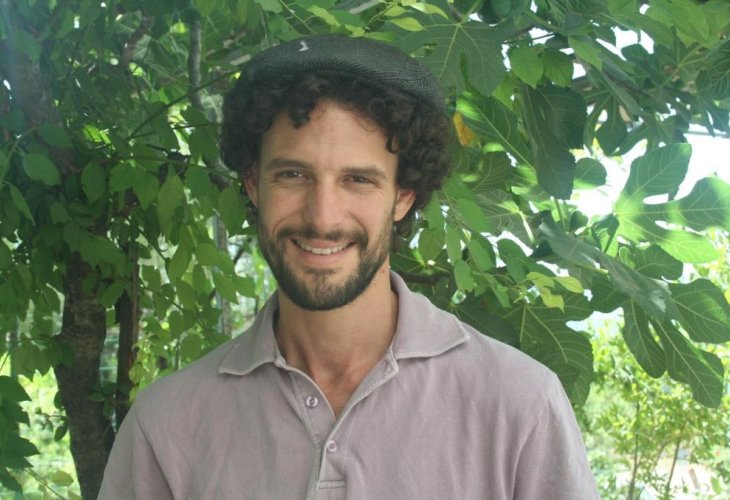 Yoav Arnoni
From a young age, Yoav Arnoni felt drawn to the world of older adults. “The more opportunities I had to meet elderly people, the more I realized how fascinating they are and how much life wisdom they carry,” he says. “I wanted to understand them better and looked for a professional path that would allow me to get to know them more deeply. That is why I chose to study social work, specializing in the elderly.”
As he gained experience, Arnoni discovered a rich and fascinating world filled with insight and accumulated wisdom. At the same time, he also noticed that older people are not always treated with the respect and appreciation they deserve.
“There are families in which an elderly person is viewed with admiration, with recognition of the experience and knowledge accumulated over a lifetime,” he explains. “But there are also families and places where the opposite is true, and elderly people suffer from loneliness and very difficult experiences.”
Passing Their Stories on to the Next Generation
Arnoni himself grew up on a kibbutz. “On the kibbutz, older members were always respected, but at the same time, they were sometimes pushed to the sidelines,” he says. “When I began researching the subject, I found it very interesting that, generally speaking, the more traditional, communal, or religious a society is, the more respect there tends to be for older people.”
“Of course, you cannot generalize completely. But it is clear that the larger an elderly person’s family is, with more children and descendants, the richer his or her life often becomes, surrounded by greater warmth and love. Personally, that made me feel that I wanted to build my own life around family, giving, and community.”
For years, Arnoni worked as a social worker visiting elderly people receiving hospitalization-at-home care. “I saw people who were almost collapsing under the challenges of illness and old age,” he recalls. “But I also saw others who seemed to flourish and display extraordinary strength precisely during those periods. Often, those were people who were strongly connected to their families and spiritually connected to God. You could see that they had a deeper foundation that helped them contain and cope with illness and weakness.”
Today, Arnoni works as a social worker in an assisted-living facility in Jerusalem. Alongside that work, he runs a unique independent project documenting the life stories of elderly people.
“The documentation is not done through writing,” he explains. “I use video and photography. I film elderly people telling their stories, then edit the footage and pass it on to the next generations.”
“I use my professional knowledge to guide the person, help him open up, and give him the space to make his voice heard. It benefits everyone. The elderly person feels that he is at the center, which often leads to openness and an internal process. And for the family, of course, it becomes an incredibly valuable keepsake.”
He recalls one elderly woman who told him that her father had died when she was very young and that she barely had the opportunity to know him. “Only after we sat together and documented her memories did she tell me that this was the first time she had ever spoken to her children about their grandfather. Through the story, she was able to bring him to life for them in a way she never had before. It was incredibly moving.”
Sometimes Arnoni chooses to document life stories through group work. “I facilitate groups of older adults who meet and tell one another their stories. It encourages them to open their hearts. They talk and share while I document everything.”
“Sometimes, because they are in a group, they discover surprising connections between them. Suddenly, they realize that they came from the same town or grew up in similar circumstances, or that they have relatives in common. All kinds of fascinating things emerge.”
Preserving the Story of a Generation
One especially moving story Arnoni documented was that of Holocaust survivor Yitzhak Boker. “Yitzhak told me that he had been on a death march with his entire family. They walked kilometer after kilometer. The weaker people were left behind, and that was how he was separated from his grandparents.”
“Eventually, he and his brother survived. When the war ended, a train took them to the Hungarian city of Satmar. The entire Jewish community of Satmar, dressed in new clothing, was waiting for them at the station.”
“It was the eve of the Seder, and every family took survivors home, prepared a full Seder meal for them, and even gave them new clothes. Yitzhak described that Seder night as feeling like a resurrection.”
“That story touched me so deeply that before last Passover, I called him just to tell him how much his story was alive inside me as I prepared for the holiday.”
Arnoni often documents Holocaust survivors, but he emphasizes that he does not want the stories to focus only on suffering. “They are always powerful stories,” he says, “but I try to include not only what happened during the Holocaust, but also the story of rebuilding and recovery afterward.”
He has also documented many Jews from Middle Eastern and North African communities who described immigrating to Israel as children. “It was fascinating to sit with them and hear about their longing for Zion. Again and again, they spoke about the dream of Jerusalem.”
One elderly woman from Morocco told him about the day her family boarded a plane for Israel. “She said that as they boarded, non-Jews told them they had to remove all their nose rings, earrings, and jewelry because ‘the plane would be too heavy to take off.’ That was how they tricked them and took all their valuables.”
“She said they were not even upset about losing their wealth. They were willing to give up so much simply to reach the Holy Land.”
“Only after they landed did they realize they were actually very far from Jerusalem and that absorbing into the new country would not be easy at all. She told me how, at the age of 18, she found herself responsible for the entire household, raising chickens, harvesting fields, and living with very little while her husband worked paving roads. Their home and family were built through enormous effort, sweat, and tears.”
For Arnoni, stories like these are deeply meaningful. “I find it fascinating to hear about everything that generation went through,” he says. “I feel privileged to document such a unique generation. Not every generation immigrated to Israel. Not every generation survived wars and rebuilt everything from the beginning.”
“Our generation, for example, has fewer stories like these because we were born into a world that was already established and relatively comfortable. The previous generation was a generation of hard work. It is a privilege to document their stories, listen to them, and let them feel that they are the heroes.”
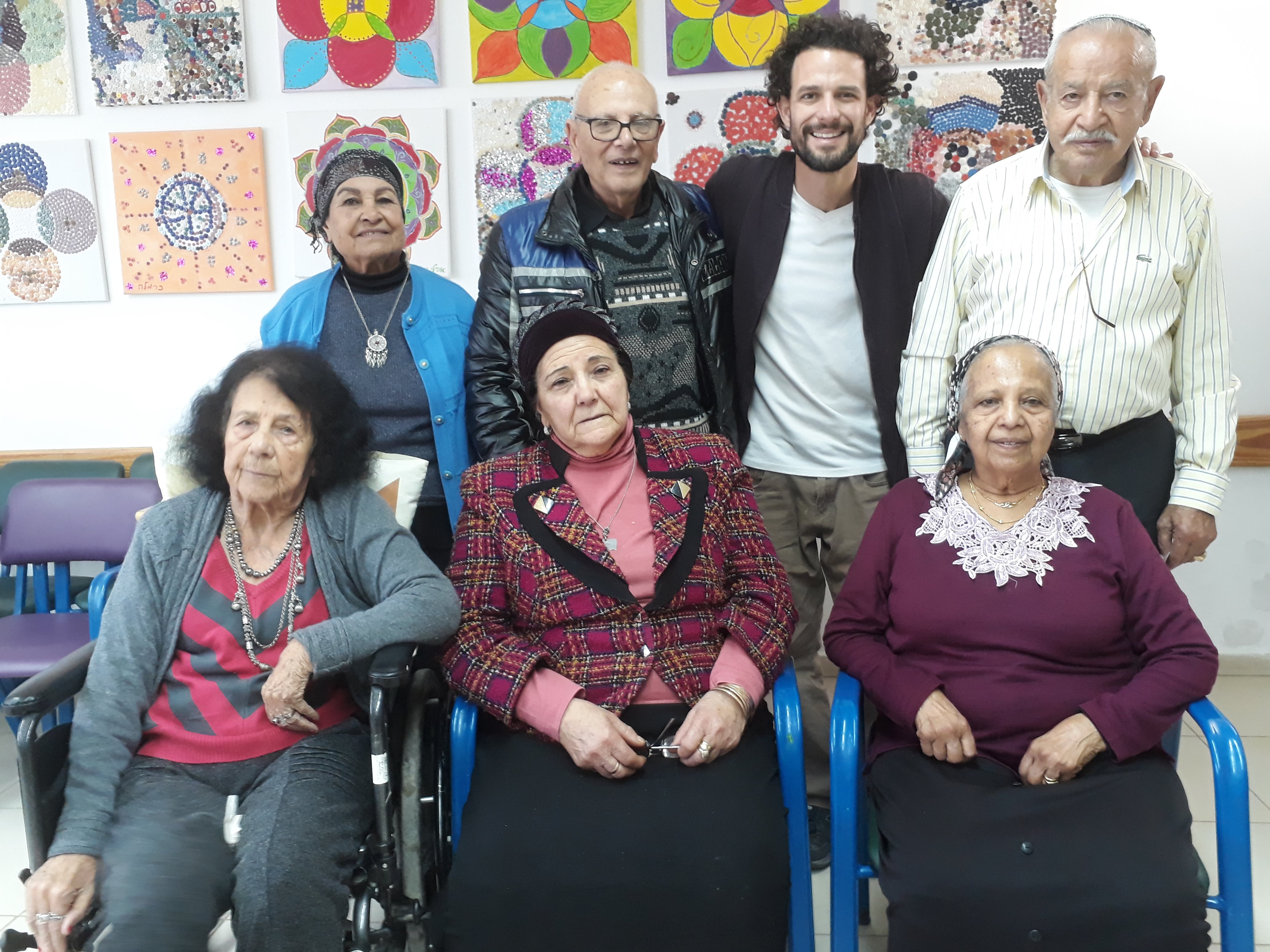 A group led by Yoav
Surely there are elderly people who simply do not want to open up and share?
“I don’t think that is entirely accurate,” Arnoni responds. “I believe that deep down, everyone wants to tell his story. The problem is that the setting is not always sensitive enough, and the people around them do not always know how to listen. That is why some elderly people stop themselves from sharing before they even begin.”
“But in my experience, when you find the right moment, approach them patiently, and show genuine appreciation and attentive listening, they almost always open up. And they discover that revisiting their memories actually does them good.”
From your experience, what can we do to encourage our grandparents to open up and tell us about their lives?
“First of all, it is very important to guide them with questions. It is not enough simply to say, ‘Tell me your story.’ Try asking, ‘What was one of the most significant moments in your life?’ ‘What are you most proud of?’ ‘What has brought you the greatest happiness?’ Questions like these help uncover the broader meaning behind the memories.”
“It is also important to understand that memory is like a fan. Sometimes a grandfather will tell you that he does not remember or that something was not important. But if you continue gently and ask, for example, ‘Tell me about the school you attended as a child,’ he may suddenly reconnect with the sensory experience. He will remember the sights, sounds, and atmosphere, and then the memories begin opening up.”
“You can also move chronologically. Where did you grow up? Where did you study? What games did you play? How did you celebrate your bar mitzvah? And then continue from there.”
Arnoni offers one final piece of advice, perhaps the most important of all. “When you visit your grandfather or grandmother, make time. Do not rush. Arrive with all the patience in the world. Turn off your phone and communicate that you truly have the time and emotional space to listen.”
“It will benefit your grandparents enormously, but perhaps even more importantly, it will benefit you.”

