

Raising Children
When Your Child Cries at Preschool Drop-Off: What to Do
Preschool drop-off can be emotional for children and parents. Discover simple ways to ease separation, create comforting routines, and help your child adjust.
- Naama Green
- | Updated
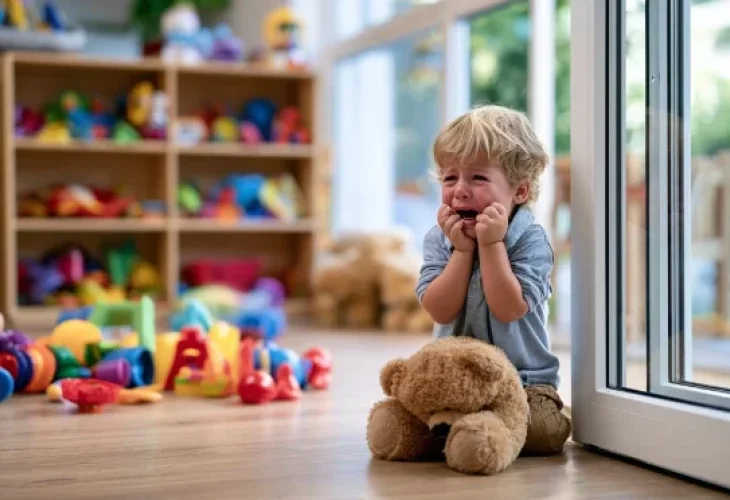
You peel him off your neck, one finger at a time. He cries as if you’re leaving for another country, not spending eight hours at the office. The teacher says, “Go, it’ll pass in a minute,” and you hurry out with a forced smile.
Then, at the first traffic light, you start crying too.
First of all, what actually happens after you leave?
This is the part no one shows you. In most cases, the crying settles down within a few minutes, and the child who was convinced his world was ending suddenly finds himself completely absorbed in a container of play dough.
Ask the teacher to send you a quick message or photo about 15 minutes after drop-off. It can save your entire morning.
The Comfort Kit That Goes With Him
A small child may not fully understand your explanations, but he does understand familiar objects. Something that looks, smells, or feels like home can be a tangible reminder that home still exists and that you will come back.
- A water bottle he especially loves, perhaps filled with chocolate milk or another favorite drink. Even if you normally stick to water, during the adjustment period, chocolate milk doesn’t have to be a treat. It can be a tool.
- A small bag with his favorite snack, ideally something he recognizes by its packaging. That moment when he opens his backpack and discovers something familiar can be worth more than 20 reassuring sentences.
- A favorite doll, stuffed animal, or other comfort object from home that can stay with him throughout the day. Prepare yourself for the possibility that he’ll choose the most tattered toy in the closet, the one missing an eye. Don’t argue with him. If it comforts him, it works.
- If he is two or older, tuck a small photo of the two of you into his pocket. It may comfort him more than you realize.
Keep Goodbyes Short and Consistent
A long goodbye doesn’t necessarily reassure a child. It can signal that you’re not entirely sure about this place either.
Three kisses, one familiar phrase, and then go.
Choose a simple goodbye ritual and repeat it every morning. Maybe it’s a kiss on the hand followed by a wave from the window. Whatever you choose, keep it consistent. The urge to stretch out the goodbye because your child is upset can actually make the separation harder.
One thing you should avoid is sneaking out without saying goodbye. It may seem easier the first time, but afterward, your child may remain on alert, worried that you could disappear again without warning.
Before you drive away, take a moment to say a few words of your own. Not a formal prayer or a carefully worded request. Simply say, “Ribbono shel Olam, watch over him today.”
It takes two seconds, but it can change the way you begin your day.
What to Do When He Comes Home
In the evening, resist the urge to interrogate him.
The temptation to ask, “Did you cry today?” can be strong. But that question brings his attention straight back to the crying, and suddenly he may be crying again at eight o’clock at night, when everyone is exhausted and there’s no play dough around to distract him.
Instead, ask what he ate, who he played with, or what they did outside. Guide the conversation toward the positive parts of his day. His memories of this new experience are still taking shape, and you can help him focus on the moments that felt safe, enjoyable, and familiar.
During the first few days, don’t be surprised if you notice a little regression. His sleep may be disrupted. He may become extra clingy. Suddenly, he may want you to feed him again or help him with things he was already doing independently.
These behaviors can be part of processing a major change and adjusting to a new routine.
Many children gradually settle into their new environment over the course of several weeks. If you aren’t seeing improvement, or if something about the situation simply doesn’t feel right, speak openly with the teacher and pay attention to what you are observing.
Tomorrow, he may cry for four minutes, and you may cry at the traffic light.
The day after that, it may happen again, but a little less.
And then one morning, he’ll walk through the door without even turning around. No kiss. No last look. As if you hadn’t spent all those mornings peeling him off your neck one finger at a time.
And you’ll stand there at the door, just a little offended, and realize that you almost miss the crying.

