

Magazine
From Portugal to the Jewish People: One Woman’s Extraordinary Journey Home
Raised in a secular Catholic family, Chana Eyal knew almost nothing about Judaism. A chance encounter with Israelis, a mysterious Star of David, and long-hidden family traditions led her on an incredible journey to discover her Jewish roots and build a Torah-observant home in Israel.
- Michal Arieli
- | Updated
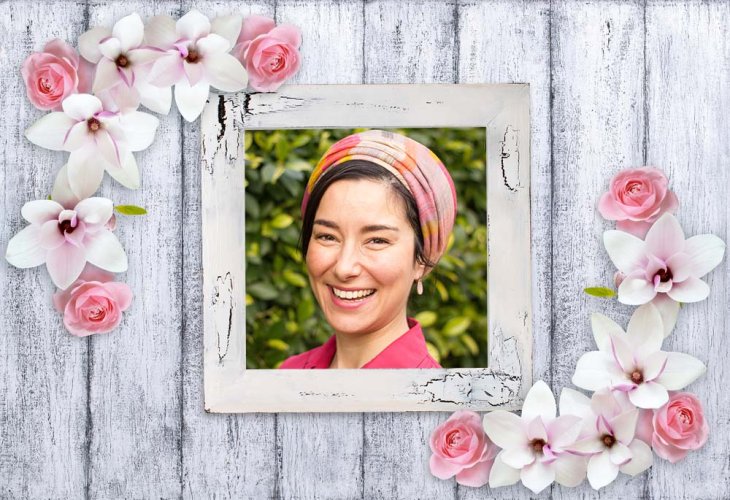 Chana Eyal
When Chana Eyal received an invitation to travel to the United States to speak before Jewish audiences, she was deeply moved.
“The truth is, I don’t like leaving the Holy Land,” she explains. “But the opportunity to share my story even far away reminds me just how great this mission is. I am so grateful for the chance to tell as many people as possible about the extraordinary Divine Providence that led me to the Jewish people. So yes, if I was able to turn my entire world around, return to the Jewish people, and move to Israel, then anyone can do it. You just have to want it.”
Conflicts and Questions
As a child, Chana was named Anna. She was born and raised in Porto, Portugal, the only child of a secular Catholic family.
“My parents were not religious people, and I didn’t believe in religion either,” she recalls. “But whenever there was a holiday or some special date, we would mark it with a family celebration. Some of my friends were more religious than I was, so I heard from them about different beliefs.
“Whenever people explained Christianity to me, I felt there were so many contradictions. The thing that bothered me most was the idea of praying to a human being. I believed it made sense that there was a spiritual Being whom we could not see, but why not pray directly to Him?
“I would ask my Catholic friends these questions, and they would suggest, ‘Try speaking to the priest,’ or, ‘Talk to my cousin. He’ll surely be able to help you.’ But none of the explanations satisfied me.
“Today I understand that it wasn’t simply that I encountered Judaism for the first time at age 26. From the very beginning, something about Christianity did not make sense to me. I simply didn’t know there was such a thing as Judaism, and I certainly never imagined that I myself was descended from a Jewish family.”
Did you know any Jews growing up?
“Not at all. There were no Jews where I lived. In general, it was very rare to encounter an Israeli or a Jew in Portugal. So even though I was an intelligent, curious young woman, I had simply never encountered this concept called Judaism.”
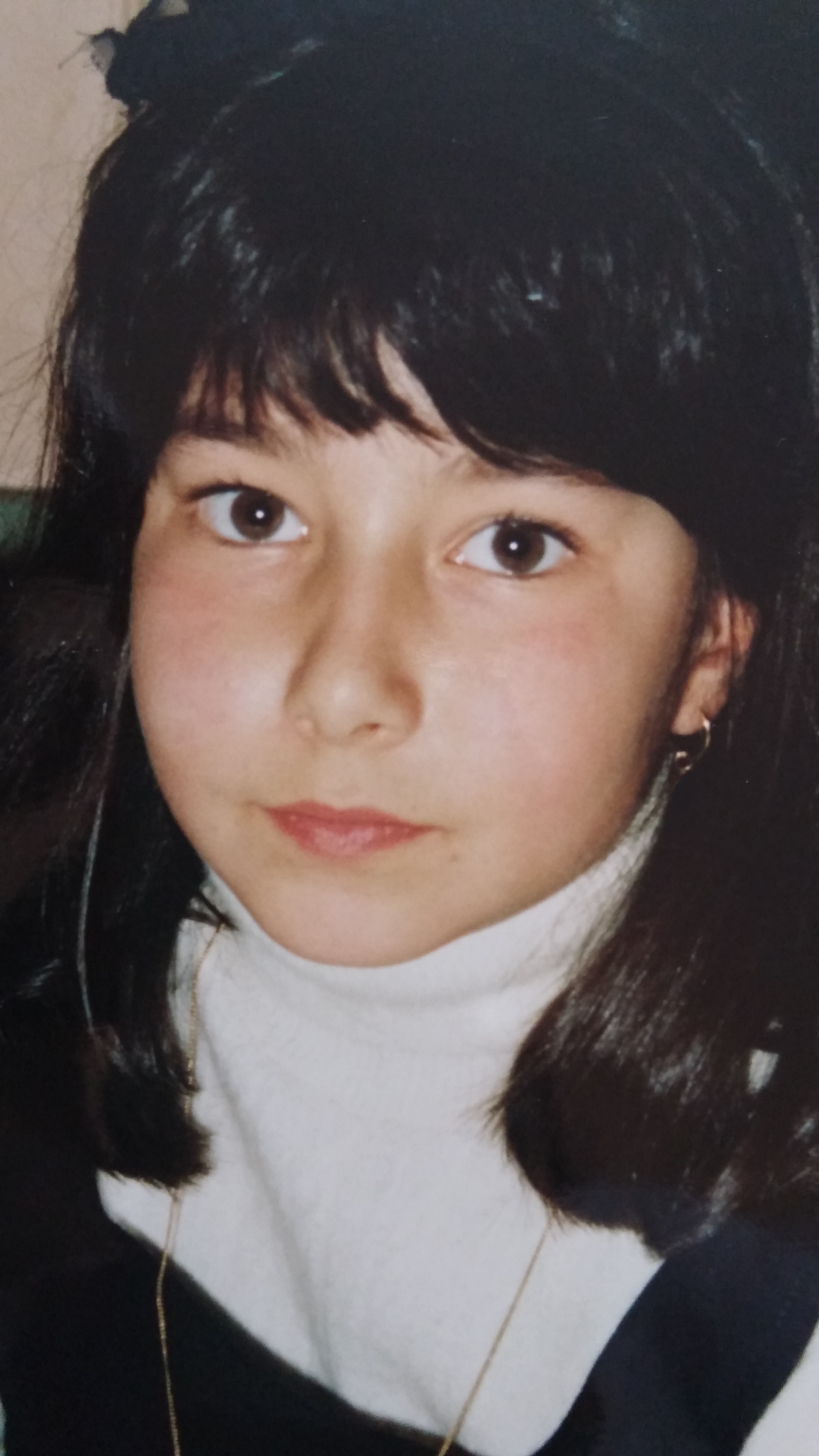
The Israelis in Nepal
Portugal does not have mandatory military service, so Chana began studying psychology at university at the age of 18 and completed her master’s degree by 23. She then began working, participating in research projects and even teaching psychology at the university.
As she approached 25, she was preparing to begin her doctorate when an unexpected opportunity arose to take a vacation.
“In the months before that, I had become very interested in spirituality,” she recalls. “I was learning meditation and yoga and trying to find myself. When I realized I had time for a vacation, something inside me told me that I wanted to travel to Nepal and India. Maybe there I would understand a little more about what was happening inside my soul.”
For Israelis, a trip to India or Nepal after military service may sound ordinary. In Portugal, Chana explains, it was anything but typical.
“I happened to hear about someone I knew who had traveled there. She told me about meditation and the spiritual experiences she had encountered, and I felt it was right for me. I planned a trip of two or three months, and at the last moment a good friend of mine, also a psychologist, joined me.
“As soon as we arrived in Nepal, we kept hearing one word over and over again: ‘Shalom.’ At the time, I didn’t know it was Hebrew. The Nepalese were so accustomed to hosting Israelis that they assumed I was Israeli too and greeted me that way. I was excited that I had already learned my first word in the local language.”
Before long, she encountered Israelis for the first time in her life. “I was sitting in a café with my friend when I noticed a group of people who looked very much like me, but I immediately realized they weren’t from Portugal or Spain. I listened to the language they were speaking and noticed the guttural sounds. It sounded ancient and fascinating.
“My friend was much less interested. She mostly wanted to decide what to order. But I couldn’t let it go. I kept asking her, ‘Do you hear their language? Where do you think they’re from?’ Finally, I couldn’t resist. I approached them and asked where they came from. They said Israel.”
Chana remembers that moment as one of the most emotional, and strangest, experiences of her life. “Until then, I had heard almost nothing about Israel, and I thought I had no particular thoughts or feelings about it. Yet suddenly I felt as though it was somehow connected to me.
“I was also surprised because the little I had read about Israel had given me the impression that there was nothing there but war. I couldn’t imagine young people living there being happy and relaxed. Yet the Israelis I met were completely different from the picture I had imagined. They even seemed like me.
“A few days later I met more Israelis, and this time I called out ‘Shalom!’ They immediately assumed I spoke Hebrew. That was when I finally realized my mistake: ‘Shalom’ was Hebrew, not Nepalese.”
An Encounter in India
After Chana and her friend completed their travels in Nepal, her friend returned to Portugal, while Chana decided to continue alone to India.
“I traveled by myself for four days, and there was something indescribably special about it. Specifically because I was alone in a foreign place, I felt I could go deeper within myself. It connected me to the Creator and to my own spirituality.”
Four days later, while sitting in a café, she once again heard the distinctive sounds she now recognized and realized that a group of Israelis was sitting nearby.
“They were different from the Israelis I had met in Nepal. They seemed older and more settled. I soon discovered that they weren’t post-army backpackers but working people who had come to India for business.”
Chana began speaking with one of them, a man named Shai.
“Right from the beginning, I could tell that he loved his country and was even proud of it. Eventually I dared to ask him, ‘I see on the news that there is always trouble in your country. Explain to me, what is the conflict with the Palestinians all about?’
“Shai started drawing maps and trying to explain. As he spoke, I noticed something strange: he wasn’t talking about ‘Israelis’ and ‘Palestinians.’ He was talking about ‘Jews’ and ‘Arabs.’
“I was confused. ‘What do Jews have to do with this?’ I asked. “He was even more shocked than I was. ‘You don’t know that Israel is a Jewish country?’”
Then she ventured another question: “But Jews are supposed to look like men in black hats and suits, not like you.”
Shai laughed. He explained that those were Haredi Jews. There were also Jews who wore only a kippah, and others like him who were secular and did not observe the commandments, but were nevertheless Jewish.
“So I asked him, ‘If you don’t observe anything, what does being Jewish mean to you?’
“His answer fascinated me. He explained, ‘Even we secular Jews believe there is only one God. There are no statues and no stories about people to whom we pray. There is only the Creator of the world. That’s it.’
“I said, ‘Wow.’ I felt an immediate connection to that idea.”
Shai then explained that the Jewish people trace their ancestry back to Abraham, Isaac, and Jacob, and to Jacob’s twelve sons.
“There were many more fascinating details in that conversation. I kept asking questions and Shai tried to explain. I was captivated, although I still didn’t understand everything. What confused me most was how the man sitting opposite me could describe himself as nonreligious while displaying so much knowledge, connection, and even faith.”
Eventually they parted ways. Shai gave Chana his email address.
At the time, it never occurred to her that one day he would become her husband.
Her First Visit to Israel
Not long afterward, Chana and Shai met again in India. This time, their relationship became more personal.
“We both felt that something deep was developing between us,” Chana says. “But Shai still hadn’t told me that there was a serious problem with the fact that I wasn’t Jewish, and that marriage in such a situation was far from simple, because it would mean that his children would not be Jewish either.”
Eventually, they went their separate ways and Chana returned home to Portugal. She immediately told her parents that she had met an Israeli man named Shai and that their relationship had become serious. Her parents were surprised that their only daughter had formed a relationship with a Jew. They were even more surprised when Shai arrived to visit her just two weeks later.
Before leaving, Shai told her, “My family in Israel is waiting to meet you too.” Chana promised to visit, and before Passover she flew to Israel.
“For the entire flight I felt nothing unusual. I wasn’t especially excited. But as we began descending and the announcement said that we were about to land in Israel, I looked through the window and saw the lights below.
“Suddenly, I felt an overwhelming sense of belonging. It was as though I had arrived somewhere familiar, as though I was finally coming home.” The feeling was so powerful that, as a psychologist herself, Chana wondered whether something was wrong.
“I remember going into a room by myself and contacting my psychologist friend. I told her, ‘Take out a psychosis questionnaire. You have to diagnose me, because I’m experiencing something abnormal.’
“Eventually Shai offered to take me sightseeing, but I wasn’t interested. Finally I asked him, ‘Remember when you told me about the Temple and the wall that remains from it? Can you take me to that wall where all the Jews pray?’ It was the only thing I could think about.”
Her visit concluded with the Passover Seder at Shai’s family home.
“It was breathtaking for me. I was so moved to see all the relatives sitting together. Shai translated the Haggadah for me, and we finished the evening with an extraordinary sense of spiritual elevation.”
The Star of David
Chana returned to Portugal deeply shaken by everything she had experienced.
She and Shai had already decided that their future would probably be together, and initially they planned to live in India, where Shai had business connections. Chana had also met an Indian professor at a conference in Europe and had discussed the possibility of working in academia there.
But when she returned home, one particular detail caught her attention.
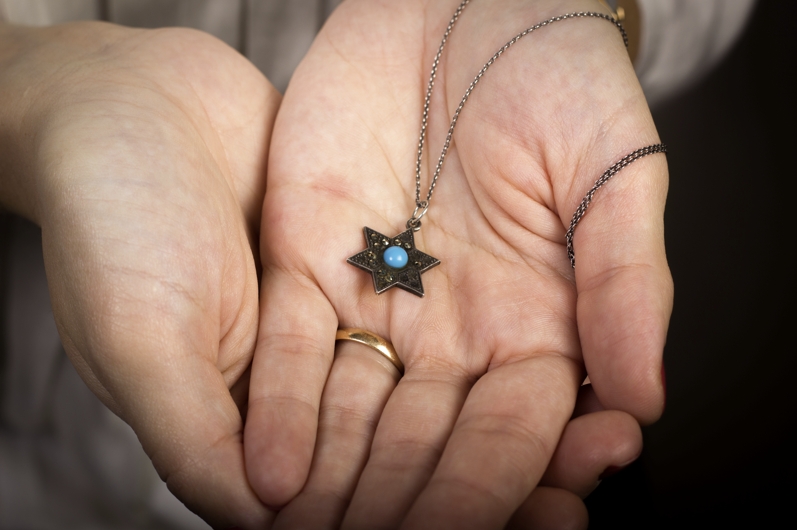
“The first thing I told my parents was, ‘You wouldn’t believe how much Israelis love their country and how proud they are of it. For example, the symbol on their flag isn’t used only for things like football. You see it everywhere, especially on jewelry and necklaces. It’s called a Star of David.’
“Then my mother suddenly remembered something. She said, ‘You know, when I was a child, I also had a necklace with a star like the one you’re describing.’ “She searched for the necklace, and when she found it, we discovered that it really was a Star of David.”
That same day, Chana told Shai about the necklace and showed it to him over Skype. “Shai became incredibly excited. He started jumping in his chair. He told me, ‘Look your mother in the eyes and ask her whether she is Jewish.’
“I went to my mother and asked her. As I expected, she said no. But Shai still wasn’t satisfied. He told me to ask my grandmother, my mother’s mother. “I tried. But the moment I brought up the subject, my grandmother began avoiding the question. It was obvious that she was extremely uncomfortable talking about it.”
Chana refused to give up. Over the following months, she searched every archive she could access and attempted to reconstruct her family tree.
“I managed to trace it back six generations. I discovered that I had family originating in Cusco and a great-grandfather named Pinto. Eventually, though, I reached a dead end because the older documents were written in an ancient Portuguese script that only priests knew how to read. Obviously, I didn’t see much point in asking a priest to investigate whether I was Jewish, so I put the research aside.”
Meanwhile, Chana joined Shai in India, where they began living together.
“During the week, Shai worked and I became involved with an Indian university. On Fridays, we would go together to the Chabad House. The more I learned about Judaism, the more something remarkable happened: I became deeply attached to it.
“I even began speaking to God, telling Him in my own words how I felt and what had happened during my day. I would ask Him for things, but above all I kept asking: ‘Why did You give me this Star of David? What are You trying to tell me?’”
Then she began discovering something even more astonishing. Customs she had grown up with, customs she had always assumed were superstitions or remnants of Christianity, appeared to have Jewish parallels.
For example?
“Ever since I can remember, my grandmother and mother warned me never to point at the stars. My grandmother would slap my hand away, and my mother would say, ‘It isn’t good to point at them.’
“When I researched it, I learned that the end of Shabbat is traditionally determined by the appearance of stars. In earlier generations, families whose children pointed toward the stars could potentially reveal their Jewish identity, which may explain the fear surrounding the custom.
“We also had a custom never to sweep dirt toward the front door. I had never known why. In the days of the Inquisition, it was extremely dangerous to place a mezuzah on the doorway, so mezuzot were removed and hidden. Yet according to the tradition I discovered, people continued showing respect to the doorway that had once held the mezuzah by avoiding sweeping dirt toward it.”
There were more customs. Her family kissed bread if it fell on the floor. They washed their hands before eating fruits and vegetables. They even murmured a special prayer before eating a fruit for the first time that season.
“The most amazing discovery was that the prayer I had always recited whenever I entered a cemetery was a Jewish prayer. I learned this from an elderly Jewish woman whom I found in a village in Portugal. “When I told her that our family used to say this prayer, she told me, ‘You are Jewish just like I am. Go speak to your grandmother.’
“She explained that during periods when Jews were forced to enter Christian cemeteries and churches, they would recite this prayer in Hebrew, expressing that despite what they were outwardly doing, their faith remained with the Master of the Universe.”
Building a Jewish Home
Slowly, Chana began to understand that her family roots were Jewish. Suddenly, the intense experience she had felt upon arriving in Israel, which she had initially feared might be psychological or psychiatric, took on an entirely different meaning.
“Suddenly all the pieces of the puzzle came together,” she says.
About six months after she and Shai moved to India, they left and traveled to Israel shortly before Shavuot. “I didn’t give up. I asked Shai to take me to rabbis who could explain what I was supposed to do with Judaism in my life.”
Shai introduced her to rabbis involved in conversion, and she eventually appeared before a special committee. She explained everything she knew about her family and told them that she was convinced she descended from anusim, Jews who had been forced to conceal or abandon their Judaism.
“The rabbi listened very carefully. When I finished, he told me, ‘There are Jews in the world, there are people who are not Jews, and there are Jews whom we lost somewhere along the way. We know this because the history of our people is difficult and complicated. Since Jewish law is complex and it is extremely difficult to prove Jewish status from 500 years ago, you have the opportunity to join us, and we are here to help you go through the process you need.’”
Chana then began a conversion process that lasted a year and a half.
“I feel that every single day of learning was for my benefit. It was a privilege. The learning itself was incredibly important to me and taught me so much. At the same time, I felt that I was being given the privilege of becoming Jewish through my own choice.”
During that period, Shai also began moving closer to Judaism. They moved into separate apartments, and Shai began studying at Machon Meir.
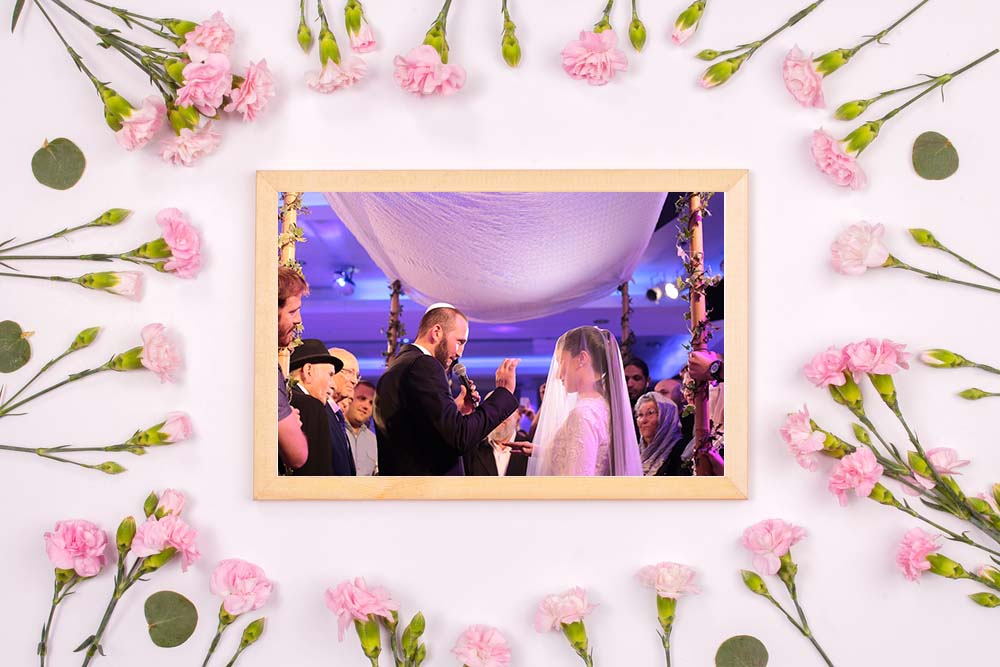
Their wedding was deeply emotional and conducted according to Jewish law.
“God literally brought me from the other side of the world and drew me toward Him so that I could discover my roots and join the Jewish people,” Chana says. “There is nothing more wonderful than feeling your Jewish identity.”
Today, Chana lives in Israel with her husband. They are parents and have built a Torah-observant Jewish home.
“As a Jewish mother, I become emotional every time my daughters look through the window after Shabbat and count the stars,” she says. “And I thank God for bringing me here and choosing me to be His daughter.”

