

Magazine
From Darkness to Torah: Alon Yoffe’s Remarkable Journey of Teshuvah
Musician Alon Yoffe shares how his mother’s powerful letter, an unexpected encounter with Tanya, a life-changing trip to Uman, and the light of Torah transformed his life and brought him home to faith
- Avner Shaki
- | Updated
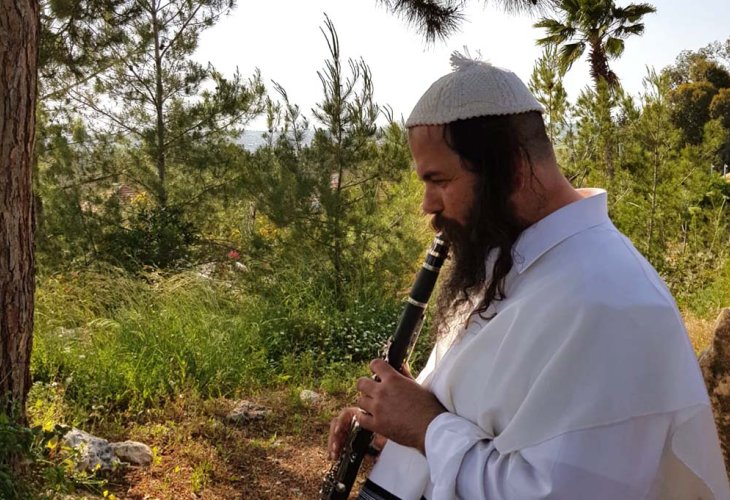 Alon Yoffe
When Alon Yoffe was going through one of the darkest periods of his life, his mother somehow sensed that something was wrong. She boarded a plane to visit him, perhaps even to save him. Mothers, it seems, have a special instinct for recognizing when their children are in trouble, and few things in the world compare to a mother’s love.
“Unfortunately, I did a lot of things I’m not proud of during my teenage years,” Yoffe says candidly. “It continued during my army service. After I was discharged, I traveled through several countries in Europe and eventually settled in England. Mind-altering substances were not unfamiliar to me at the time, but in England things reached levels I had never experienced before. It still affects me today. For example, my memory isn’t what it should be.
“I supported myself by waiting tables and doing various odd jobs, but mostly I was involved in things that weren’t good for me. My mother came to visit because we hadn’t seen each other for a long time, and she immediately understood what was happening, and she realized that I was in a very bad place.
“She returned to Israel, and the entire night after she came home she couldn’t sleep. She decided to write me a letter. It was an incredibly powerful and emotional letter. At first, she didn’t want to send it because she was afraid I would be hurt, but eventually she decided to send it.
“A few days after my mother returned to Israel, I had a very frightening experience connected to the substances I had been using. I found myself in an extremely difficult mental and emotional state, and I cried a great deal. A few days later, things began to improve somewhat, and that was exactly when my mother’s letter arrived. Her words hit me deeply. A week later, I was back in Israel. That was really the beginning of my journey toward goodness and truth.”
A Good Kid From Ramat Gan
Alon Yoffe is married to singer Dina Avigail Yoffe, better known as Din Din Aviv. A father of four and a musician living in Hod Hasharon, Yoffe describes his teenage years as turbulent, although his childhood had been remarkably peaceful.
“I was born into a completely secular family in Ramat Gan. There are three siblings, and I’m the middle child. My father is the son of Holocaust survivors, and my mother is a very warm Bulgarian woman. They were complete opposites. My father was a drummer, but after he married and the children were born, my mother wanted him to find another profession, so he changed careers. We had a piano at home, and also a drum set that usually remained dismantled because drums make so much noise. Every so often, my father would put them together, play for a while, and then take them apart again.
“Until 11th grade, I was a good kid. I got good grades and behaved properly. Then things changed. Around that time, I discovered one of the darker clubs in Tel Aviv. It was literally and figuratively a very dark place, with aggressive dancing, loud music and plenty of alcohol.
“I was at the age when smoking and drinking suddenly seemed cool, and I changed dramatically. My appearance changed too: ripped jeans, unusual clothes, strange hairstyles. My parents had a very difficult time with what was happening to me.
“I completed high school and enlisted in the army, but I continued doing foolish things there as well. I was an army driver, so I came home every day and spent time with friends. Only today do I understand that this was the yetzer hara. The yetzer hara simply wants to destroy you. After the army, I traveled to Europe, and as I mentioned, thank God, my mother’s letter eventually brought me back to Israel.”
Finding Music and Finding Himself
Returning to Israel was not easy, but Yoffe knew it was the right decision. Just days after he came home, a close friend suggested that they study music together at the Rimon School of Music.
“I had always loved music, but I only began pursuing it professionally relatively late, at age 24. I was mainly interested in playing drums, so that’s why I went to Rimon. But maybe the real reason I went there was to meet my wonderful, righteous wife.
“We were complete opposites, yet somehow it happened. I was extremely quiet after everything I had been through. I was very introverted. I felt as though I had nothing left to say and nothing to give. I felt empty. I barely had an inner world. I didn’t even know who I was. The years before Rimon felt like a black hole.
“For years, I had used unhealthy things simply to escape from myself. Then suddenly, when all those things are gone, you feel like you’re nothing. You don’t know who you are because nothing truly fills you. There had been no real nourishment for Alon, for my soul. Everything was external, full of distractions, anything to avoid being alone with yourself for even a second.
“You try to behave the way society tells you to: be smart, look good, play well. It’s all external. Inside, at the root, nothing is nourishing you. The soul can only be filled by truth. When you spend years occupied with something that isn’t real, you gradually become emptier and emptier.”
His future wife was almost his exact opposite.
“My wife was very outgoing. Even while we were studying, she was already somewhat famous, and she was the type who always had something to say. On the surface, there was no reason for us to connect because we were so different, but Hashem wanted it to happen.
“One day, we were playing together in a group, and I saw that she was sad. I had never seen her like that. I called her aside and said a few encouraging words. That was really the beginning of our relationship. It took seven years, but eventually we got married.”
Those seven years were complicated. They separated, traveled to different parts of the world, reunited, and experienced their share of heartbreak. Looking back from the perspective of an observant Jew, Yoffe says he came to appreciate the Torah approach to marriage and shidduchim, and hopes his own children will be spared some of the emotional pain he and his wife experienced along the way.
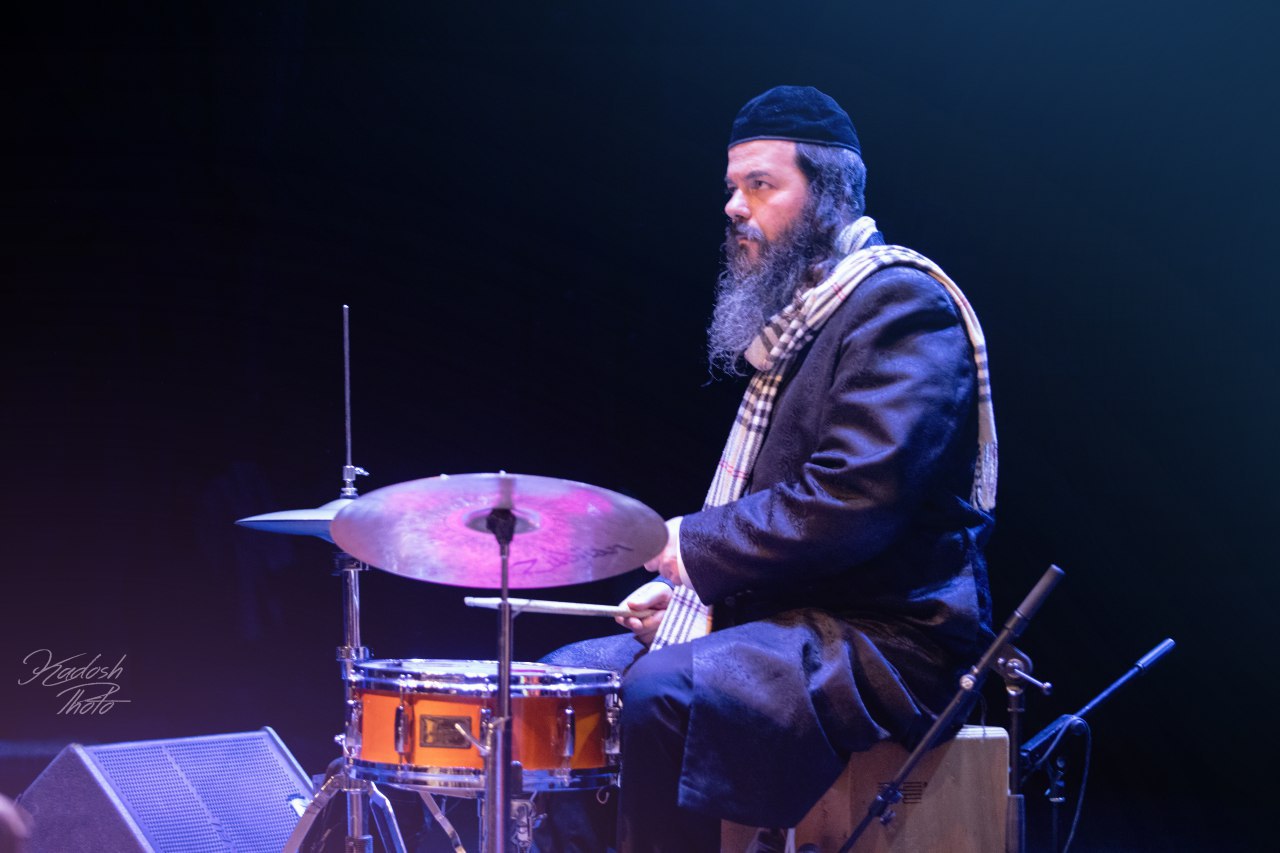 Alon Yoffe (Photo: Kadosh Photo)
An Unexpected Journey to Teshuvah
Although Yoffe now describes the emptiness he experienced before becoming religious, he says that at the time he did not understand what he was feeling.
“I didn’t have concepts like ‘soul’ to describe it. I simply knew that something strange was happening inside me. I wasn’t searching for spirituality. My teshuvah just happened. I never expected it.
“When people ask me how I became religious, I tell them I did nothing. My teshuvah was entirely Hashem’s mercy. I wasn’t heading in that direction at all. But the first time I encountered Torah, it was incredibly powerful. It was like someone turning on a light in tremendous darkness.
“Hashem constantly gives every person hints. The question is whether we try to notice them. And sometimes, beyond those hints, Hashem actually illuminates the right path for a person.”
One day, Yoffe was sitting with a friend when a Chabad chassid arrived to put up a mezuzah. Afterward, his friend mentioned that he studied Tanya with the man at four in the morning and asked Yoffe whether he wanted to join.
“I had no idea what Tanya was, but it sounded extreme and unusual, so I said I’d come. I kept coming back. We studied twice a week, and I became completely captivated. My whole night suddenly filled with light. I was drawn to it like a magnet. At that point, I still wasn’t keeping mitzvot. I was simply enjoying the spiritual light.”
What ultimately brought you to a fully observant life?
According to Yoffe, his children played an important role, as did a trip to Uman for Rosh Hashanah.
At the brit milah of his oldest son, Yehuda, Yoffe had a powerful spiritual experience. Later, although he and his wife had not specifically sought a religious preschool, his wife fell in love with one nearby because she connected with the teachers. When Yehuda turned three, they gave him a traditional first haircut and left his peyot. Soon, he and his friends began wearing tzitzit.
“My wife said to me, ‘Your son is walking around wearing tzitzit and you aren’t. How does that look?’ So because of her, I put on tzitzit for the first time.”
Around that period, Yoffe was recording an album with a friend from a Breslov community in Hod Hasharon. The friend mentioned that he was planning to travel with a group to Uman for Rosh Hashanah and invited Yoffe along.
“I agreed, not because I had any idea where I was going, but because I thought it sounded cool. I returned from Uman wearing a cap with a kippah underneath it, and I never took the kippah off again.”
“For the First Time, I Felt I Had Come Home”
Yoffe finds it difficult to explain exactly what happened to him in Uman.
“It wasn’t that I decided to wear a kippah. It felt as though the decision had been made for me from Above. Many people break down and cry in Uman. I didn’t experience that, but something deeply affected my soul.
“I accepted the yoke of Torah and mitzvot in a single moment. My wife asked me what was going on with the thing on my head, and I told her I simply couldn’t take it off. I cut my hair, left peyot, and suddenly became religious. I accepted Shabbat and everything else. It all happened extremely quickly. For the first time in my life, I felt that I had come home. I had found my place.
His spiritual transformation also changed his relationship with his musical career. After graduating from Rimon, Yoffe had built a successful career as a drummer, performing jazz, African music and pop with well-known Israeli musicians. Yet after returning from Uman, he suddenly found himself unable to continue in the same way.
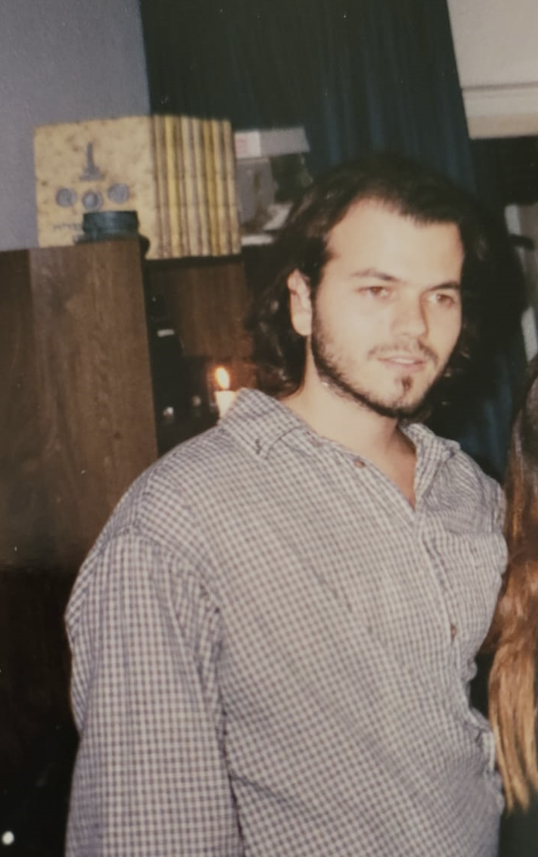 Alon Yoffe in his youth
“Such a powerful light had entered my life that everything outside the light of truth suddenly seemed dark. Looking back, I understand that this was probably the only way I could have escaped from where I had been. The lower a person has fallen, the greater the light he sometimes needs in order to climb out.”
A New Kind of Music
Then came another turning point.
“One day I was driving, and the song ‘Ki MiTzion Tetze HaAhava’ by Yonatan Razel, sung with Evyatar Banai, came on the radio. I had no idea who was singing, but I got chills all over my body. Even now, remembering it gives me chills.
“As soon as I heard it, I knew: This is what I want to do. This is why I studied music.”
He told no one. Two days later, Yonatan Razel’s producer called and asked him to play with Razel. “I felt as though Hashem was smiling at me.”
At his first rehearsal, Yoffe encountered an atmosphere entirely different from the music world he had known. Instead of smoke-filled rehearsal rooms, he watched Razel calmly eat and recite Birkat Hamazon with concentration.
“Hashem helped me tremendously with this. Very quickly, I left behind everything I had been doing before. I joined Yonatan’s production, and we produced several songs together.”
Yoffe has also performed with Yosef Karduner, an experience he describes as one of the greatest privileges of his life. He has occasionally played with Aharon Razel and, on rare occasions, performs with his wife when she cannot find a female drummer. In those instances, he turns the drums around and plays with his back to the audience.
Torah, Music and a Different Kind of Success
Today, Yoffe hopes to devote more time to producing music and eventually releasing more of his own compositions. But there is one thing that often delays his personal musical projects: he would rather be learning Torah.
During Chanukah, he finally released one of his own compositions, a melody for “Maoz Tzur.” The tune came to him almost instantaneously while lighting the Chanukah candles.
“I sat down at the piano and it simply came out. Usually you construct a melody and change it, but this one just came down. It was a miraculous moment. I must have been very focused and connected. I can’t explain it beyond the fact that I feel very connected to Chanukah. The light of Chanukah is an elevated light, connected to the hidden light of the future. I have a special love for that holiday.”
Most of his day, however, is spent learning in the beit midrash in Hod Hasharon.
“We have been given an incredible Torah, and we simply have to surrender ourselves to it and follow the guidance of the tzaddikim. It is so beautiful, and it brings tranquility to the mind and soul. It is an enormous privilege. The more you surrender yourself to Torah, the more peace and serenity it gives you. You can experience something of Shabbat throughout the entire week.
“The reason we become upset and angry is that things don’t work out the way we want them to. But the more a person studies Torah, the more he understands that there is something here greater than himself, and then he becomes calmer. With worldly wisdom, a person can sometimes become increasingly full of himself. Torah works in the opposite direction. The more Torah you learn, the more you can become humble.
“Every single day, I try to thank Hashem for the privilege I have been given, for the tremendous light He illuminated and continues to illuminate for me. And I pray that He will increasingly illuminate the eyes and hearts of every Jew.”

