

Magazine
Former Hostage Shlomi Ziv: “Give Me the Privilege of Putting on Tefillin Again”
After 246 days in captivity in Gaza, former hostage Shlomi Ziv opens up about the prayer he repeated every day, his renewed faith, and his return to tefillin.
- Naama Green
- | Updated
Former hostage Shlomi Ziv, who was rescued from Gaza in Operation Arnon after 246 days in captivity, opened up about the darkest moments he endured and the faith that, he says, was rebuilt within the ordeal itself.
Speaking with Eliyahu Libman on the Growing Along the Way podcast, Ziv described how his captivity transformed his relationship with Hashem, his daily prayer to once again put on tefillin, the moment he realized Israeli forces had come to rescue him, and the challenges that have followed him home.
“Give Me the Privilege of Putting on Tefillin Again”
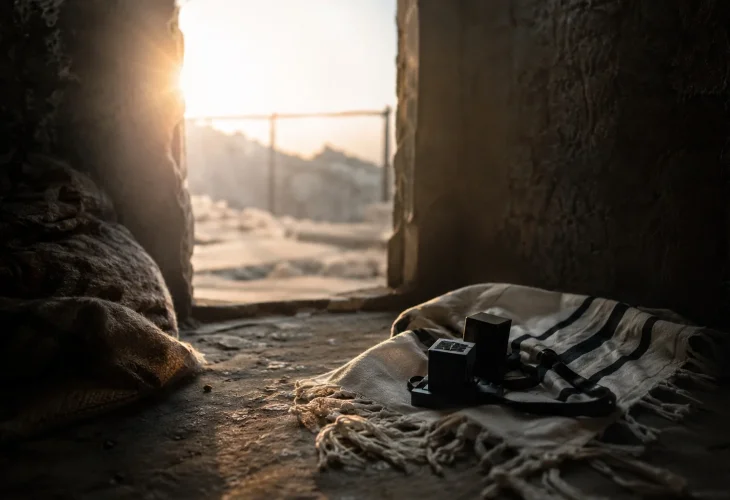
Ziv shared that he had been dealing with post-trauma since the attack on the Worshippers’ Route in Hebron in November 2002, when he was serving as a Border Police fighter. After that event, he said, his faith was shaken, and he eventually stopped putting on tefillin. In Gaza, however, the opposite process took place, and his faith began to grow stronger.
Every morning in captivity, Ziv thanked Hashem for the simple fact that he had woken up alive. “I give thanks that I woke up and they didn’t murder me, or that some missile didn’t fall on us,” he said. Alongside that gratitude was one request that he repeated day after day: “Give me the privilege of putting on tefillin again. That’s what I asked Him for.”
Since his rescue, that prayer has become a daily reality. “Morning after morning, thank Hashem, I’ve been given that privilege, and every morning I put on tefillin.”
During the first two months of captivity, however, Ziv said he was at his lowest point. “There were two months of crisis... two months of crying like a baby, truly rock bottom.” Only afterward did something begin to change, and he described experiencing “an uplift of acceptance... trusting in Hashem, faith, hope.”
His captors, he said, deliberately tried to break the hostages psychologically. “They showed us only attacks on Israel and harm to IDF soldiers on television. They did everything to break us mentally, to make us think Hamas was winning the war.”
Surprisingly, Ziv said that his previous experience with post-trauma gave him tools that helped him cope with captivity. “As someone dealing with post-trauma, I can say that it actually gave me the tools to cope with everything I went through in Gaza. I told myself: ‘Shlomi, you’re above this. There are things that aren’t in your control. Breathe.’ Those were the tools that kept me going inside Gaza.”
Ziv also recalled conversations with his captors in which he tried to understand what they envisioned for the future. According to him, their answer was stark: “Either you leave here and go back where you came from, or you convert to Islam, or you die.” One captor, he said, even told him: “On the next October 7, Shlomi, we’ll reach the Galilee... and next time we won’t kidnap you. Next time, you die.”
The Moment He Heard Hebrew Again
After 246 days of not knowing whether he would ever return home, a Shabbat morning began like so many others in captivity. Then came an explosion. “A moment later, there was already gunfire inside the house, so you understand that it’s our security forces.” Within seconds, Ziv heard something he had not heard in eight months: “Hebrew! Hebrew! There! There!”
The battle inside the house continued for several long minutes. “We lost a hero of Israel, our personal hero, Arnon Zamora, may Hashem avenge his blood, who fell as he was the first to break in,” Ziv said.
Ziv shared that he struggled with feelings of guilt over Zamora’s death, but Zamora’s family offered him strength and reassurance. “You understand that it doesn’t matter whether it was Shlomi Ziv or any other hostage. Arnon would not have hesitated for a moment.”
Returning to Israel did not erase the experiences of captivity. Ziv described how seemingly ordinary smells can suddenly transport him back to Gaza. “Suddenly, a smell takes you back to Gaza,” he said. He recalled asking his wife to throw away a hand soap she had bought because its scent was identical to that of the wipes the hostages had been given in captivity. Even the smell of pita with olive oil and za’atar could take him back there. “There are flashbacks. There are smells,” he said.
Yet alongside those painful memories, Ziv emerged from captivity with a renewed message about faith and Jewish identity.
“Don’t be afraid to be Jewish,” he concluded. “Don’t be afraid to take pride in where you came from and where you’re going.”

