

Sukkot
The Power of Sukkot: 13 Blessings Hidden in Its Mitzvot
From protection and healing to peace and joy, discover 13 teachings from our sages about the spiritual power of Sukkot’s mitzvot.
- Naama Green
- | Updated
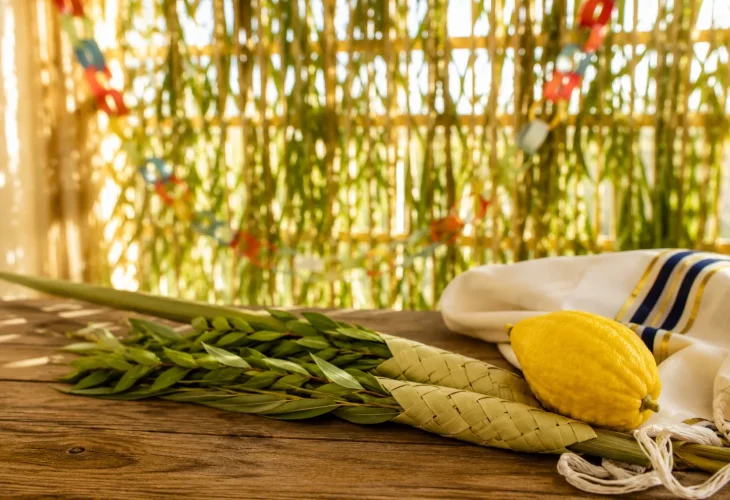
Sukkot is known as zman simchateinu, the “time of our joy,” but the mitzvot of the holiday carry meanings that reach far beyond celebration. Our sages and great Torah commentators describe the sukkah, the Four Species, and the mitzvah of rejoicing on the holiday as sources of protection, spiritual growth, blessing, and closeness to Hashem.
Here are 13 powerful teachings about the mitzvot of Sukkot and the spiritual opportunities they offer.
The Mitzvah of the Sukkah
1. The sukkah has the power to overturn harsh decrees
By fulfilling the mitzvah of sukkah, a person can merit the overturning of a decree issued during the High Holy Days.
It is taught in the name of the Yitav Lev that even if the verdict on Rosh Hashanah and Yom Kippur was “guilty,” that same Hebrew word can be transformed into the initials of the verse: “Let the pious rejoice in glory; let them sing for joy.”
In other words, through the joy, celebration, and song that accompany the mitzvah of sukkah, a person may merit having a harsh decree overturned.
2. The sukkah offers protection from judgment and calamity
As a reward for fulfilling the mitzvah of sukkah, a person can merit protection from judgments and calamities. The Zohar connects this idea to our forefather Jacob, who fled from Esau and came to Sukkot.
3. The sukkah can bring relief from pain and distress
The Tiferet Shlomo offers a deeper interpretation of the sages’ statement that “one who is suffering is exempt from the sukkah.”
Through the spiritual power of the mitzvah of sukkah, he explains, a person can merit being freed from pain and distress. Similarly, the statement that “the sick and those attending to them are exempt from the sukkah” is interpreted as a blessing that they should be freed from illness and pain and experience healing of both body and soul.
4. Sukkot is a time when salvation can flourish
The Sfat Emet offers a beautiful interpretation of the words in Shemoneh Esrei: “King who causes death and brings life, and causes salvation to flourish.”
“King” refers to Rosh Hashanah. “Causes death and brings life” refers to Yom Kippur, when Hashem sits on His royal throne in judgment and determines the lifespan allotted to each person. “Causes salvation to flourish” refers to Sukkot, a time when salvation can emerge and harsh decrees can be nullified.
According to this teaching, the judgment of Rosh Hashanah itself ultimately creates the possibility for salvation to flourish.
5. The mitzvah of sukkah is associated with long life
One who fulfills the mitzvah of sukkah can merit long life. This is hinted at in the verse, “All citizens of Israel shall dwell in sukkot.”
The numerical value of the Hebrew word for “citizen” is the same as that of the word for “strength.” This alludes to reaching an advanced age, as the verse states: “And if by strength, eighty years.”
6. The sukkah can bring peace into the home
The Kaf HaChaim cites the Yafeh LaLev: “One who is careful with the mitzvah of sukkah and performs it properly is guaranteed that there will be no quarrel in their home throughout that year.”
The book Segulat Yisrael also offers a spiritual practice for avoiding discord: studying tractate Sukkah throughout the year, based on the verse, “You conceal them in a sukkah from the strife of tongues.”
The Mitzvah of the Four Species
7. The Four Species represent serving Hashem with our entire being
The Sefer HaChinuch explains that each of the Four Species corresponds to a different part of the human body and carries its own spiritual message.
The etrog resembles the heart, the dwelling place of the mind, reminding us to serve the Creator with our intellect. The lulav resembles the spine, the central part of the body, reminding us to direct our entire physical being toward His service. The hadas resembles the eyes, warning us not to be led astray by what we see. The aravah resembles the lips, reminding us to guard our speech and maintain our awareness of Hashem even in times of joy.
Together, the Four Species remind us of our mission to make Hashem King over every aspect of our lives.
8. The lulav contains an allusion to Torah and righteous children
The Hebrew letters of lulav contain several symbolic allusions. The letters lamed-vav correspond to the 36 righteous people said to exist in every generation, as well as the 36 tractates. The letters lamed-bet allude to the Torah, which begins with the letter bet and ends with lamed.
The numerical value of lulav also corresponds to “life,” representing Torah. Through this mitzvah, a person can merit righteous children whose hearts are devoted to Torah.
9. Waving the lulav weakens the power of the accuser
The Rosh, citing the Jerusalem Talmud, explains that waving the lulav during Hallel is intended to “shake” the power of the accuser.
What appears to be a simple physical movement therefore carries a deeper spiritual significance.
The Mitzvah of Holiday Joy
10. The joy of Sukkot can influence the year ahead
The Pele Yoetz, citing the Gur Aryeh, teaches that one who remains happy and joyful during this holy holiday, without allowing sorrow to overcome them, can merit a good year and continued joy.
Sukkot is not simply a holiday on which happiness happens to be appropriate. Joy itself is part of the spiritual work of the festival.
11. Joy in performing a mitzvah is itself a form of serving Hashem
The Rambam teaches: “The joy a person feels in performing a mitzvah and in loving Hashem, who commanded it, is a great form of service.”
Serving Hashem is therefore not only about what we do, but also about the joy with which we approach His mitzvot.
12. Strive to remain joyful throughout the holiday
The Vilna Gaon taught that although maintaining constant joy is among the more challenging mitzvot of the holiday, a person should strive “to rejoice and be happy at every single moment of the holiday, and not fall into sadness for even a moment.”
The emphasis on joy throughout Sukkot reminds us that happiness can itself require conscious spiritual effort.
13. Pray for the ability to feel joy
Joy does not always come naturally, particularly during difficult periods. That is why a person can also ask Hashem to help them experience it.
King David prayed, “Gladden the soul of Your servant.” We similarly ask in our prayers for sorrow and sighing to be removed.
A person should therefore increase their prayers for genuine inner joy, asking Hashem not only for external blessings but for the ability to recognize and experience the goodness already present in their life.
Taking the Joy of Sukkot With Us
The mitzvot of Sukkot invite us to do more than sit in a sukkah, take the Four Species, and celebrate the holiday. Each mitzvah carries layers of meaning that can shape the way we approach Hashem, our families, our challenges, and the year ahead.
The sukkah reminds us that our protection ultimately comes from Hashem. The Four Species call us to dedicate every part of ourselves to His service. And the mitzvah of joy teaches us that serving Hashem with happiness is itself a profound spiritual achievement.
As we enter the sukkah and celebrate zman simchateinu, we can pray that these mitzvot bring protection, blessing, healing, peace, and genuine joy throughout the coming year.

