

Health and Nutrition
Does When You Eat Affect How Long You Live? New Study Says It Might
It may not be only what you eat that matters. A new study suggests the timing of your first and last meals could be linked to longevity.
- Yitzchak Eitan
- | Updated
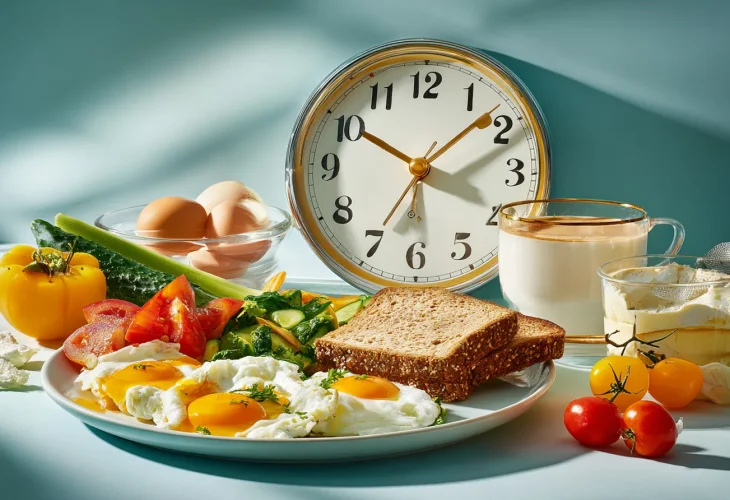
Nutrition advice often focuses on what we eat: more vegetables, less processed food, enough protein, and a balanced diet. But growing research suggests that when we eat may matter too.
A new study published in the European Journal of Clinical Nutrition examined the relationship between meal timing and longevity. Researchers analyzed data from 31,044 U.S. adults ages 40 and older who participated in the National Health and Nutrition Examination Survey (NHANES). Participants reported everything they ate and drank during a 24-hour period, and researchers subsequently tracked mortality data for more than eight years.
The findings revealed an interesting pattern: People who ate their first meal later in the day tended to have a higher risk of death during the follow-up period.
Could Eating Earlier Be Linked to a Longer Life?
Compared with participants who ate their first meal between 7:00 and 8:00 a.m., those who began eating between 8:00 and 10:00 a.m. had a 10% higher mortality risk.
For those whose first meal was between 10:00 a.m. and noon, the increase was 19%. Among participants who did not begin eating until after noon, the associated increase reached 29%.
The relationship was particularly notable for cardiovascular mortality. Participants who ate their first meal in the afternoon had a 46% higher risk of dying from cardiovascular disease compared with those who began eating earlier.
According to the researchers’ calculations, at age 50, people whose first meal was delayed until the afternoon had an estimated life expectancy approximately 2.46 years shorter than those who ate earlier.
What About Your Last Meal of the Day?
The researchers also examined when participants stopped eating.
Compared with people whose final meal was between 7:00 and 8:00 p.m., those who finished eating before 7:00 p.m. had a 13% higher mortality risk. Meanwhile, participants whose final meal occurred after midnight had a 27% higher risk.
The findings therefore do not necessarily suggest that simply eating as early as possible is best. Instead, they raise questions about whether the timing and regularity of meals—and how closely they align with the body's natural rhythms—may play a role in long-term health.
The researchers, led by Dr. Zhili Shan, suggest that meal timing could affect the body's circadian rhythm, or internal biological clock. Eating at times that are poorly aligned with this rhythm may influence the way the body processes glucose and fats.
However, the findings come with an important limitation: The study was observational, meaning it cannot prove that eating later causes an earlier death.
People who eat their first meal later may differ in other important ways. For example, late meal timing could be associated with shift work, disrupted sleep, existing health conditions, or other lifestyle factors that themselves influence longevity.
The study therefore does not establish an ideal breakfast or dinner time for everyone, nor does it mean that occasionally eating breakfast late is dangerous. Rather, it adds to growing research exploring how meal timing and the body's internal clock may be connected to long-term health.
For now, what we eat remains crucial—but when we eat may be another piece of the puzzle.

