

Magazine
From Unimaginable Loss to Choosing Life: Viktor Atia’s Journey of Faith
After the tragic loss of his eight-year-old daughter, Chabad emissary Viktor Atia found strength in faith, family, and shlichut, transforming profound grief into a mission of joy, kindness, and hope
- Michal Arieli
- | Updated
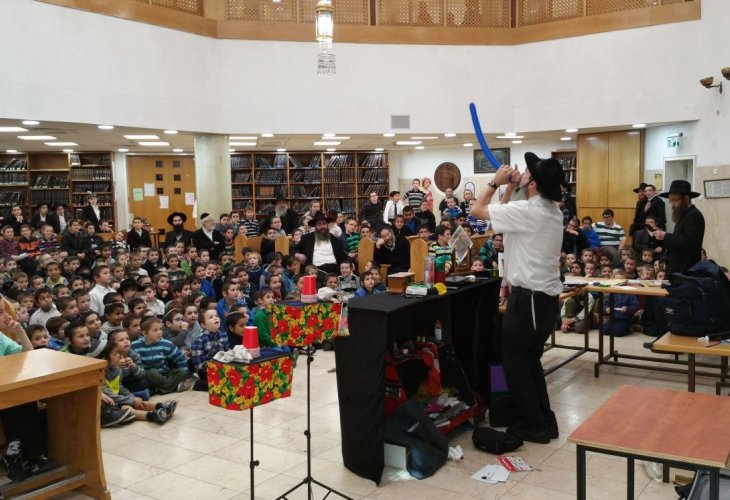
When speaking with Viktor Atia, it is difficult not to wonder about the man behind the voice. At one moment, he sounds cheerful and animated. He sings, jokes, and easily brings a smile to your face. At another, a tear seems to gather in the corner of his eye. His voice drops almost to a whisper, and it becomes clear that behind the joy is a man who has carried profound pain.
Viktor takes us back several decades, to the beginning of his story. “I grew up in a traditional home that was not observant,” he says. “We made Kiddush every Shabbat, but it was the kind of Kiddush where the television was still on and everyone was glancing at the screen while drinking the wine so they wouldn’t miss the suspense. I didn’t know much about Judaism, but from as far back as I can remember, I felt that my soul was searching for something.”
Step by step, Viktor says, he encountered the right people at the right time, people who helped him discover what he felt was the truth he had been seeking. By the time he reached army age, he had already become a baal teshuvah. During his military service, he found himself serving alongside several other young men who were also becoming more observant. Some were further along in the process, while others were just beginning, and they came from different religious backgrounds.
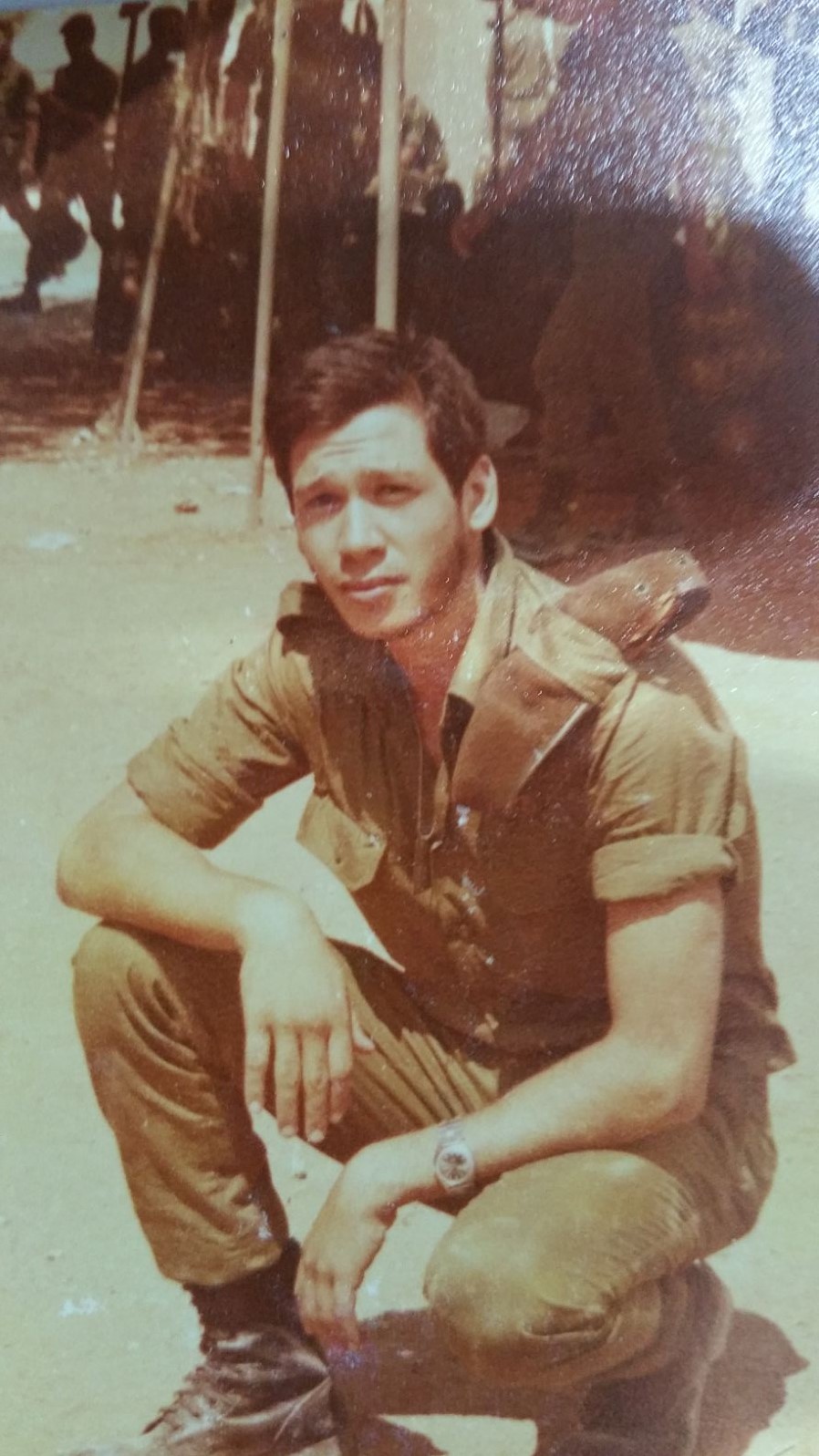 Viktor in his youth
“We became a close-knit group and tried to keep whatever we could,” Viktor recalls. “On Fridays, we would buy chicken with mehadrin certification, use the spices available in the army kitchen, and prepare a Shabbat meal together. On Shabbat, we would eat together, and each person would take a turn sharing a Torah thought. Because each of us had come closer to Judaism through a different path, it created a very special atmosphere. We strengthened one another.”
Not long after completing his army service, Viktor was introduced to the daughter of Rabbi Nachshon, one of the early founders of the renewed Jewish community in Hebron. The match worked out, and Viktor moved to Hebron with his wife, eventually becoming an official Chabad emissary there. Eighteen years ago, another energetic emissary, Danny Cohen, joined him and took responsibility for many aspects of the work, while Viktor’s brother-in-law, Rabbi Yosef Nachshon, also became involved in the mission.
For Viktor, Hebron became far more than a place of work. His entire day revolved around his shlichut, and he raised his children there in what he remembers as a peaceful and meaningful life. Then came the worst day of his life.
“Come Home Quickly. Chaya Mushka Was Burned”
In 2006, Viktor’s eight-and-a-half-year-old daughter, Chaya Mushka, died in a horrific fire.
“I was paying a condolence visit to a friend when suddenly my wife called me,” Viktor recalls. “I answered the phone and heard her screaming, ‘Viktor, come home quickly. Chaya Mushka was burned.’ Then the call disconnected. I felt as though the sky was collapsing on top of me.”
He immediately got into his car and drove home. “It was a terrible drive. We live in one of the newer neighborhoods of Hebron, and outside our house there is a large playground that is usually full of mothers and children. When I arrived, there wasn’t a single person there. It felt like I was entering a ghost town. That only intensified my feeling that the worst had happened.”
As he stepped out of the car, a close friend came toward him. Viktor looked at him and asked, “Avraham, they didn’t manage to save my daughter, did they?” His friend hugged him tightly and said, “Viktor, Baruch Dayan HaEmet.”
Viktor says there is no way to describe what he felt at that moment. “I kept thinking, this cannot be real. How can it be that my Chaya Mushka, my eight-and-a-half-year-old girl, the child I am used to seeing happy and laughing, a part of my soul, is suddenly no longer here? I felt as if I wanted to say to Hashem, ‘Take me too. I don’t want to live. I just want to be with my daughter.’”
Then, unexpectedly, a memory came to him. A few days earlier, one of his older sons had walked past his younger brother and, out of boredom, slapped him lightly on the back of the neck and ran away. Viktor had stopped him and asked why he had done it. The boy hid under a blanket as though he could not hear.
“I told him, ‘The Hebrew words berichah, running away, and bechirah, choice, are made from the same letters. You can choose to face what I am saying and improve, or you can run away.’”
Now, in the midst of unimaginable grief, Viktor realized that he needed to say those same words to himself. “I understood that I had a choice too. But I still felt that I simply could not handle it. I had a sharp pain in my chest that wouldn’t leave me. I looked up toward Heaven and prayed, ‘Give me the strength to know how to deal with this tragedy. Give me the strength to calm my wife and children. Help us come out of this stronger.’”
What Happened That Day?
Later, Viktor learned what had apparently happened. Chaya Mushka and her five-and-a-half-year-old brother had been playing with a box of matches outside the house. Near their home was a small enclosed structure large enough for one or two children. Someone had thrown dry sechach there after Sukkot, and for some reason it had not been cleared away.
The children apparently lit the matches, and the dry branches caught fire. Viktor says that Chaya Mushka’s younger brother realized that her dress had caught fire and shouted, “Take off your dress and run!”
Children who were nearby later told the family that Chaya Mushka cried out, “Help! But then I won’t be modest.” Instead of removing the burning dress and escaping, she hid beneath part of the sechach that had not yet caught fire.
Viktor is careful to emphasize that Jewish law would certainly not have required modesty in such a life-threatening situation. On the contrary, she should have removed the dress immediately. But in the innocence of an eight-year-old child, she did not understand that. Then the rest of the dry branches ignited, and she was trapped.
A neighbor heard the screams and tried to extinguish the fire, but could not. Firefighters did not arrive in time, even though a fire station was only about 150 meters away. “It all happened within seconds,” Viktor says. “By the time my younger son called my wife, the neighbors would not even let her approach. There was already no one left to save.”
At first, Viktor struggled with guilt and anger. “I tried to blame the street cleaner for not removing the sechach. I blamed whoever had thrown it there in the first place. But over time, I came to understand how precise everything was, how everything happened under Divine providence. All of those people were only messengers.”
Viktor later heard that a group of Jews from Hebron had gone to Rabbi Mordechai Eliyahu, of blessed memory, and asked how it could be that a Chabad emissary who had devoted his life to strengthening other Jews could suffer such a tragedy. According to what Viktor was told, Rabbi Eliyahu responded that the girl’s soul had come into the world in order to strengthen the value of modesty.
Viktor also remembers something that happened the day before the accident. “I was visiting my parents in Bat Yam when my wife called and told me she had come home and found the house spotless. Chaya Mushka had cleaned everything.”
Naturally, Viktor praised her. “Later, my wife asked her, ‘Why did you suddenly decide to clean? You never do this on your own.’ Chaya Mushka answered shyly, ‘I wanted you to feel good, Mommy, because tomorrow a lot of people are going to come to the house.’ My wife had no idea just how many people would soon be coming. Looking back, we felt that perhaps Mushka somehow sensed that something was about to happen.”
“Where Is My Daughter in This Entire Universe?”
Years have passed since the tragedy, but Viktor says the pain remains real and piercing. “The first year was extremely intense. The pain never left me.”
One day, he opened the Igrot Kodesh, the collected letters of the Lubavitcher Rebbe. The pages that opened before him were in Yiddish, which he could not understand, but two Hebrew words appeared there: Akeidah and tzedakah.
“I couldn’t help feeling how perfectly those words fit what had happened. I thought about what my daughter had gone through as a kind of Akeidah, and I decided to strengthen the mitzvah of charity by placing tzedakah boxes in her memory.”
The days of shiva were extremely difficult, but the nights were the hardest. “During the day, there were constantly people coming and going. People talked, and there was always something happening. But at night, it was just you, your wife, and the Creator.”
He remembers one night in particular. “I went to cover my children. First, I entered the boys’ room. The shutters were closed, and everyone was under their blankets. Then I went into the girls’ room and felt a cool breeze. I looked at the beds. My older daughter was sleeping there, and Chaya Mushka’s bed was empty. I felt such an enormous void open up in the house.”
Viktor turned toward the window and stared into the dark sky. “I began whispering, ‘Master of the universe, I am a believing Jew. But until a week ago, there was a child sleeping in this bed. Where is she now, in this entire universe?’ I felt incredibly small. I understood nothing.”
He went to bed and spent most of the night crying into his pillow. “I kept thinking about my daughter. I hoped she was okay. I hoped she wasn’t suffering. I slept maybe an hour or an hour and a half. When I woke up, I understood more deeply than ever what we mean when we say, ‘Like a father has compassion for his children.’ There is nothing in the world that compares to a father’s compassion for his child.”
Building in Her Memory
As time passed, Viktor decided that he wanted to expand his work in Hebron in memory of Chaya Mushka. Rabbi Gluckowsky, one of the prominent Chabad rabbis, encouraged him to build a permanent structure in her memory, telling him that “a building has the power to heal.”
Raising the money was not easy. “I’m not naturally someone who knows how to fundraise,” Viktor admits. “But my partner in the Chabad House helped me, and over six years we raised money in Israel and around the world.”
Eventually, they built a three-story center that includes a synagogue, a large library, space for children’s programming, assembly halls, and guest facilities. During periods of military operations in the Hebron area, soldiers often stay there. “They know our center is always open to them. They can shower, eat, and rest.”
The building has become a living memorial, transforming personal grief into a place that serves others.
One Eye Cries, the Other Laughs
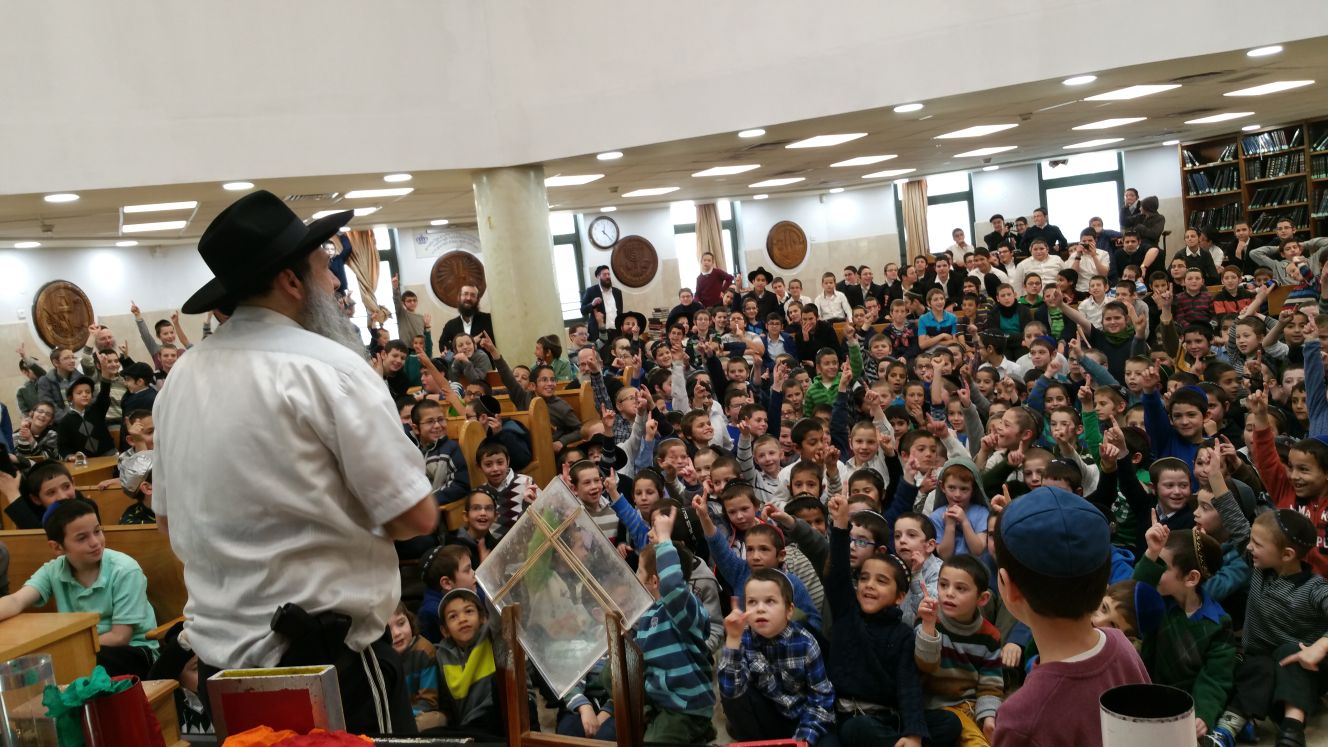
Perhaps the most surprising part of Viktor’s story is that despite the sadness he carries with him, much of his work today is centered on laughter and joy. In recent years, he has become highly skilled in magic and mentalism, performing for audiences in Israel and abroad.
“It started when I was fundraising in the United States,” Viktor explains. “I was standing in a store when a non-Jewish man came in holding a wallet. He opened it as if he were taking out money, and suddenly flames came out. Then he closed it, opened it again, and more fire appeared. Finally, he left behind a business card saying that he performed magic and mentalism shows and walked away.”
Viktor noticed how completely the man had captured everyone’s attention. “I thought to myself, if I want to work in a field that fascinates everyone, children and adults alike, this is it.”
It did not happen overnight. Slowly, he met people in the field, learned techniques, and began developing his own ideas. Today, he performs frequently, but he makes a point of connecting the entertainment to Jewish values.
“If I bend a spoon, for example, I say, ‘Look, the spoon bent and the handle rose upward. That teaches us that someone who knows how to forgive and give in can rise higher.’ Or if I perform something that makes me look powerful, I explain that the Hebrew word gibor, hero, is related to lehitgaber, to overcome. A true hero is someone who can overcome himself and know when to give in.”
For Viktor, the performance is never only about the trick. It is another form of shlichut.
Choosing Life
“I chose to take the lesson of choosing life,” Viktor says. He plays with the Hebrew word chacham, wise, which is an acronym for the Hebrew words “half the glass that is full.”
“I choose to look at the fact that I was privileged to have my wonderful daughter for eight and a half years. I thank Hashem that, Baruch Hashem, I have eleven wonderful children. I have a reason to come home. That heals my soul.”
He is also deeply grateful for the path that brought him closer to Torah and Jewish tradition. “I thank Hashem every single day that I merited to return to Torah before the tragedy happened,” he says. “Because I know clearly that if I had not become observant before what happened, I would not have survived this grief.”
For Viktor, faith did not eliminate the pain, but it gave the pain a framework he could live with. “When something hurts and you do not even believe that there is Someone who sent that pain, the suffering becomes much harder.”
Viktor still lives with both sides of his story. One eye cries. The other laughs. Between them is the choice he continues to make every day: to keep living, to keep giving, and to keep turning pain into something that can bring light to others.

