

Magazine
Forever Remembered: Turning the Stories of Israel’s Fallen Into Living Legacies
After the war brought his career to a standstill, Gershi Kornitzer found a new mission to help more than 100 bereaved families honor their loved ones through Torah scrolls, books, acts of kindness, and deeply personal memorial projects
- Hidabroot
- | Updated
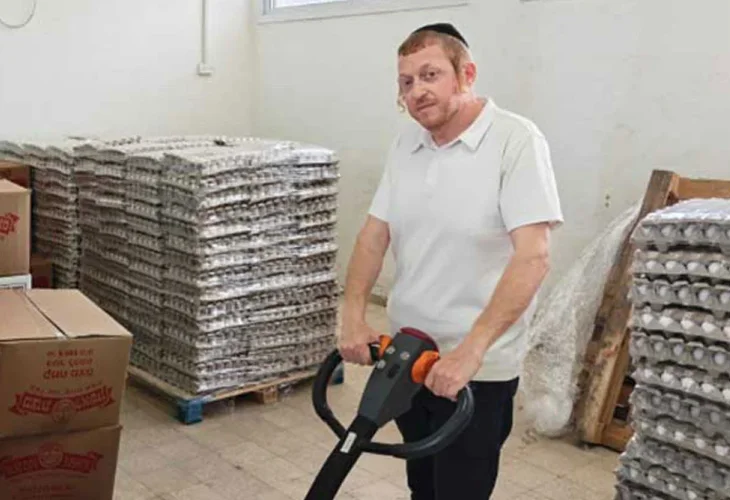 Gershi Kornitzer (Photo: Yehoshua Prochter)
Nothing could have prepared Gershi Kornitzer for the experience of meeting more than 100 bereaved families whose loved ones were killed during the war. What began as a spontaneous desire to help has grown into a deeply personal mission of helping families create meaningful memorials that reflect the lives, values, and personalities of those they lost.
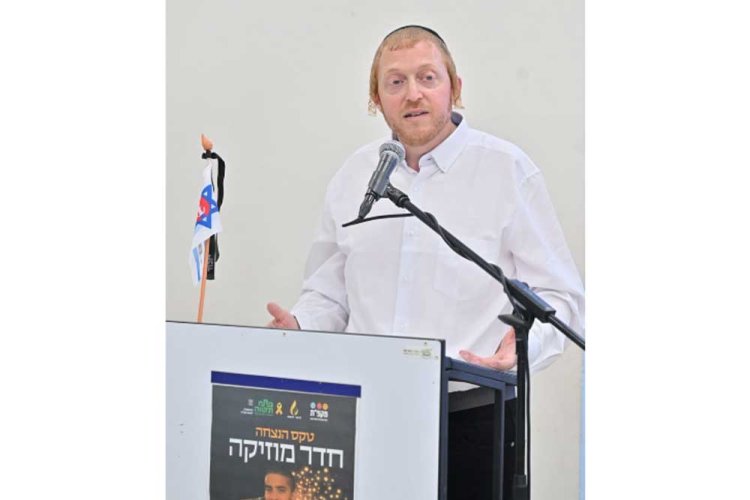
Kornitzer, a Hasidic Jew from Ashdod, had previously worked as a tour guide, primarily leading groups of visitors from abroad through Israel. When the war began and tourism came to an abrupt halt, his professional life changed overnight. Unexpectedly, the loss of his livelihood opened the door to an entirely different kind of work.
A Bereaved Mother’s Fear
The idea began one morning while Kornitzer was listening to the radio and a bereaved mother was speaking about the support her family had received following the loss of her son. Amid all the care and concern, she confessed that one fear haunted her: that eventually, her son would be forgotten.
With so many soldiers falling during the war, Israelis had tragically become accustomed to hearing yet another announcement that a soldier’s death had been “cleared for publication.” Behind every announcement was a person with a name, a family, a story, and a life. But as the number of casualties grew, the mother feared that individual stories might slowly disappear from public memory.
Her words stayed with Kornitzer. “I remember hearing her and saying to myself, ‘We have to do something to commemorate these soldiers who gave their lives for us.’” That thought became the foundation of the “Forever Remembered” initiative, dedicated to creating meaningful memorial projects for fallen Israelis.
Kornitzer had no previous background in memorial projects, fundraising campaigns, or public relations. With tourism at a standstill, however, he suddenly had time on his hands and wanted to use it for something worthwhile. Together with several partners, he began helping bereaved families honor their loved ones.
For Kornitzer, memorializing the fallen cannot be reduced to a standard formula. “I don’t offer families a ‘package of products,’” he explains. Instead, he sits down with each family and listens. Who was their loved one? What mattered to them? What made them unique? What values shaped their life? Only after understanding the person behind the name do they begin discussing ideas for a fitting memorial.
Some requests are difficult to carry out, and others require considerable funding. Yet Kornitzer says that so far, they have managed to fulfill every memorial request they have accepted. “We had special Divine assistance, and we managed to fulfill every family’s dream.”
From a Book of Writings to a Music Room
The initiative began modestly. One of Kornitzer’s first projects involved a widow who wanted to publish her late husband’s writings in a booklet. He helped her raise small donations and connected her with the professionals she needed. Soon, however, larger projects followed. Today, the organization has been involved in more than 100 memorial initiatives.
One particularly moving project commemorated Amitai Granot, son of Rabbi Tamir Granot, head of Yeshivat Orot Shaul. After the mourning period, Rabbi Granot discovered his son’s diaries and wanted to publish them as a book. Kornitzer’s initiative took responsibility for the entire process, from editing and printing to distribution and financing. The book was eventually published and made available to the public.
Another project honored Yaad Ben Yaakov, who fell in battle on Simchat Torah. When Kornitzer and his colleagues met Yaad’s mother, Lihi, they learned that music had been central to her son’s life. Yaad had not kept his talent to himself; he devoted time to teaching music to underprivileged children.
Together, they decided that the most fitting memorial would be a professional music room in Petah Tikvah, Yaad’s hometown. The project cost several hundred thousand shekels. The city provided the space, while the organization equipped it with everything necessary. Perhaps the most poignant detail was the identity of its teacher: Yaad’s own former music teacher came to teach there, allowing the music that had meant so much to him to continue through others.
Tefillin and a Synagogue in a Soldier’s Memory
Another project commemorated Idan Kenan of the Kfir Brigade, who was killed by a Hamas sniper near Jabalia. His parents described a young man with a deep connection to faith. Although Idan did not define himself as religious, his spiritual connection was particularly important to him.
His mother suggested distributing tefillin in his memory. The organization purchased pairs of tefillin, and the family traveled around the country distributing them to Jews who wanted to begin putting on tefillin or who could not afford a pair of their own.
The family also wanted to commemorate Idan in the synagogue where he had prayed. The building was in poor condition, so together with the family, the organization undertook a comprehensive renovation and transformed it into a renewed place of prayer.
Remembering “The Good Policeman”
Sometimes the process of creating a memorial uncovers stories even the family did not fully know, such as when Kornitzer met the family of police officer Shmuel Golima, who rushed to save lives on Simchat Torah and was killed at the police station.
His widow described him simply as “the good policeman.” Only after his death did she discover the extent of his quiet generosity. He would visit grocery stores and vegetable shops and leave money with the owners. If someone reached the register and discovered they did not have enough to pay, the shopkeeper could use Shmuel’s money to cover the difference, allowing the customer to leave with dignity and with the food they needed.
The organization decided that the most fitting memorial would be to continue that kindness. Before Passover, they raised money for food vouchers, which Shmuel’s widow distributed to struggling families in Sderot. The initiative was so successful that they repeated it before the Tishrei holidays.
Memorials at No Cost to the Families
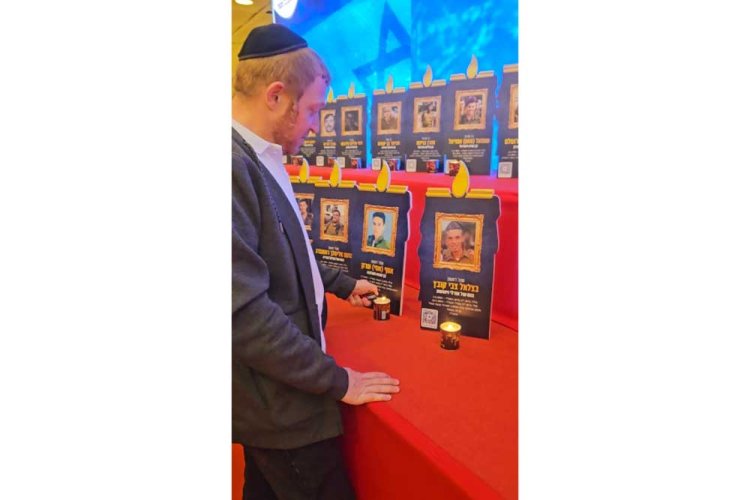
Bereaved families are not asked to finance these projects. “We don’t ask the families for anything,” Kornitzer emphasizes. They provide photographs, information, and guidance so that the memorial remains faithful to their loved one, but they are not expected to pay anything themselves.
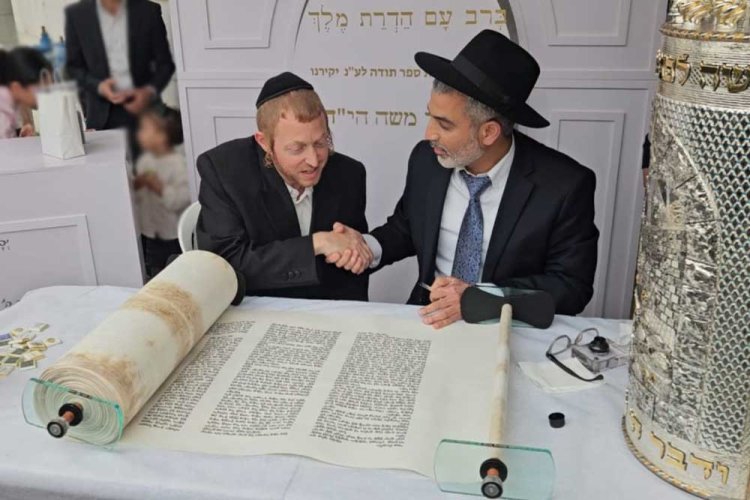
Among the most frequently requested memorials are Torah scrolls. Interestingly, Kornitzer says, the request often comes from families who are not religious. There is something about a Torah scroll, he believes, that represents permanence, connection, and continuity.
When a family does not have a particular synagogue in mind, Kornitzer and his team help find one, preferably a newer synagogue or a congregation without many Torah scrolls, ensuring that the memorial scroll will be regularly read and used.
Building a Mikvah in Memory of the Fallen
Among the initiative’s more recent projects is a memorial for Adi Baruch, a reservist who was killed by a rocket strike in Sderot while on her way to volunteer for the city’s defense. Her family chose to commemorate her through the renovation of a mikvah in Moshav Tushiya.
The project inspired other bereaved parents to approach Kornitzer with similar requests. Because building or renovating a mikvah requires significant funding, the organization decided to bring seven families together for a joint project: a mikvah near Gaza dedicated to the memory of seven fallen female soldiers.
The projects are funded by donors from across Israeli society as well as supporters abroad. Kornitzer says that different donors connect with different types of memorials, and his team tries to match major donors with projects that speak to their interests and values.
Living With the Families’ Pain
Working so closely with bereaved families inevitably carries an emotional price. “It’s really not easy,” Kornitzer admits. Every time he enters a bereaved family’s home and sees the photographs and memorial corner, he feels the pain anew. From what he has witnessed, he says, no family simply returns to the life it lived before the loss. A permanent void has been created.
However, knowing that he can help preserve the memory of the person they loved gives him strength. The stories of the fallen have also changed his own family life. At the Shabbat table, Kornitzer makes a point of telling his family about another person whose story he encountered that week — another hero, another act of courage, another life worth remembering.
Kornitzer believes that memorialization can bring a measure of comfort, although he is careful not to confuse comfort with the disappearance of grief. Many families tell him that creating something meaningful in their loved one’s memory brings a certain sense of relief. Their son, daughter, spouse, or parent may no longer be physically present, but something carrying their values continues to live and influence others.
And yet, no memorial can replace the person who was lost. “The pain remains,” Kornitzer says, because the families have lost what was most precious to them. “Nothing can fill that void.”
A Mission That Continues
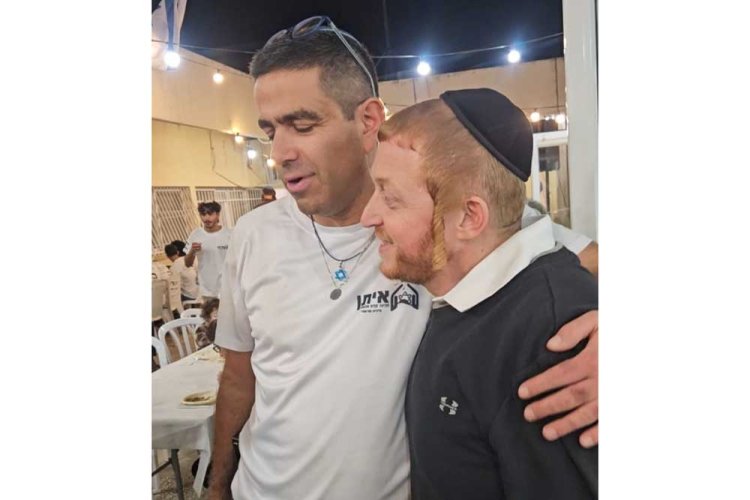
Many of the families Kornitzer works with are not religious, and some are surprised when they meet him for the first time and discover that the person coordinating their memorial project is a Hasidic Jew. For Kornitzer, those encounters have become another meaningful part of his mission. The reactions, he says, are overwhelmingly positive, creating connections between Jews who might otherwise never have met.
Kornitzer has since returned to his regular work, but he has no intention of leaving the memorial initiative behind. He now combines both. From the beginning, he made himself a promise that he never wanted to reach a point where he would need to turn away a bereaved family.
His ultimate goal is larger than any individual project.
“My aspiration is to memorialize everyone,” he says, “not only for the families, but also for the people of Israel, so that they can get to know those who are no longer with us, and so that their memory will continue to accompany us forever.”

