

Interesting
Could Silk, Yeast and AI Help Keep Food Fresh for Longer?
From edible silk coatings to smart packaging and antimicrobial yeast, scientists are developing surprising new ways to keep food fresh and reduce waste.
- Shira Dabush
- | Updated
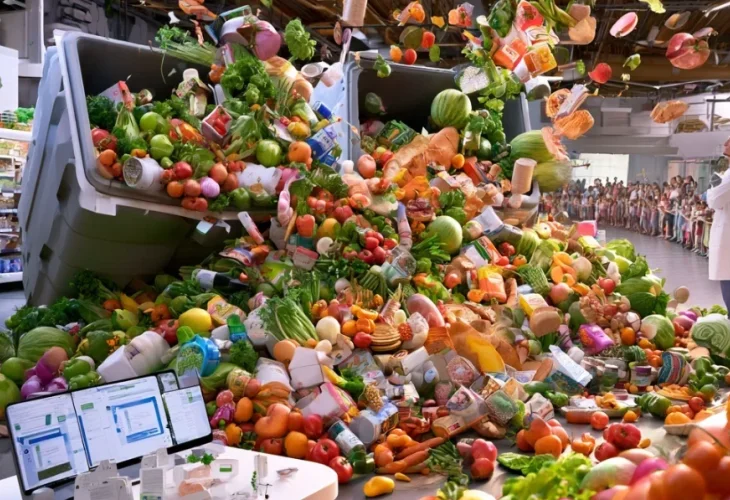
What if a bag of lettuce could alert you that the food inside was contaminated, or a piece of fruit could be covered with an ultra-thin layer of silk protein that keeps it fresh for several extra days? Researchers around the world are developing new ways to slow spoilage, detect harmful bacteria more quickly, and reduce the enormous amount of food that ends up in the trash.
Among the more intriguing developments are yeast that carry antimicrobial substances, smart packaging, artificial intelligence, and edible coatings made from silk protein. We tend to think of yeast as something added to dough, silk as a material used for clothing, and artificial intelligence as a tool that generates text and images. But in laboratories around the world, these same materials and technologies are taking on a very different role: helping food stay safe and fresh for longer.
Could Yeast Help Fight Bacteria?
Prof. Nitin Nitin, a food engineer at the University of California, is exploring the possibility of using yeast as a carrier for antimicrobial substances. The idea is to use the structure of yeast cells and their walls to “package” substances that can target bacteria and deliver them more efficiently where they are needed.
One of the substances being tested is thymol, a key component of thyme oil known for its antimicrobial properties. In studies, researchers have used yeast to carry thymol and help disrupt bacterial biofilms that can form on surfaces that come into contact with food.
One potential advantage of this approach is that it could be relatively simple and inexpensive, without necessarily requiring complex industrial equipment. If the technology develops further, it could prove especially useful in places where refrigeration and food-handling infrastructure are limited.
Packaging That Does More Than Wrap Food
Another area attracting researchers’ attention is smart packaging. Today, we rely heavily on dates printed on food packages, but a date does not always tell us the food’s actual condition at that particular moment. It may not reveal whether microbial contamination has developed, while perfectly usable food can sometimes be thrown away simply because of the date on the package.
Researchers are therefore developing packaging that does more than protect the product—it could also help monitor what is happening inside.
The idea is to incorporate sensors capable of detecting pathogens or changes associated with spoilage and communicating that information in a way that can be quickly understood. In some systems being tested, signals can be read using a dedicated scanner and displayed on a screen or smartphone.
If technologies like these eventually become widely available, consumers may one day be able to rely more on real-time information about the condition of their food rather than simply looking at a printed date.
What Does Silk Have to Do With Fresh Fruit?
One of the most surprising developments comes from the world of silk.
A team led by materials engineer Prof. Benedetto Marelli is studying the use of fibroin, a protein found in silk. The material can be processed into an extremely thin, transparent layer, and research has explored its use as an edible coating for fruit.
The goal is to slow the processes that cause food to lose freshness and eventually spoil. Studies have found that silk-based coatings can extend the shelf life of certain produce.
For consumers, the concept is surprisingly simple: the fruit may look and feel almost completely normal while being covered by a very thin protective layer designed to slow down its deterioration.
Even Tiny Needles Are Part of the Picture
Researchers have not stopped at coatings. Marelli’s team has also studied microscopic silk-based needles that can deliver carefully measured substances into agricultural produce to slow processes associated with aging.
In one experiment, researchers used the tiny needles to deliver melatonin to pak choi. The treatment delayed the yellowing of the leaves and extended shelf life by 10 days under refrigeration and four days without refrigeration.
The potential could be particularly significant in places where fresh produce must travel long distances between the field and the market or spend extended periods without ideal refrigeration.
A New Approach to Food Waste
These developments are only a small part of a much broader field of research. Scientists are also exploring bacteriophages—viruses that target specific bacteria—to help reduce food contamination, along with other biological coatings that may slow spoilage, sensors that detect chemical changes inside packaging, and technologies designed to protect food before deterioration begins.
Artificial intelligence is also increasingly being explored as a way to analyze information about food quality, storage conditions, and spoilage, potentially helping producers and retailers make better decisions about when food is still safe and usable.
What these approaches have in common is a shift in thinking. Instead of waiting until food has spoiled and then throwing it away, researchers are looking for ways to detect problems earlier, slow deterioration, and give food a longer usable life.
If even some of these technologies make the transition from the laboratory to everyday use, the food of the future may not simply last longer. It may also become much better at telling us when it is actually time to throw it away.

