

World News
$209 Billion Over 25 Years: Inside Trump’s Massive Venezuela Oil Deal
Venezuela’s interim president, Delcy Rodríguez, says the energy agreement with the United States will last 25 years and could bring the country roughly $209 billion. American companies are preparing to expand their operations, while protests against the U.S. presence continue in Caracas.
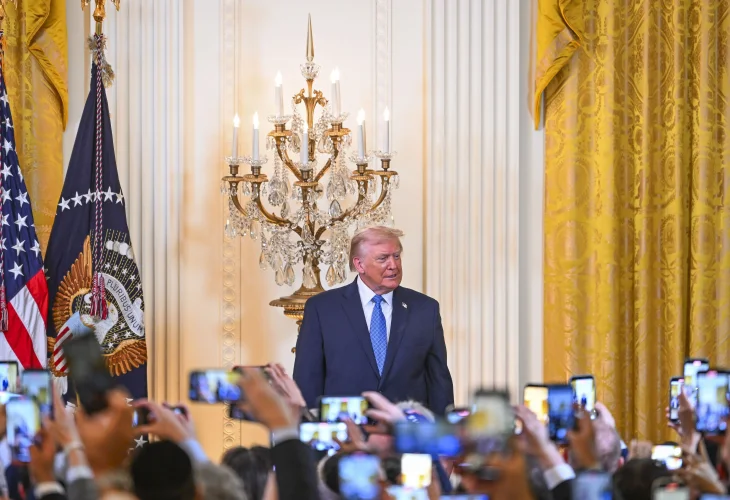 Trump (Photo: Live Avrahams, Flash90)
Venezuela’s interim president, Delcy Rodríguez, says the energy agreement with the United States will last 25 years and could bring the country roughly $209 billion. American companies are preparing to expand their operations, while protests against the U.S. presence continue in Caracas.
Venezuela’s interim president, Delcy Rodríguez, revealed additional details overnight, between Shabbat and Sunday, about the energy agreement between her country and the United States, most notably, the length of the arrangement and the revenue Venezuela expects to receive. In a nationally televised address on the state-run VTV channel, Rodríguez announced that the agreement would remain in effect for 25 years. She called it a “historic” deal intended to help rebuild the economy and bring billions of dollars into state coffers.
Under the plan presented by Rodríguez, cooperation with Washington will include the development of 17 strategic oil fields, with the goal of increasing crude oil production to 1.5 million barrels per day. She said this figure represents the planned output under the bilateral agreement alone and is an initial target. The broader plan to expand Venezuela’s energy sector also includes developing eight new oil blocks.
The new details emerged after U.S. President Donald Trump announced a plan under which the United States would take partial control of Venezuela’s oil reserves. He said that, through partnerships with the private sector, the United States had secured majority control over more than 65 billion barrels of proven oil reserves. The move is based on the expectation that American companies could help revive the local oil industry while also helping lower fuel prices in the United States.
Rodríguez sought to ease concerns about damage to Venezuela’s control over its resources, stressing that the country continues to retain full “ownership and sovereignty” over its natural resources. She said the arrangement with the United States is intended to enable Venezuela to tap foreign capital, technology, and operational expertise to rebuild its oil industry, which has been hurt for years by sanctions, underinvestment, and poor management.
The expected scale of the revenue was also revealed in the interim president’s address. According to her estimate, the arrangement could bring Venezuela roughly $209 billion, based on a benchmark price of $65 per barrel. Rodríguez noted that about $19 from every barrel produced and sold under the agreement is expected to go directly into state coffers.
That revenue is especially significant for Venezuela, whose current oil production stands at only about 1.25 million barrels per day, a figure far below its production potential. The government hopes that the investments and technology brought in under the new arrangement will help expand the industry’s operations and increase output.
Energy companies are already preparing to take part in the new framework. Venezuelan officials are expected to sign agreements next week granting energy companies, including American firms, exploration and production rights. Sources involved in the negotiations said energy giant Chevron is among the companies expected to finalize talks and move its joint ventures into the new energy framework.
But the growing economic ties between Caracas and Washington are also sparking domestic opposition. Dozens of groups affiliated with the government gathered in central Caracas and demonstrated against the American presence in the country. The protests are taking place as the government continues to advance agreements with foreign companies, as part of an effort to revive one of Venezuela’s key economic sectors.

