

Magazine
The Loneliness We Cannot Prescribe Away
Loneliness may be a health problem, but doctors can’t treat it effectively. Communities and individuals must step up.
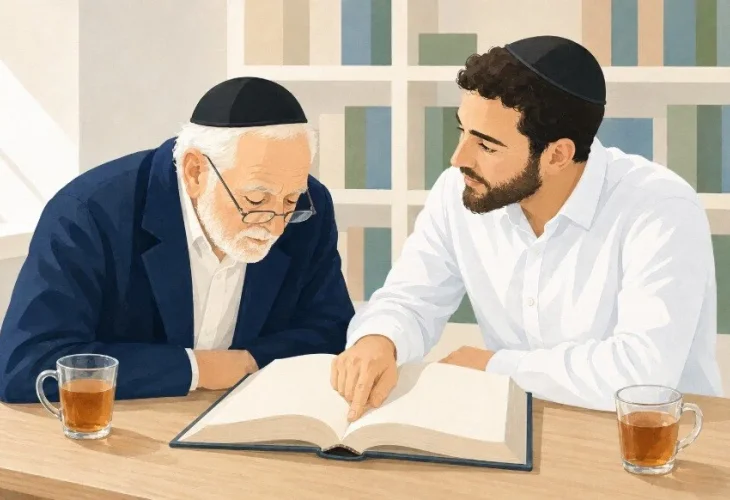
For quite a few years now, scientists and public-health officials have been telling us that chronic loneliness can be bad for the body as well as the soul.
The evidence is substantial. Loneliness and social isolation have been associated with higher risks of cardiovascular disease, stroke, dementia, depression and premature death. The U.S. Surgeon General's landmark 2023 advisory warned that the health consequences of lacking social connection can be comparable to those associated with smoking up to 15 cigarettes a day.
The World Health Organization has likewise described loneliness as a global health concern, estimating that between 2014 and 2019, loneliness was associated with more than 871,000 deaths annually—about 100 deaths every hour.
But a new study from the University of Michigan raises an important question: Does recognizing loneliness as a health problem mean that doctors should be expected to fix it?
The answer, argues sociologist Sofia Hiltner in research published in Social Problems, is no—not by themselves. Hiltner examined more than a decade of media reports, medical literature and academic research on loneliness. Her concern is that once loneliness became associated with disease and mortality, society began making a logical leap: if loneliness damages health, perhaps healthcare should treat loneliness.
But a doctor can screen a patient for loneliness. A doctor can refer someone to a community program or mental-health professional. A doctor cannot manufacture a friendship, rebuild a neighborhood, restore a family relationship or give someone a community in which they genuinely belong.
Loneliness is not identical to being physically alone. Someone can live alone and feel perfectly connected to other people; someone else can live in a crowded house, work in a busy office and still feel profoundly lonely. Loneliness is fundamentally about the gap between the relationships we have and the relationships we need. And that gap appears to be growing.
A large 2025 analysis spanning 159 countries found that social isolation increased globally by 13.4 percent over a 16-year period—from 19.2 percent to 21.8 percent—with the entire increase occurring after 2019. The COVID-19 pandemic clearly accelerated an existing trend, but it did not create it. Americans had already been experiencing declining participation in civic, religious and social organizations, fewer close friendships and weaker forms of community life.
Technology is part of the paradox. We can contact almost anyone instantly, yet digital contact does not necessarily produce the kind of sustained, embodied relationships human beings need. Remote work and remote education have eliminated many of the casual encounters that once connected people. Smartphones can fill every quiet moment, leaving less room for spontaneous conversation. And modern life increasingly prizes independence, mobility and efficiency—qualities that can be valuable, but can also make people less rooted in communities.
The result is a strange modern phenomenon: we have more ways to communicate than any previous generation, but fewer structures that require us to belong to one another.
Judaism offers a remarkably different starting point.
The Torah's description of the first human being contains a statement that sounds almost like a medical or psychological observation: “It is not good for man to be alone.” (Genesis 2:18). It is a sweeping statement about human nature.
The Mishnah makes the communal obligation even more explicit. Hillel teaches in Pirkei Avot: “Do not separate yourself from the community.” The surrounding passage is not merely about attending communal events. It presents participation in a community as part of living a healthy human life.
Jewish tradition also understands friendship as something that requires intentional cultivation. Pirkei Avot teaches, “Acquire for yourself a companion.” A companion is not simply someone who happens to be available. Friendship is something we actively acquire, maintain and invest in.
Perhaps most strikingly, the Talmud records the famous expression “o chavruta o mituta”—“either companionship or [something like] death”. The point is not that every lonely person is literally in mortal danger. It is that human beings can suffer profoundly when they lose the relationships through which they are known and valued.
This suggests an important correction to the modern conversation about loneliness.
The solution cannot be only to teach lonely individuals better coping skills. Nor can we simply tell them to “put themselves out there.” If the institutions that once created relationships are disappearing, the answer must include rebuilding those institutions.
Families can make time for shared meals. Synagogues can become places where people are genuinely known. Schools and workplaces can create opportunities for sustained relationships rather than constant transactions. Communities can notice the person who has stopped showing up.
And individuals have a role too. We may need to resist the temptation to wait until we feel like socializing. Call someone. Invite someone for a meal. Join something that meets regularly. Become useful to other people. Show up repeatedly.
The most important lesson from the new research may therefore be larger than medicine: loneliness is a health problem, but it is not merely a medical problem.
A prescription can treat an illness. It cannot give us a neighbor.
For that, we need something older and more demanding: a community in which people know that they need one another—and act accordingly.

