

Israel News
Extreme Weather Shuts Down Desalination Plants South of Hadera
Unusual weather has caused severe turbidity in seawater, forcing desalination plants south of Hadera to shut down. Agricultural water was cut off in the Ramat Negev region, while Eshkol officials urged residents to reduce consumption until the plants resume full operations.
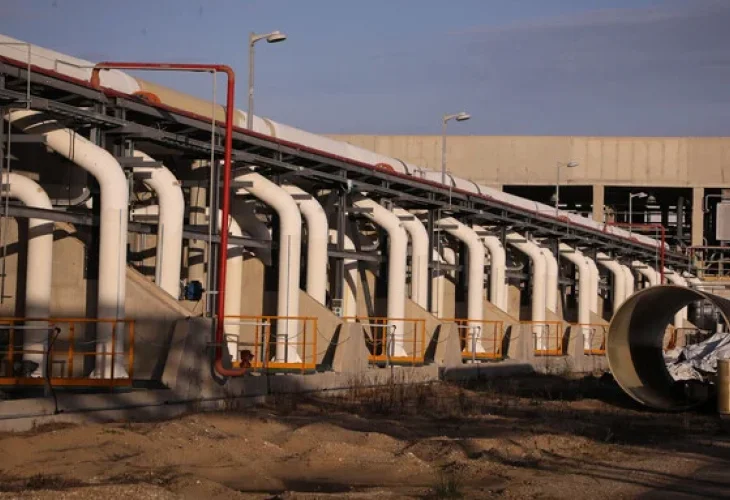 Desalination plant (Photo: Yitzhak Harari, Flash90)
The unusual weather and heavy rains of recent days have led to the shutdown of water desalination plants south of Hadera and disruptions to the water supply system. The Water Authority confirmed today (Monday) that damage to seawater quality forced some of the plants to temporarily halt operations. As a result, officials also decided to reduce the supply of fresh water for agriculture in the south.
The main problem is severe turbidity in the seawater caused by the weather conditions. At this point, the only major desalination plant that remains operational is the facility in Hadera. The plants that were shut down will be able to resume operations once seawater turbidity drops to the required level.
The plant shutdowns are already affecting agriculture in the south. In the Ramat Negev Regional Council, the water supply for agriculture has been cut off, while the Eshkol Regional Council urged farmers and the public to reduce their use of water for agriculture and gardening.
The unusual rains have also caused complex technical malfunctions at several major desalination plants across the country, and in recent hours there has been a significant disruption to the regular nationwide water supply. Infrastructure teams are working to overcome the malfunctions and restore the plants to full operation. At the same time, urgent intervention is currently needed to manage demand, in order to prevent a further drop in water pressure and emergency reserves.
Despite the unusual situation, the Water Authority stresses that the water system continues to operate in full. Mekorot is immediately reinforcing all available production resources, while professional teams continue monitoring seawater quality in order to allow the plants to resume operations as soon as possible. According to the latest assessments, some of the facilities may return to operation soon, and the authority said it is prepared for various scenarios.

