

Jewish Law
How to Merit a Good Year: Rosh Hashanah, the Shofar, and the Power of Overlooking Offenses
Practical Rosh Hashanah laws, together with a powerful lesson on avoiding anger, the strength of sincere prayer, and being sealed for a good life and peace
- Hidabroot
- | Updated
Two daily halachot from BeHalacha U'BeAggadah, based on the rulings of Maran Rabbi Ovadia Yosef.
Is It Permitted to Eat Before the Shofar Blowing?
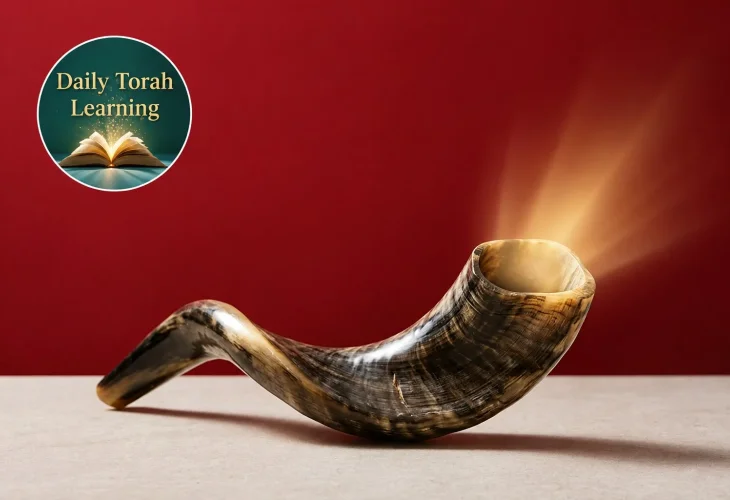
Rosh Hashanah is called a "day of sounding the shofar", referring to the special mitzvah of the day, the mitzvah of blowing the shofar. The sound of the shofar reminds us: Improve your deeds! Awaken, examine your actions, and return to Hashem.
Someone who feels weak may eat a small amount before the shofar blowing begins. It is preferable to recite Kiddush over wine or grape juice, drink most of a revi'it [41 grams], and eat up to a kebeitzah of cake [54 grams]. If obtaining wine is difficult, one may eat without reciting Kiddush.
How Can We Merit to Be Sealed for a Good Life and Peace?
There is an essential lesson that we must understand and internalize. As important and precious as the Jewish customs of eating certain foods on Rosh Hashanah may be, we must remember that these foods are only simanim, symbols. What matters most is that a person makes an effort to create a pleasant and joyful atmosphere at home.
For example, if a man becomes angry at his wife because the food accidentally burns, he has not only fallen into the wrongdoing of anger, but has also created a negative sign for the new year.
If, however, he chooses to let it go and restrains himself, his reward will be exceedingly great. This itself can be a reason for him to merit being written and sealed for a good life and peace. The most important thing depends on the person himself and his efforts to create a warm and pleasant atmosphere.
A person should therefore make every effort not to become angry. In this merit, he may experience the fulfillment of the words of the Gemara (Rosh Hashanah 17a): "Whoever overlooks offenses committed against him, Heaven overlooks all his transgressions."
Daily Quote
"Just as a person must have complete faith in Hashem, blessed be He, that He creates everything, directs, rules, and watches over everything, and that He has the power to change nature according to His will, so too a person must have faith in himself. He must believe with complete faith that Hashem hears, listens to, and pays attention to every single word of every Jew, even one who considers himself the lowest of the low. Every Jew has the ability to bring about the fulfillment of his request through Hashem's mercy if he truly prays to Him."
Source: Rabbi Natan of Breslov, Likutei Halachot, Nachalot 4
Understanding the Quote
Rabbi Natan of Breslov speaks about two important aspects of faith.
Faith in Hashem: We believe that Hashem is the Creator, the One who directs, watches over, and rules everything, and that He has the power to change nature according to His will. This fundamental belief teaches us that the world does not operate by chance. Hashem is the source of everything and has complete control over creation.
Faith in one's own ability: Alongside faith in Hashem, every person must also believe in the power and importance of his own prayer. The passage emphasizes that Hashem hears every word and every prayer of every Jew, even someone who feels that he is "the lowest of the low." Every Jew has the ability to accomplish something through prayer, provided that the prayer is offered sincerely and truthfully.
Rabbi Natan emphasizes that just as it is important to believe in Hashem's power and sovereignty, it is also important to believe in the power of prayer and in one's own ability to turn to Hashem and ask for mercy. Even the simplest person can have an impact through sincere prayer, with faith in Hashem and in the significance of his prayers.

