

Words of Torah
When Life Hurts: King Solomon’s Advice for Facing Hardship Without Despair
Proverbs teaches us not to reject life’s difficulties or become overwhelmed by them, but to recognize Hashem’s love, search for meaning, and find the strength to grow through challenging times
- Amitai Chanaya
- | Updated
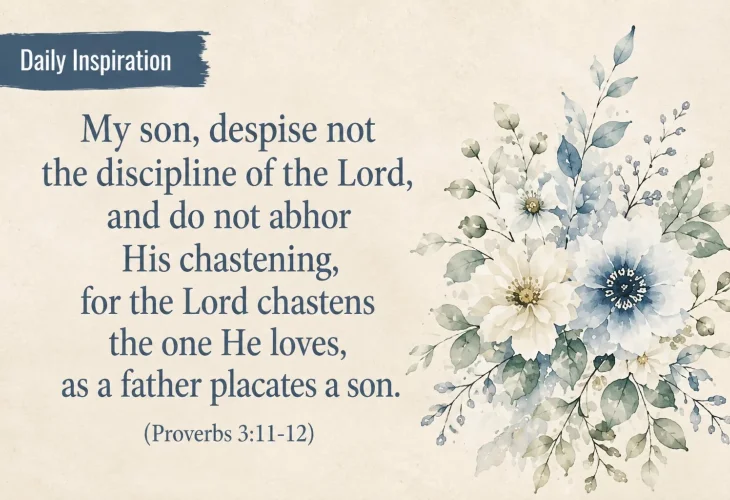
“My son, do not reject the discipline of Hashem, and do not grow weary of His rebuke. For Hashem rebukes the one He loves, as a father favors his son.” (Proverbs 3:11–12)
When a person experiences hardship and suffering, the natural reaction is often either to push it away or to sink into despair. King Solomon however offers a different approach. Rather than becoming bitter, we are encouraged to recognize that hardship is not intended to break us. It comes from the Creator’s love and is ultimately directed toward our good.
Rashi explains: “‘My son, do not reject the discipline of Hashem’: If suffering comes upon you, let it be precious to you. ‘Do not grow weary’: This is similar to the expression, ‘I am weary of my life’ (Genesis 27).
‘As a father favors his son’: Like a father who desires to benefit his son and comforts him after striking him with the rod, so too the goodness that comes after the blow will be sweet to you.”
Two Ways of Responding to Hardship
The verse presents two levels in our response to suffering. It tells us not only, “Do not reject it,” but also, “Do not grow weary.”
“Do not reject it” means not responding to suffering with complete rejection or disgust. On the contrary, Rashi says, “Let it be precious to you.” The challenge can be viewed as something meaningful rather than something entirely without purpose.
The verse then adds, “Do not grow weary.” This refers to not sinking into despair or emotional exhaustion, similar to the expression, “I am weary of my life.”
The Torah’s guidance therefore asks for more than simply enduring hardship. It encourages us to search for meaning, love, and purpose even within the challenge itself.
The Father and Son
The comparison to a father and son illustrates this idea.
A loving father disciplines his child not because he wants to cause pain, but because he cares about his child and wants what is best for him. Afterward, he comforts him and continues to shower him with love and goodness.
Similarly, the hardships we experience are not arbitrary. They can be part of a larger process leading toward something better.
With this understanding, it becomes possible to view even painful challenges through a different lens, as part of Hashem’s love and closeness, even when we cannot yet understand their purpose.
Something to Take With You
Do not run away from difficulty, but do not sink into it either. When a challenging moment arrives, try not to dismiss it as meaningless, but also do not allow it to overwhelm you with despair. Look for the place where growth may be possible.
Remember what comes after the pain. Just as the father comforts his son, difficult experiences can ultimately lead us toward something better. Remembering this possibility, even while going through the challenge itself, can give us the strength to keep going.

