

Torah Personalities
The Rashash and the Dream That Revealed the Hidden Purpose of Suffering
A poor man came to the great Kabbalist Rabbi Shalom Sharabi seeking an answer to his suffering. A powerful dream of the Heavenly Court transformed the way he understood his hardships.
- Rabbi Yitzhak Batzri
- | Updated
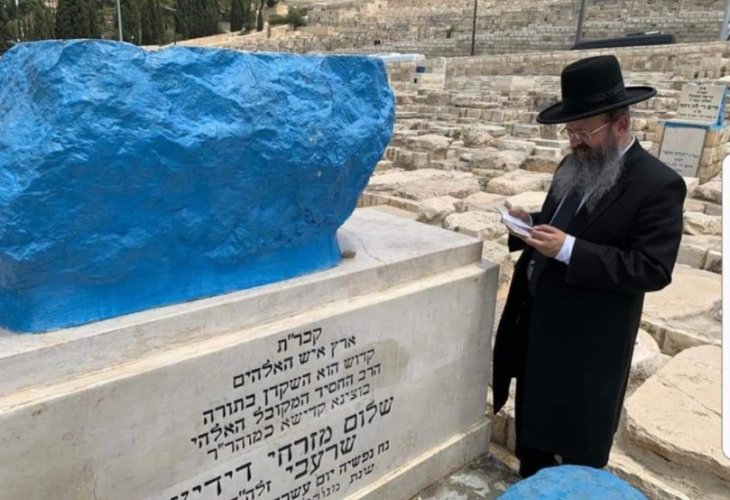
The great Kabbalist Rabbi Shalom Sharabi, known as the Rashash, promised that those who come to his grave and pray with a broken and sincere heart will merit salvation.
There are also remarkable traditions surrounding the Rashash's home. Kabbalist Rabbi Yaakov Ades has related that those who spend time there may merit extraordinary spiritual experiences and visions. It is told that when the Chazon Ish visited Jerusalem, he spent a long time in the Rashash's home and remarked that the place offered a special illumination of holiness.
Rabbi Gafner, a Jerusalem Jew who helped establish the Birkat Kohanim gathering at the Western Wall during Chol HaMoed, also reportedly spent an extended period in the Rashash's home. He later related that he experienced visions there that remained with him and guided him throughout his life. There is even a tradition that during the Rashash's lifetime, people who came to his home would sometimes fall asleep and receive an answer in a dream to the very question that had brought them there.
A Man Overwhelmed by Suffering
There was once a desperately poor man whose life was filled with hardship, suffering, and pain. One day, he decided to visit the righteous Kabbalist Rabbi Shalom Sharabi to receive his blessing. But he wanted more than a blessing. He wanted an answer. Why was Hashem dealing with him this way? How was he supposed to understand all the suffering that had entered his life? And what could he do so that his burden might finally become lighter?
When he arrived at the Rashash's home, he was asked to wait. Exhausted from the difficult journey, he sat down and soon fell into a deep sleep.
In his dream, the man saw himself arriving in Heaven. Before him stretched a deserted road, with not another soul anywhere in sight. Slowly, he began walking along the path. Suddenly, he heard a tremendous noise behind him. A large carriage came rushing past, filled with angels as white as snow. Another carriage followed, and then another. Soon, an entire procession of carriages was passing him, all filled with white angels. Some of the angels were enormous and powerful, while others were small, thin, and frail.
When the procession of white angels finally ended, another enormous convoy appeared. This time, the carriages were filled with frightening black angels. The strange sight aroused the man's curiosity, and he quickened his pace to follow them. Eventually, he reached a vast open square where all the carriages had stopped.
The angels climbed down and made their way toward the center of the square, where an enormous set of scales stood. One by one, they began climbing onto the scales.
The Heavenly Court
The man had no idea what was happening until someone explained that he was witnessing a judgment in the Heavenly Court. The angels being placed on the scales, he was told, had been created by the mitzvot and sins performed by a person during his lifetime.
When a person performs a mitzvah completely and wholeheartedly, a large and weighty white angel is created. But when a mitzvah is performed imperfectly, the angel created by it may appear incomplete, thin, or frail. The same was true of the dark angels created by sins. Those produced by deliberate wrongdoing or sins committed willingly and with enjoyment appeared large and heavy, while those created by accidental sins or acts committed under difficult or coercive circumstances were smaller and weaker.
The man then noticed that each carriage carried a sign identifying the deed that had created its passengers. The carriages carrying the white angels were labeled Torah study, prayer, acts of kindness, Shabbat observance, and other mitzvot. The carriages carrying the dark angels bore inscriptions such as neglect of Torah study, desecration of Shabbat, theft, jealousy, and other sins.
The enormous scales continued to fill. White angels gathered on one side and dark angels on the other. As the man watched, a troubling question occurred to him: Whose life was being judged?
He asked, and the answer left him trembling. It was his own.
The Scales Were Tipping Against Him
Almost all the angels had already taken their places, and the scales were leaning toward the side of the dark angels. The man understood what this meant. If nothing changed, the final judgment would be against him. He began shaking with fear.
Then a heavenly announcement rang out: “Are there any more angels?”
“No,” came the answer.
It seemed that the judgment was about to be sealed. But then the announcer asked another question: “Perhaps this Jew suffered during his lifetime? If so, can his suffering be added to the side of his merits?”
Suddenly, an enormous carriage appeared. It was filled with angels created from all the suffering and hardships the man had endured throughout his life. As each angel representing suffering was brought forward, several dark angels were removed from the scales. The man was shown that suffering can cleanse and refine a person from his sins.
For the first time, he began to feel some relief. The weight on the side of the dark angels steadily diminished. Slowly, the two sides of the scales moved closer and closer to becoming equal.
Then the angels representing his suffering ran out.
The man stared at the scales. The side representing his sins was still slightly heavier. His heart sank. The judgment was about to be announced, and the scales were still tipped against him.
In desperation, a bitter cry burst from his lips: “Give me a little more suffering!”
“I Already Received My Answer”
The sound of his own scream woke him. He opened his eyes and looked around. Only then did he realize that everything he had just witnessed had been a dream.
He rose from the chair and began to leave. The rebbetzin saw him and called out, “But you wanted to speak with the rabbi.”
The man turned to her and replied, “There is no need anymore. I have already received the answer I needed from Heaven.”
He had arrived at the Rashash's home wanting to know why his life was filled with so much suffering and how he could escape it. He left seeing his hardships from an entirely different perspective.
The very suffering he had viewed only as a burden appeared in his dream as something that could cleanse, refine, and ultimately benefit him spiritually. The pain he had desperately wanted removed suddenly took on a meaning he had never imagined.
The story does not teach us to seek suffering. Rather, its message is about how limited our perspective can be. We see the pain in front of us, but we do not always see what may be taking place beyond it. There are moments in life when we cannot understand why Hashem allows us to endure a particular difficulty. We pray for relief, as we should, and hope for better days. Yet this story of the Rashash offers another thought to carry with us: the fact that we cannot see a purpose in our suffering does not necessarily mean that no purpose exists.
Sometimes, what appears to us only as hardship may look entirely different when seen from a higher perspective.
May the merit of the Rashash protect us and may we merit good news, salvation, and revealed blessings.

