

Magazine
Nansi Brandes: A Journey of Faith, Family, and Music
Musician and comedian Nansi Brandes opens up about his childhood in Romania, rise in Israeli music, daughter’s return to Judaism, near fatal illness, and the faith that now shapes his life
- Avner Shaki
- | Updated
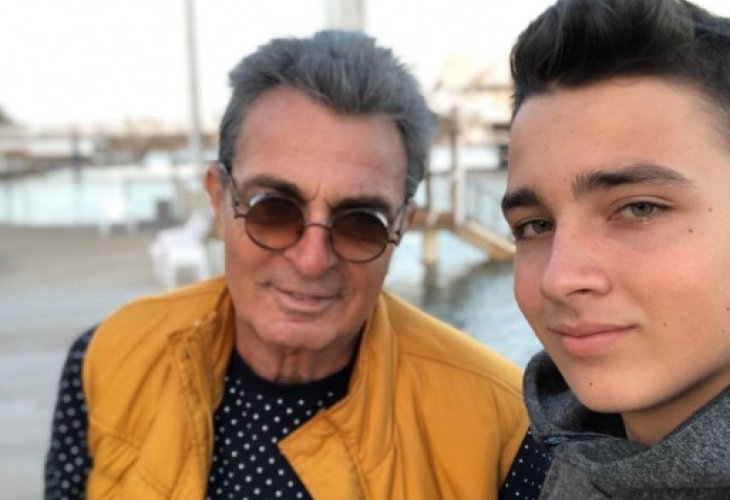
Nansi Brandes lives in Tel Aviv. He is divorced, a father of four, a musician and comedian.
A Spark of Nostalgia
“I was an only child, and from a very young age I was sent away to boarding schools. It was extremely traumatic for me. Every time I had to go back, I resisted with everything I had, but they would physically force me onto the transport. Three adults who worked there would simply grab me, and there was nothing I could do to resist. I remember crying bitterly more than once.
“It started when I was four years old and continued for several years. It was a terrible experience, and I believe it is the reason I developed such a strong need to be loved.
“Later, when I was in school, I realized that if I was funny, the other kids would like me. And it worked. But it also caused me a lot of trouble, because when you are the class clown, the teachers are not exactly thrilled with you. Between those two possibilities, I chose to become the ‘bad kid.’ I embraced that role completely, and that was the identity I carried with me to school every day.”
A Spark of Jewish Roots
“When it came to Judaism, my roots were very weak. We lived in Romania, and my parents didn’t have any Jewish friends. Until I was relatively old, I was convinced that Rosh Hashanah was on November 31 and Yom Kippur was sometime in April. My parents occasionally went to synagogue, but that was about it. I, on the other hand, went to churches quite often.
“At a certain point, however, I decided to visit Israel. As far as I was concerned, it was only supposed to be a stop along the way to Canada or Paris. I moved to Israel at the age of 27 with a master’s degree in music, and I immediately fell in love with the country. I felt a very powerful connection to the land. There was something deeply spiritual that drew me here.
“That experience also awakened my interest in Judaism. I wanted to understand what it meant to be Jewish. Things progressed fairly quickly. Within a year, I had begun fasting on Yom Kippur and eating kosher for Passover. I still observe those things today, and I’m not even entirely sure why. It simply feels right.”
A Spark of Judaism
“There are many beautiful things in Judaism, but one idea I connect with especially strongly is the importance of bringing joy to other people. Of course, that expresses itself through humor, but not only through humor.
“I genuinely love people. That is why I try to stay far away from lashon hara, speaking negatively about others, and make a real effort to bring peace between people. If, for example, I saw people fighting in the street, I would stop my car and try to separate them.”
A Spark of Struggle
“My musical education was a real struggle. My parents wanted something to come of their difficult child, and because they noticed that from the age of three I was constantly glued to the radio, fascinated by what I heard, they decided I should study music.
“We had a piano at home, and teachers regularly came to give me lessons. That was how I learned to play. But what I really wanted was to become a soccer player. Instead, I was forced to play music, and because of that, I hated both the lessons and the teachers who came to teach me.
“Within a relatively short period, I went through eight different teachers. They simply gave up on me. My final teacher told my parents that his health was more important to him than the money he was earning from teaching me.
“When I was nine, my parents finally stopped trying to force me. And almost immediately afterward, I began playing constantly. This time, it came from within me.
“I had always loved the piano. What I hated was the way people were trying to teach me. I also discovered that being able to play gave me a significant social advantage, and that motivated me to pursue music with everything I had.”
A Spark of Accomplishment
“I have always tried to do good things, and thank God, many times I have succeeded. I feel that I was given the special privilege of working with some extraordinarily talented people.
“I produced three very successful albums for Zohar Argov. I worked with Yehoram Gaon on Emtza HaDerech and BaPardes Leyad HaShoket. And I produced Shlomi Shabat’s first album, Biglal HaRuach.
“I actually met Shlomi when I was in New York with Yehoram Gaon. I was conducting the orchestra that accompanied him. One evening, we were sitting at a place popular with Israelis, and that was where we met Shlomi. At the time, he was earning $40 per performance. Look where he is today.
“After the show, we sat together for a while, and I asked him, ‘Why don’t you come to Israel? You have a beautiful voice.’
“He replied, ‘If you produce an album for me, I’ll come.’
“A year later, he returned to Israel and called me. I told him, ‘A promise is a promise,’ and we began working together.”
A Spark of Mitzvah
“My daughter became religious when she was 17. Once she said to me, ‘If you want to honor me, make sure you wash your hands in the morning and thank God when you wake up.’
“I have been doing it ever since, for 20 years.
“To tell you the truth, to this day I have no idea exactly how she became religious. Suddenly, she started attending lectures about Judaism and gradually began taking on more and more observances.
“I accepted it fairly easily, although my wife found it more difficult. Of course, these things can be complicated, but I simply understood that there was no reason for me to lose my daughter because of religion.
“Today, she is extremely religious. She is very careful about the standards of kosher food she eats, lives in Yavniel, and is a Breslov Hasid. Most importantly, I’m very grateful that we have an extremely close relationship.”
A Spark of Survival
“A number of years ago, I was attacked by a very aggressive bacterial infection. I was rushed to the hospital after my body systems began to fail.
“For about two weeks beforehand, I had experienced various aches and pains, but nothing that seemed particularly serious. Then, on the eve of Yom Kippur, I suddenly felt severe pain throughout my entire body.
“As soon as I arrived at the hospital, I was taken into intensive care, sedated, and placed on a ventilator. The doctors did not believe I was going to survive.
“It took them two days to understand what was happening to me, and I remained fully sedated for a week. After I regained consciousness, they gradually began to understand what had happened. Altogether, I spent six months in the hospital.
“Today, I actually feel better than I did before the illness.
“Several rabbis I spoke to told me that perhaps I had not yet completed my purpose in this world. In general, I feel that I have been given something special. I know there is a God, and I feel that He watches over me with personal and particular care.
“These things are difficult to explain. But I feel them very deeply, and with tremendous certainty.”

