

World News
Report: Russia Secretly Helped Iran Develop Supersonic Cruise Missiles
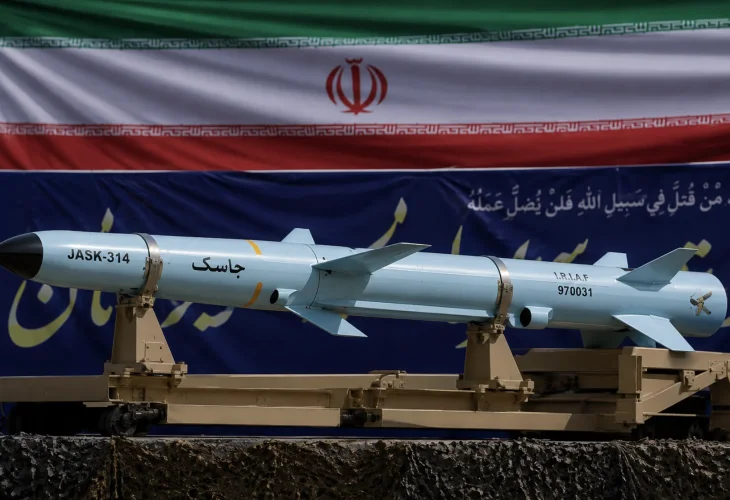
A Financial Times investigation reveals a covert program launched in 2023, in which Russian engineers and companies have been helping Iran develop an engine for deadly supersonic cruise missiles.
 Illustration
Russia has been secretly helping Iran develop advanced technology for supersonic cruise missiles as part of a joint program that has been underway for several years, the British newspaper "Financial Times" reported today (Wednesday).
According to the report, the covert program, known as C430L, began in 2023 and remains active today. The most recent correspondence uncovered in the investigation dates to last June and points to continued activity between the two sides.
At the center of the project is the development of an advanced engine for cruise missiles, designed to enable them to travel faster than the speed of sound. Russian missile engineers and defense companies are involved in the program, which, according to the investigation, includes the transfer of highly sensitive Russian military technology to Iran.
Supersonic cruise missiles can combine high speed with low-altitude flight, reducing the time available to air-defense and missile-defense systems to identify the threat and attempt to intercept it. Missile experts and military officials assessed that the technology could be used to develop both anti-ship missiles and missiles intended to strike land targets.
For Iran, this is an effort to close a significant technological gap. Tehran has already developed advanced ballistic missiles, including missiles it describes as hypersonic, while also producing engines for slower cruise missiles.
The "Financial Times" noted that this is technology Tehran had sought to acquire for years. It also wrote that a program of this kind could not exist without approval from Russia's political leadership.
According to the investigation, Russia's involvement in the project went beyond transferring blueprints, components, or technical information. Several senior engineers from NPO Mashinostroyenia, considered one of Russia's leading missile manufacturers, visited Iran several times even before the formal contract between the sides was signed in November 2023.
The disclosure comes after another report last month pointing to deepening military cooperation among Iran, Russia, and China. The U.S.-based website "Al-Hurra" reported at the time, citing sources, that Iran had recently received hundreds of anti-aircraft missiles from the two countries.
According to that report, the shipments included about 300 Verba (9K333) shoulder-fired missiles, transferred to Iran in five containers via the Caspian Sea. After arriving in the country, the missiles were distributed by the Islamic Revolutionary Guard Corps across several strategic areas.
The sources said some of the missiles were positioned near bases and sensitive sites in Tehran, Kermanshah, and Isfahan. Additional missiles were deployed at border bases near Iraqi Kurdistan and along the Strait of Hormuz coast.

