

Magazine
“I Was Blessed”: Deborah’s Inspiring Outlook on Life With Muscular Dystrophy
Living with muscular dystrophy, Deborah Lebron shares how faith, determination, and everyday victories have shaped her inspiring outlook on life.
- Miriam Solomon
- | Updated
 Inset: Deborah Lebron
“I was blessed to be born with muscular dystrophy,” Deborah Lebron tells me, surprising me with her candid words.
From a young age, Deborah has navigated life in a wheelchair, facing her limitations with remarkable clarity and positivity.
“Yes, despite everything, I feel that I’ve been blessed. After all, it is a gift from Hashem, meant especially for me.”
A gift? Isn’t it a bit of a stretch to call muscular dystrophy a “gift”?
“Despite the less pleasant moments it brings, I feel that it is a gift. I believe that just as the army chooses elite soldiers for complicated missions, Hashem gives complex challenges to those He knows can handle them, those who have the strength to endure.
“I think everyone should try to view the challenges in their life this way. Beyond that, I am who I am today because of this very gift: muscular dystrophy.”
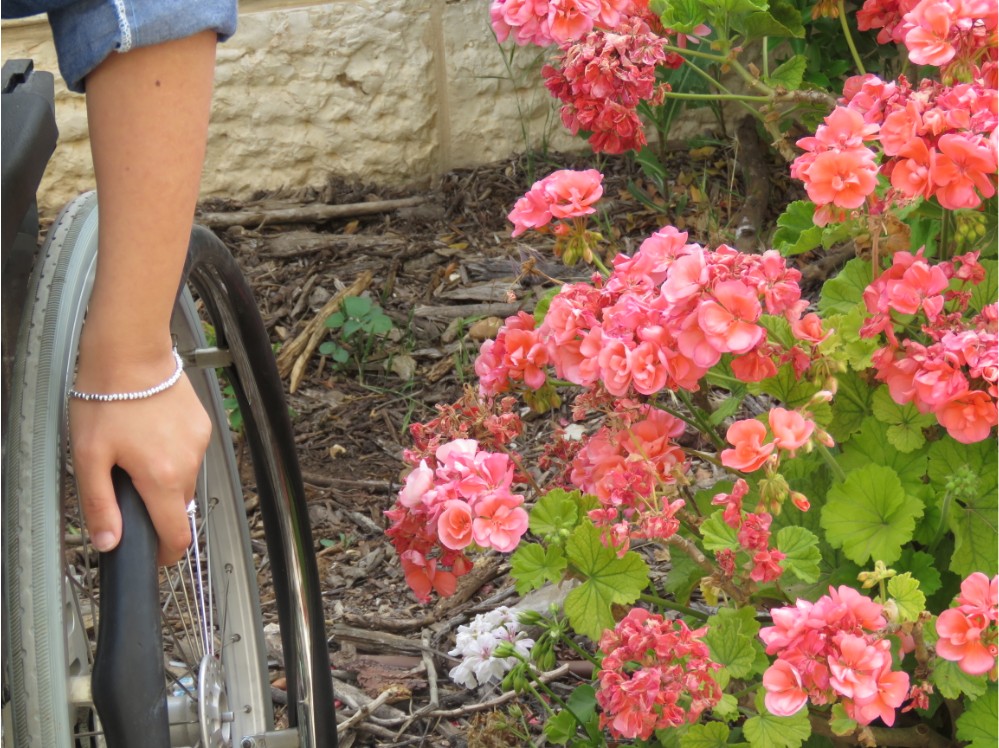
The Race for Independence
Talking with Deborah, it quickly becomes clear just how much determination goes into things that many people barely think twice about.
“Living with muscular dystrophy requires me to summon a great deal of inner strength,” she explains. “Every day begins with lifting my eyes toward Heaven and asking for strength for the day ahead. It creates a special connection with Hashem.
“Every time I leave the house, there are questions to consider: Are there stairs? Is the sidewalk wide enough? Are there trees blocking my path? If there is no ramp, I might find myself unable to cross somewhere.
“This year, more than ever, I’ve started going out alone to run errands. It’s invigorating. I can go shopping too, even if people sometimes stare and wonder, ‘Where is the person accompanying her?’ If there is something too high or too far away for me to reach, I ask for help. Thank Hashem, people are usually very willing to assist. And after an outing like that, I come home with an enormous sense of accomplishment.”
Sometimes, she admits, the obstacles can seem overwhelming. But she has learned to look for solutions rather than give up.
“I remember trying to buy a memory card last summer. When I arrived at the store, a car was blocking the wheelchair-accessible ramp. It was frustrating, but I decided to call the store and explain the situation.
“To my surprise, the storekeeper and the owner came outside and helped me make the purchase right there on the street. I went home grateful for the resourcefulness Hashem had given me. There had been an obstacle, but I had found a way around it.”
Do you always go out alone?
“Not always. Because of accessibility issues, I constantly have to think through my route. Can I manage it alone? Should I take an accessible ride, a bus, or go with my father? My father, may he be blessed, has his own schedule and can’t always drive me, so I try to be as independent as possible.
“This year, I’ve taken major steps toward greater independence. I began attending a seminary outside my hometown. For many girls, that might be relatively straightforward. For me, every detail has to be considered in advance to make sure the journey and the location are accessible.”
You travel outside the city on your own?
“It’s not entirely without help,” Deborah admits with a knowing smile.
“I started studying at Beit Bina Seminary in Jerusalem, where they look beyond my physical limitations and see who I really am. Every morning, I take a wheelchair-accessible shuttle, and I return home in the evening. For my field placement in another part of Jerusalem, I take a bus and then travel for about 40 minutes on the light rail. For me, that’s a real challenge.”
And how often does this daily journey go smoothly?
“Thank Hashem, I’m often helped by wonderful people. When I get on the bus, someone will help with the ramp, often the driver himself, and make sure my wheelchair is secure. Once I’m on board, another ‘angel’ might validate my card because the machine is too high for me to reach. At my stop, another kind person may help me with the seat belt.
“That’s only the first part of the journey.
“Then I reach the light rail. Sometimes the doors don’t open for me, which can be frightening when I’m traveling alone. But often a security guard notices and comes to help.
“When I get off the train, I stop and thank Hashem for getting me there safely. Every ordinary, uneventful journey feels like a joyful victory. Of course, I can ask for help when I need it, but knowing that I managed the journey myself brings me tremendous happiness.”
Does every trip involve so many little hurdles?
“The challenges don’t end when I get inside,” she laughs. “The building where I do my internship has several floors, and the elevator button is too high for me to reach. So once again, I wait patiently for someone to arrive, ask someone going into the elevator, or request help from the security guard.
“By the time I reach the fifth floor, many different people may have helped me along the way. My independence may look different from someone else’s, but to me, this is real independence. I went out without someone accompanying me. I traveled, explored, and interacted with the world on my own.
“And every journey teaches me something new. When I hear ‘next stop: City Hall’ week after week, for example, I gradually become more familiar with the city around me.”
Deborah pauses to emphasize something she wishes more people understood.
“People with disabilities need others to look beyond what they see on the outside. There is a person underneath, with a personality, abilities, dreams, and the potential to succeed. And remember that a small gesture from you can become something precious to another person. Hashem does not forget those acts of kindness.”
Learning to Handle Life on Her Own
Your optimism is striking, especially considering how many challenges you face. How do you maintain that positivity and strength?
“I’ve realized that, for my own benefit, I need to do whatever I can for myself. That is my goal. I’m learning to manage things independently as much as possible.
“This past year, I’ve really stepped into adulthood. I go out more and take care of more things myself, even if I sometimes need assistance along the way. I want to do as much as I can without depending heavily on other people.”
Has this growing independence brought challenges in other areas as well?
“Definitely. With my father’s guidance, I’ve started becoming involved in the more technical and bureaucratic aspects of my care. It may sound unusual, but a child with a disability requires a tremendous amount of medical and logistical support. As I’ve grown older, I’ve begun taking more responsibility and learning how to navigate that complicated world myself.
“At first, those tasks seemed intimidating. But my father patiently taught me which offices to call and what to say, and eventually I began making those calls myself. There were nerves at first, and of course there can be unpleasant interactions, but you become stronger through the experience.
“The bureaucracy can be very difficult, particularly when dealing with medical committees, but persistence pays off, even when it means going to the offices myself.”
Are you satisfied with what you’ve achieved through all of this?
“Thank Hashem, every success gives me enormous satisfaction. I also know that learning these things now will make life easier when, with Hashem’s help, I establish a home of my own.
“These victories may not require physical strength, but they demand patience, persistence, and skills that have to be learned. I take real joy in succeeding at them. I’ve learned that fulfillment isn’t measured only by what your body can do.”
What Does Success Look Like?
Deborah concludes with a reflection of her own:
“What is success to me?
“For some people, it is climbing Mount Everest.
“For some, it is creating something innovative.
“For some, it is scoring a goal.
“For some, it is joining the army.
“For some, it is helping another person.
“For some, it is understanding a passage of Gemara.
“For some, it is having children.
“For some, it is scoring 100% on a test.
“For some, it is building a legacy.
“For some, it is earning a Ph.D.
“And for someone else, success might be saying a single sentence clearly despite the limitations of their muscles.
“Reaching a bottle that is just a little too far away and drinking without spilling.
“Navigating a crowded store in a wheelchair.
“Riding the light rail alone.
“Holding a baby nephew safely.
“Warming up lunch without help.
“Crossing your legs comfortably.
“Reaching something from a grocery store shelf.
“Waking up each morning and facing another day.
“Thank You, good Hashem, for the small successes that, for me, are truly immense.”

