

Raising Children
Yom Kippur in the Pediatric Oncology Ward: A Father’s Prayer for His Daughter
A father experiences the prayers of Yom Kippur with new intensity, praying for healing, mercy, and another year of life
- Shalom Gabay
- | Updated
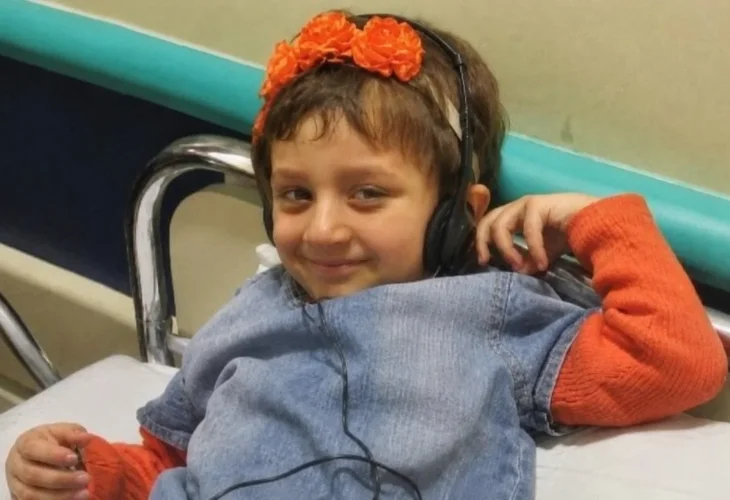 (Photos: Private album)
The month of Elul had arrived in our oncology ward. We were suspended between hope and fear, living the words, “He hangs the earth upon nothingness.”
That year, our situation was especially unusual. We had submitted an application for our daughter to participate in a medical trial involving a new experimental drug that might offer hope for her specific type of cancer. The trial was to take place at a hospital in New York, and we were told that our application could be considered only after a meeting of the hospital’s medical team. The doctors would decide whether she was eligible for the trial and whether there was any realistic chance that the treatment could help her.
Then we learned when that meeting would take place: Rosh Hashanah. On the very day that Jewish tradition describes as the Day of Judgment, when the fate of every living being is determined for the coming year, doctors thousands of miles away would be sitting around a table discussing our daughter’s chances. One can only imagine what Rosh Hashanah looked like in our home that year.
With constricted throats, tear-filled eyes, and hearts consumed by anxiety, we whispered our prayers and waited for the holy day to end. As soon as it did, trembling, we reached for the telephone to hear the doctors’ decision. But the answer was not what we had expected. Because of the complexity of our daughter’s case, they explained, no final decision had been reached. Another decisive meeting would be necessary. It would take place in approximately eight days.
My heart could barely withstand the pressure. Eight days later would be Yom Kippur, the Day of Atonement, when the judgment of Rosh Hashanah is sealed. The words of our Sages had never felt more literal: “The intermediate are suspended and waiting.” That was us. Suspended and waiting.
Elul in the Oncology Ward
When anxiety drains the last drop of strength from your body, when tension seems to run like electricity through your veins and into your bones, no one needs to awaken you to Elul. My Elul did not require inspirational gatherings or stirring speeches. It did not depend on Selichot, mussar, a particular prayer leader, a place near the bimah, a perfectly steady prayer stand, a kittel, or the inspiration of praying among a large congregation.
My Elul needed none of those things because, for me, Elul had never gone to sleep. Perhaps it had begun before the previous year’s Elul had even ended. How could a father sleep, physically or spiritually, when his daughter’s life hung before him and he was waiting for a prayer that might somehow tip the scales?
For us, the words “Who will live and who will die, who at his appointed time and who before his time” were not an abstract passage in the prayer book. They were not words we recited while vaguely imagining that they applied to someone else. They were the desperate plea of people waiting for mercy.
We knew families who had fought beside us, shoulder to shoulder, traveling the same path through the silent corridors of the oncology ward. Tragically, after another year had passed, there were some children whose recovery we were no longer praying for. And so, deep inside us, another terrible question whispered: Which of us might no longer be included in next year’s prayers for healing?
Afraid to Look Up
Walking through a pediatric oncology ward during Elul is unlike walking anywhere else. As I passed from room to room, I sometimes preferred to lower my eyes and stare at the floor. Not because there was anything I wanted to see there, but because I was afraid to look into the eyes of one of those beautiful children and wonder what was being decided for them during these fateful days.
“Who will be at peace, and who will be tormented? Who will reach his allotted end?” In an oncology ward, such words cease to be poetic questions. Reality does not allow the answers to remain blank forever.
Rosh Hashanah, the Day of Judgment, had passed, and now we approached Yom Kippur, the day of the final seal. The eve of the holy day arrived, and everywhere hearts trembled between judgment and mercy. Men, women, and children quietly prepared themselves. Some prepared for the afternoon confession, some sought purification and forgiveness, while others seized one more opportunity for kindness, charity, or spiritual reflection. The city seemed hushed with awe as everyone prayed for compassion before the gates would close.
We were preparing too, like everyone else, only more intensely. Alongside all our hopes for the future was one immediate, practical prayer: Please, let there be no unexpected fever. No emergency. No sudden trip to Schneider Children’s Medical Center. Not now. Please, not today.
An Hour Before Yom Kippur
But our wishes did not determine the day’s events, and bacteria do not consult our calendars before entering our lives. We were eating the final meal before the fast, about an hour before Yom Kippur was to begin, when our daughter suddenly began feeling unwell.
There was nothing to discuss. We simply went to Schneider. When a child with cancer might be facing an immediate medical danger, there is no second thought. Saving a life comes first.
Within minutes, we were on our way, and soon we were once again deep inside Schneider, deep inside the pediatric oncology ward. We arrived together with the fading light of Yom Kippur eve.
My heart pounded like a violent storm beating against a fragile window. It was time for Kol Nidrei. Fear tore through the dark places inside me that remained hidden throughout the year, and suddenly the thin barrier holding everything back seemed to collapse.
Kol Nidrei. Here, at Schneider, in the heart of the pediatric oncology ward.
Across the Jewish world, people were wrapped in tallitot and dressed in white, standing before the Torah ark as the haunting melody of Kol Nidrei filled their synagogues. And we were at Schneider. There was no Torah ark, no Torah scroll, no tallit, no white garments, no cantor, and no congregation.
There was only my daughter and me. She looked at me with bewildered eyes, not fully understanding what was happening, while my own quiet Kol Nidrei floated through the hospital room. It was small and fragile, yet it pierced straight through the heart.
Where Are the Transgressors?
We were alone in that hospital room, and yet we were not alone. On Yom Kippur, in a pediatric oncology ward, there is a powerful sense that Someone is there. The Master of the Universe is present. The Divine Presence is above us, listening to a sound unlike any other in the world, a cry that could come only from this ward, from these children, at this hour.
The melody of Kol Nidrei penetrated deeper and deeper, and the tears began to fall. Then came the traditional declaration recited before Kol Nidrei: “We permit prayer with the transgressors.”
And something inside me cried out: Heavenly Court, forgive me, but here at Schneider, here in the pediatric oncology ward, on this front line where fragile young lives are fighting an overwhelming enemy, where are the transgressors? Where are the sinners?
There are only children. Little children who have scarcely had the opportunity to know what sin is. Have compassion. Have compassion on us and on our children. Look at these children. Look into their souls. Look into their dimmed eyes. Look at their fragile bodies, some of them scarcely more than shadows of the children they once were.
“Remember the covenant and disregard the accuser.” “Open the gate for us at the time when the gate is closing.”
Our day is fading. Our time is slipping away. Before our sun sets, let us enter Your gates.
The Battle for Life
On this day, in this place, facing this trial, we are all fighters. The pediatric oncology ward strips Yom Kippur of every trace of abstraction. Words that elsewhere may be recited from a prayer book become immediate and painfully real. Life and death, judgment and mercy, fear and hope are no longer distant ideas. They are sitting beside you in a hospital room.
And there, with my daughter beside me and Kol Nidrei quietly filling the space where a congregation should have been, there was nothing left to do but pray. To ask for compassion. To ask for healing. To ask for another year. To ask that the gates remain open just a little longer.
Because in the battle for life, there is no second chance.

