

Magazine
Avi Toledano: A Life of Music, Faith, and Jewish Tradition
Singer and performer Avi Toledano reflects on his dramatic journey from Morocco to Israel, the beginnings of his musical career, and the faith, prayer, Shabbat, and Jewish traditions that have shaped his life
- Avner Shaki
- | Updated
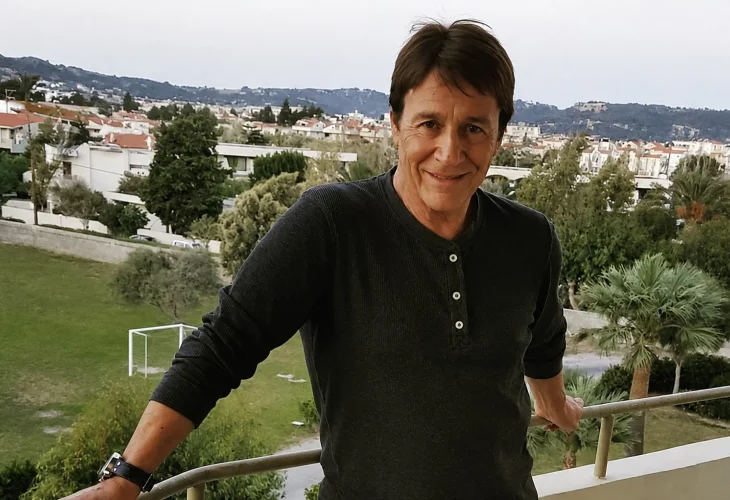 Avi Toledano
Avi Toledano lives in Gan Yavne. He is a father of six, grandfather of five, artist, actor, and singer.
A Spark of Roots
“I was born in Meknes, Morocco. If you want to imagine what Meknes was like in the 1950s, picture the village from Fiddler on the Roof: the tailor, the little grocery store, rabbis walking through town, and synagogues on every corner. It was almost like the Mea Shearim of those days.
“There were many rabbis, but there was also tremendous joy, innocence, honesty, concern for others, unconditional love, and kindness. I remember that when I was a child, there wasn’t a single Friday when my mother didn’t prepare two pots of Moroccan cholent: one for us and one for the poor. Before Shabbat, all the mothers would send their pots to the communal oven. On Shabbat afternoon, our Arab housekeeper would bring one pot to our home and another to the place where the poor ate.
“My grandfather’s synagogue stood right next to the house where I was born. Whenever my mother needed to go out, she would leave me with the worshippers. After the prayers ended and everyone went home, I would stay behind and play by myself in the synagogue. I have very early memories of that place, from when I was around four years old. Thank God, I absorbed Judaism from a very young age. I say ‘absorbed’ because I can even remember the smells.”
When Toledano was five, his family moved to Casablanca, and his world changed. He attended an Alliance school and joined the Hashomer Hatzair youth movement. For him, it was not simply a youth organization; it was his path toward Israel.
“It was nothing like youth movements today. For us, it was practically an underground operation. A friend brought me into the movement, and everything was highly secretive. People who were caught belonging to it could be imprisoned. Our counselor was an emissary who had come especially from Israel. He would disguise himself in a djellaba and wait for us at a predetermined location. No one was supposed to know what was really happening there.”
The young members were preparing to immigrate to Israel. “Zionism burned inside us,” he recalls. “We desperately wanted to go to Israel, settle the land, and fight for it.” Even attending meetings required elaborate precautions. If a certain window was left partially open, it meant they could safely enter. If it was closed, they knew to turn around and go home.
Eventually, Toledano told his parents that he wanted to move to Israel, but they refused to give their permission. Every so often, he would bring his father the necessary form to sign, and each time his father tore it up. Once, his father even brought a policeman to speak with him and explain why leaving Morocco was a bad idea. Toledano later discovered that the policeman was actually his father’s friend.
When he realized his parents were never going to sign, he made a drastic decision: he forged his father’s signature.
“I handed the form to the person responsible in the movement. That was it. I knew my life was about to change.”
A Spark of Nostalgia
“My journey to Israel was a real suspense story. You could make a blockbuster movie out of it. One day, I simply disappeared from my family.”
His escape from Morocco was planned for late at night. Earlier, he had hidden his suitcase and guitar at a café so he could collect them after leaving home. That evening, as his family returned from work and school, he kissed each of them. They were puzzled because it was not something he normally did.
A friend was planning to leave secretly with him, and the two waited near Toledano’s home for a taxi that was supposed to take them to the airport. Toledano became hungry and decided he might go upstairs to get a sandwich. He entered the elevator and pressed the button for the fourth floor. Just as he reached it, his friend called out that the taxi had arrived.
“There’s a good chance that if I had actually gone inside my house, I would have stayed.”
Emotionally, he was overwhelmed. He had no idea how his mother would react when she discovered what he had done. He asked a friend to tell his own mother the following morning that Avi had left for Israel and to ask her to break the news to Avi’s mother.
“She took it very hard. She ran to the Jewish Agency, which was operating under a false name in an office building in the city, and demanded that they bring her son back. They told her, ‘We can return him, but he will be arrested when he enters Morocco because the authorities will know he escaped. Would you rather he return or continue to Israel?’ She said I should continue to Israel.”
From Morocco, Toledano traveled to France, where he remained for six months. For the 15-year-old boy separated from his family, those months were extremely difficult. He struggled to sleep and missed his family intensely. At one point, his brother visited Paris and tried desperately to convince him to return home, telling him that their parents were ill and promising that the entire family would soon immigrate together. Toledano nearly gave in, but ultimately stayed.
Finally, he sailed from France aboard the Moledet and arrived in Haifa late at night. From there, the new immigrants were taken to Ruhama, near Sderot. When morning came, Toledano stepped outside and was astonished by what he saw: greenery, flowers, a modern dining hall, and comfortable surroundings.
“I thought, ‘Why did they call me to come here if they already have everything?’ We thought we were coming to make the desert bloom, build the country, and fight for it.”
A Spark of Creativity
When Toledano arrived in Israel, he did not know Hebrew and began studying at an ulpan. Then, almost by chance, his musical career began.
Someone from Israel Radio heard him sing and invited him to appear on a program called First Applause. Toledano performed in French, won first place, and soon received some 500 enthusiastic letters at the kibbutz.
“It was unbelievable. This wasn’t like sending a WhatsApp message. People had to write a letter, go to the post office, buy a stamp, and mail it.”
Toledano believes his success was partly rooted in his desire to create a new kind of Israeli music, one that drew from the traditions of the country’s many Jewish communities. “I’ve performed countless times throughout my life, and although I’m Moroccan, I believe about 80 percent of the people who came to see me were Ashkenazi.”
A Spark of Resilience
“The best way to cope with difficulties and crises in life is to believe that everything Hashem does is ultimately for the good. Often, you can actually see how something positive emerges from a difficult experience.”
When Toledano enlisted in the military, he was in peak physical condition and desperately wanted to serve as a combat soldier. He began combat training, but near the end, his company commander informed him that he had been reassigned to a military entertainment troupe.
“I fought the decision, but I couldn’t change it. In the end, I joined the troupe with tears in my eyes. Part of the reason I had come to Israel was to be a fighter.”
Yet the disappointment ultimately changed the course of his life. “I think I was the only soldier in a military entertainment troupe with a medical profile of 97. But the good that came from it was that, in a sense, my career began there. I became very successful while I was still in the army and received special permission to perform. I think I was the richest soldier in the IDF.”
A Spark of Mitzvah
In recent years, Toledano has devoted more time to Jewish texts and prayer. He describes feeling particularly connected to Psalms.
During one visit to Rabbi Pinto, several students were sitting around the table and each person committed to taking on a particular spiritual practice. Others accepted significant commitments, while Toledano decided that, for the time being, he could commit to reading one page of Psalms every day.
“The rabbi encouraged me and said, ‘Fortunate are you.’ At first it wasn’t easy, but very quickly I fell in love with it. I began devouring pages of Psalms, and naturally, over time, the number of pages I read each day increased.”
A Spark of Prayer
Prayer is an integral part of Toledano’s daily life.
“I speak to God dozens of times a day. I have tremendous respect for rabbis, and they deserve that respect, but I remember that you can always speak directly to the Boss.”
He begins his day with Modeh Ani and puts on tefillin, but his conversation with God continues throughout the day. He tries to appreciate what he has and often turns to God for guidance.
Before going onstage, he prays that he will succeed in communicating what he is meant to communicate. “I’m very aware of the role I have and of the privilege I’ve been given to move people and help them reach meaningful insights.”
Several years ago, he wrote a song called Touching the Light, which he now uses to open his performances. “It is a song in which I thank God.”
A Spark of Spiritual Awakening
“God is always with me, and I am always with Him. I feel Him. Sometimes that feeling is stronger than usual.”
Several years ago, Toledano held a memorial gathering at his home and invited several young married Torah scholars so there would be a minyan. They were Breslov Hasidim, the kind, he recalls with amusement, who dance in the streets.
“The moment they came inside, they started dancing in my living room. I joked, ‘This is a memorial gathering, not a wedding.’ They answered that it is a great mitzvah to always be joyful.”
They ate together and completed the Book of Psalms. In the month that followed, Toledano says, extraordinary things began happening.
“Everything I wanted seemed to come true. Anything I thought about happened. I was stunned. I couldn’t believe it. I felt that I was experiencing genuine Divine Providence.”
A Spark of Shabbat
“Shabbat is a taste of the World to Come. There is no possibility of a Shabbat in my home without Kiddush, both Friday night and during the day. On Shabbat, I also make a point of reciting Grace After Meals.”
For Toledano, Shabbat is one of the anchors connecting him to Jewish tradition and identity. For many years, he made an effort not to perform on Shabbat. At one point, however, financial difficulties forced him to accept some Shabbat performances.
“It hurt me deeply. It didn’t happen often, but even the few times it did happen were painful for me.”
A Spark of Jewish Continuity
“One of the most important things in Judaism is the chain of generations. Thank God, I have also been privileged to contribute to that by raising six children.”
His youngest daughter was born when his wife was 42 and he was 62. Many people asked him how he managed becoming a father again at that age, but Toledano says he does not dwell on age.
“I don’t make an issue of how old I am. My former father-in-law is 102, and he still beats everyone at bridge.”
A Spark of Connection
Throughout his life, Toledano has sought relationships with prominent rabbis. He recalls meeting the Lubavitcher Rebbe, the Baba Sali, Rabbi Yitzhak Kaduri, and others.
He visited the Baba Sali when his father was seriously ill in the hospital. “The rabbi was lying in his bed, and I sat beside him. It was an incredibly small room, and I asked him for a blessing.”
Toledano also became close to Rabbi Yaakov Yisrael Ifargan. For several years, he regularly attended a Friday afternoon meal hosted by the rabbi. Around 300 people would gather for fish, salads, and words of Torah.
Over time, Toledano became close enough to the rabbi that he would sit beside him at the meals, and other people sometimes asked Toledano to bring their questions to him.
One particularly memorable experience was joining the rabbi for Tikkun Chatzot, the midnight prayers of mourning for the destruction of the Temple. “At first there were very few of us, barely a minyan. We would travel together to recite Tikkun Chatzot in Amuka or at his father’s grave. Gradually, it grew and grew, until at its peak something like 5,000 people were attending. It was a very special experience.”
A Spark of Happiness
Helping others has also been an important source of happiness for Toledano. He recalls assisting a rabbi named David, affectionately known as “Saba David,” whom his friend Yehuda Barkan introduced to him.
Saba David lived with extraordinary simplicity in a modest one-room apartment while supporting an orphanage in Binyamina. For a period of time, Toledano and Barkan would travel to Bnei Brak once a week and set up a stand outside the Itzkovitch synagogue. There they would sing, speak with passersby, and collect donations for the orphanage. Toledano also contributed personally whenever he could.
“People asked me whether it bothered me to stand there collecting donations because I was famous. But I don’t look at it that way. I don’t know what it means not to be famous. I’ve been singing and performing since I was very young. I try to live normally and not give fame too much importance.”
A Spark of Faith
“Without faith, you can’t do anything in this world,” Toledano says.
For him, the coronavirus pandemic provided a dramatic reminder of human limitations. “Look at what coronavirus did. Look how such a tiny virus, something you can’t even see, can bring an entire world to a standstill. At times like that, you remember how small a human being is and how great God is. You understand that there is a Creator of the world.”
“I feel that because of the coronavirus, people have become better and more sensitive toward one another. I hope that remains.”

