

World News
Iran Targets Kuwait Overnight as U.S. Extends Middle East Military Deployment
The U.S. is extending its military deployment in the Middle East, keeping roughly 50,000 troops in the region alongside warships and fighter squadrons. President Donald Trump is considering declaring the war over while maintaining economic pressure on Iran.
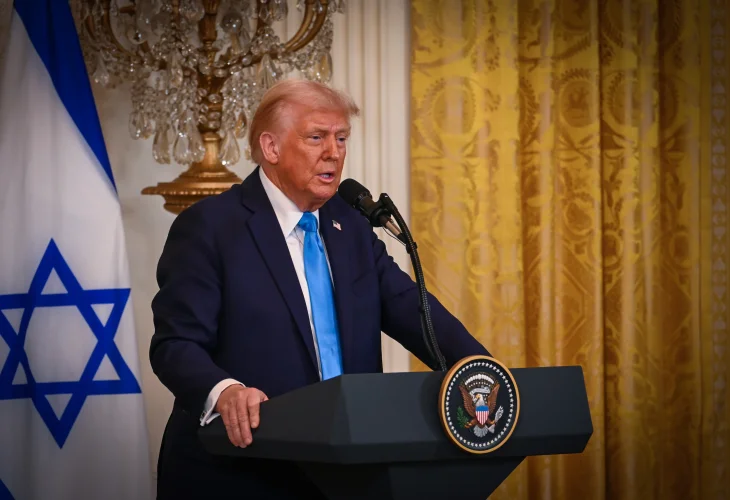 Trump (Photo: Liri Agami, Flash90)
Escalation in the Middle East continued overnight (between Wednesday and Thursday), as Kuwait’s military announced that the country’s air-defense systems had been activated to intercept missiles and drones during what it described as "Iranian aggression." Against the backdrop of the conflict, the United States is preparing to maintain a significant military force in the region into next year.
According to a report in The Wall Street Journal, U.S. Defense Secretary Pete Hegseth extended the operational deployment of American forces in the Middle East, a move intended to preserve a broad range of military options for President Donald Trump. According to the report, approximately 50,000 American troops are expected to remain in the region. Washington also has 19 warships, fighter squadrons, air-defense units, and paratrooper forces there.
But while the Pentagon prepares for an extended and expansive military presence in the region, Trump himself has been discussing with his senior advisers the possibility of unilaterally declaring that the war with Iran is over. According to American officials who spoke with The Wall Street Journal, the president expressed support for the possibility and told his aides that he believes continued economic pressure on Tehran could eventually lead to one of two outcomes: the dismantling of Iran’s nuclear program or the collapse of the regime.
U.S. Treasury Secretary Scott Bessent also addressed the possibility of regime change in Iran as a result of the pressure, though he stressed that it is not necessarily the administration’s official goal. "The goal here is not necessarily to bring down the regime. That could happen," he said. "Maybe the people will rise up. There is 100% inflation, lines, the military is not being paid. The central bank governor was in a panic last week."
In another conversation, Bessent laid out three scenarios that he said could develop if pressure on Tehran continues: "Either the Revolutionary Guards will turn against one another, or the people will turn against them, or they will come to the table and want to reach an agreement they can uphold."

