

Interesting
He Threw Himself on a Grenade to Save His Friend—and Survived
At just 21, Kyle Carpenter made a split-second decision to protect a fellow Marine. He survived against extraordinary odds and began a years-long journey back to life.
- Shira Dabush
- | Updated
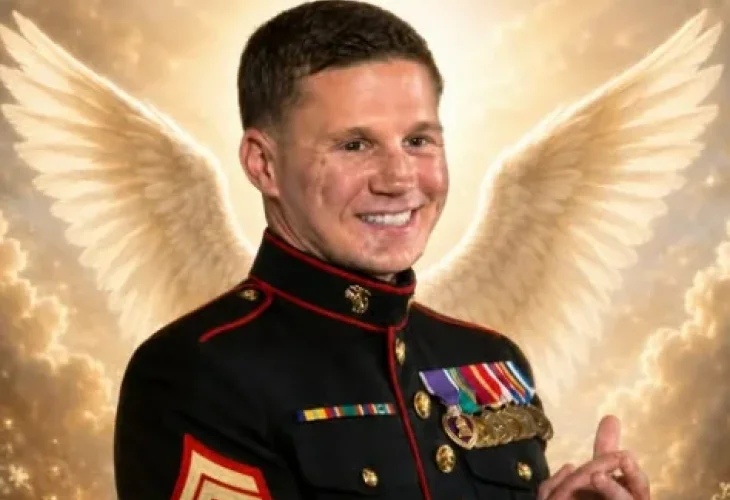
There are moments when a person discovers who they truly are in a single split second. That is what happened to Kyle Carpenter, a 21-year-old U.S. Marine serving in Afghanistan.
One day, a grenade landed inside the security post where he was stationed alongside fellow Marine Nicholas Eufrazio. There was no time to think or plan his next move. As Carpenter later recalled, there was not even time to be afraid.
In an instant, he moved toward the grenade in an attempt to shield his fellow Marine from the blast.
Seconds later, it exploded.
Carpenter was serving as a rifleman with Company F, 2nd Battalion, 9th Marines. He and Eufrazio were stationed at a small patrol base called Dakota in the Marjah district of Afghanistan. The base had been established only days earlier as part of an effort to disrupt Taliban activity and protect the local population.
During an attack on their position, enemy forces threw hand grenades toward the base. One landed inside the sandbagged position where Carpenter and Eufrazio were standing.
The natural instinct would have been to move away. Carpenter did the opposite.
According to the official citation he later received, Carpenter moved toward the grenade without hesitation in an attempt to shield his fellow Marine from the explosion. His body absorbed the brunt of the blast and much of the shrapnel.
His actions helped save his friend’s life, but nearly cost Carpenter his own.
Years later, during a White House ceremony honoring Carpenter, President Barack Obama described how fellow Marines saw Carpenter move toward the grenade before disappearing into the explosion. When they reached him, he was lying face down near where the grenade had detonated. His helmet had been punctured, his equipment was severely damaged, and part of his protective vest had been destroyed.
A Battle for His Life
Carpenter’s injuries were catastrophic. The explosion caused severe head trauma, multiple facial fractures, a collapsed right lung, and shrapnel wounds throughout his body. His jaw required extensive reconstruction, and he lost his right eye.
According to remarks made at his Medal of Honor ceremony, Carpenter flatlined three times, and each time medical teams managed to revive him. At one point, his condition was so grave that he arrived for medical treatment with no signs of life.
Still, the medics, evacuation crews, surgeons, and doctors refused to give up.
The battle at the outpost had ended within seconds. Carpenter’s battle was only beginning.
He survived, but his road back was long. Over approximately two and a half years, Carpenter underwent extensive treatment and rehabilitation, including roughly 40 surgeries. Some reconstructed his face and jaw, while others addressed injuries to his hands, legs, and other parts of his body.
He underwent skin grafts and numerous reconstructive procedures and spent long periods in hospitals and rehabilitation facilities. He also had to relearn basic everyday activities, including walking and brushing his teeth.
One of the most difficult parts of his recovery was suddenly having to depend on other people. A young Marine who had recently been carrying a weapon in Afghanistan now needed help putting on his socks and completing basic daily tasks.
The experience profoundly changed the way he looked at life.
He Chose to Keep Moving Forward
After his rehabilitation, Carpenter could have chosen to retreat from public life. Instead, he kept pushing himself forward.
He continued his education, returned to running, participated in the Marine Corps Marathon and other challenging athletic events, and began speaking publicly about his experiences. He also became an advocate and source of encouragement for other wounded service members.
The scars on his face and body remained, but Carpenter did not try to hide them.
On June 19, 2014, President Barack Obama awarded him the Medal of Honor, the United States’ highest military decoration. During the White House ceremony, Obama addressed Carpenter’s scars directly, describing them as evidence of his service and sacrifice.
The ceremony became one of the defining moments of Carpenter’s story. Obama began his remarks with a striking observation: the young man standing before the audience was not supposed to be alive.
He described how Carpenter had placed his body between a grenade and another Marine, making a split-second decision at just 21 years old that could easily have been the last decision of his life.
The official Medal of Honor citation stated that Carpenter acted with complete disregard for his own safety, moving toward the grenade in an attempt to shield his fellow Marine and absorbing the brunt of the explosion.
He was not awarded the Medal of Honor for commanding a famous military operation or winning a major battle. He received it because, in the space of just a few seconds, when instinct might have told him to save himself, he chose to try to save someone else.
A Life Worth Fighting For
Out of his long recovery came a new perspective on life.
Carpenter later wrote You Are Worth It: Building a Life Worth Fighting For, recounting his experiences in Afghanistan, his devastating injuries, and the long process of rebuilding his life.
The title itself captures much of the message Carpenter took from everything he endured: life is worth fighting for.
After coming so close to losing his own, he learned to appreciate it differently: to live fully, embrace what he had been given, and approach each day with gratitude.

