

Wonders of Creation
We’re Not Just Bigger Mice: A Surprising Discovery in the Human Brain
For decades, mice have helped scientists understand how the brain works. Then researchers discovered an unusual human neuron that challenged some of their assumptions.
- Yehosef Yavetz
- | Updated
For many years, a large amount of brain research was conducted on mice, based on the assumption that many of the basic mechanisms operating in the mouse brain also have equivalents in the human brain. Humans are far more complex, of course, but animal models have allowed scientists to study neurons, genes, and brain circuits in ways that would not be possible in living humans.
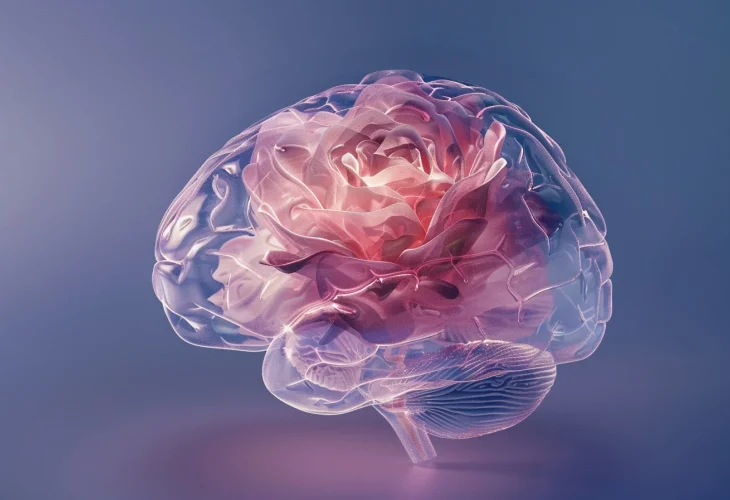
Then, in 2018, researchers studying human brain tissue identified an unusual type of neuron that had not been found in mice. They called it the “rosehip neuron,” a name inspired by the cell’s distinctive, compact shape, which reminded researchers of the fruit of a rose plant.
The discovery raised an intriguing possibility: some of the cellular building blocks of the human brain may be more distinct from those of mice than scientists had realized.
What Is a Rosehip Neuron?
Rosehip neurons were identified in the first layer of the cerebral cortex, the thin outermost layer of the brain’s cortex. This layer contains a relatively sparse but complex network of neurons and connections involved in regulating activity in the cortical circuits below.
The rosehip neuron belongs to a class of cells known as inhibitory neurons. Rather than simply encouraging other neurons to fire, inhibitory neurons can reduce or regulate their activity. They play an essential role in keeping the brain’s enormous network of electrical signals under control.
Our brains are constantly receiving and processing information. Inhibitory neurons help regulate this activity, determining which signals are amplified, which are restrained, and how different neural circuits interact.
Researchers found that rosehip neurons appear to make highly specific connections with pyramidal neurons, an important class of cells in the cerebral cortex. This suggests that rosehip neurons may be able to precisely regulate particular parts of these neurons rather than broadly suppressing activity throughout an entire circuit.
Researchers also observed another interesting feature: rosehip neurons can form electrical connections, known as gap junctions, with other rosehip neurons. These connections allow neighboring cells to influence one another directly and may help coordinate their activity.
Exactly what this means for human brain function, however, remains an open question.
Why the Discovery Surprised Researchers
For decades, mice have played an enormously important role in neuroscience research. Their brains contain many of the same broad categories of neurons found in humans, and scientists can raise mice under controlled conditions, alter specific genes, label individual cells, and record neural activity in ways that cannot generally be done in humans.
This has made mice extremely valuable for understanding basic brain mechanisms.
But the discovery of the rosehip neuron offered an important reminder: findings in mice cannot automatically be assumed to apply identically to humans.
The surprise in 2018 was not simply that researchers had found a cell with an unusual shape. They also examined the cells at the genetic level.
Nearly every cell in the body contains essentially the same DNA, but different types of cells activate different combinations of genes. By analyzing patterns of gene expression, researchers were able to distinguish different types of inhibitory neurons in the outermost layer of the human cerebral cortex.
The rosehip neurons displayed a distinctive combination of genetic markers. When researchers compared their findings with data from the mouse cortex, they did not find a mouse cell type with the same combination of characteristics. The cells’ physical structure also differed from the neuronal types they examined in mice.
The discovery did not mean that mouse research was suddenly unreliable. Rather, it demonstrated why researchers must be cautious when translating findings from animal brains to the human brain.
We Are Not Just Bigger Mice
So what exactly do rosehip neurons do? Could they contribute to uniquely human aspects of thought or behavior?
Scientists still do not know.
Their precise role in the human brain remains an area of research, and the discovery alone cannot tell us whether rosehip neurons are responsible for qualities such as self-control, free will, or decision-making.
But from a Jewish perspective, the discovery can still inspire a fascinating reflection.
Judaism teaches that human beings are not simply another species with greater intelligence. We were created with the ability to make moral choices, resist impulses, take responsibility for our actions, and direct our lives toward a higher purpose.
Science investigates the physical mechanisms that make the extraordinary complexity of the human brain possible. Torah addresses another dimension: what we choose to do with the abilities we have been given.
The rosehip neuron is only one tiny piece of an extraordinarily complex puzzle. But its discovery is also a reminder of how much remains unknown about the human brain, and how careful we must be about assuming that what we learn from animals applies perfectly to human beings.
We are not simply bigger mice.

