

Home Styling
7 Things You Should Get Rid of in Your Kitchen Today
You may be surprised by how much unnecessary clutter is hiding in your kitchen. Start with these seven common items taking up valuable space.
- Tehila Cohen
- | Updated
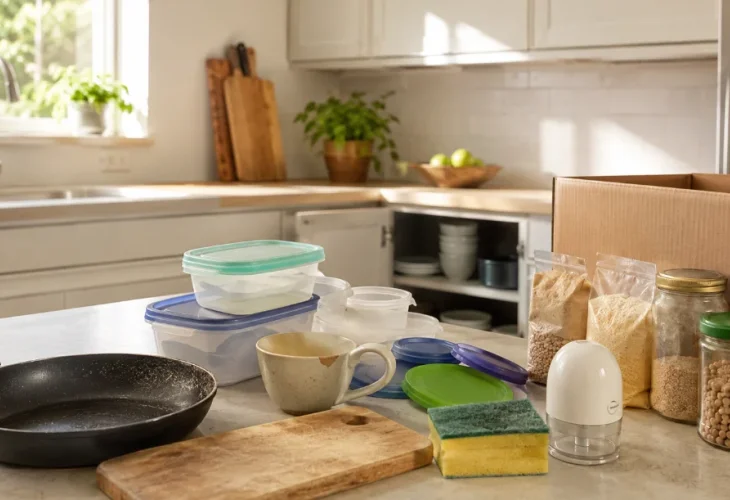
Kitchens have a way of filling up with things we keep simply out of habit: a utensil that no longer works, a spice we haven’t opened in years, or a container whose lid disappeared long ago.
A quick kitchen declutter can free up surprising amounts of space and make everyday cooking much easier. Here are seven things worth checking in your cabinets, drawers, refrigerator, and pantry.
1. Expired or Questionable Food
Go through your refrigerator, freezer, and pantry and check the dates on anything that has been sitting around for a while. Pay particular attention to opened sauces, spreads, baking ingredients, and old spices.
Keep in mind that not every date printed on food indicates that it becomes unsafe immediately afterward. Depending on the product, some dates relate more to quality than safety. But if you don’t remember when something was opened, it has been stored improperly, or its smell, appearance, or texture has noticeably changed, it may be safer to throw it away.
2. Containers Without Lids
Almost every kitchen has a cabinet or drawer filled with mismatched food containers and lids.
Take everything out and try to match each container with its lid. If you have containers without lids or lids without containers, get rid of the extras.
You may be surprised by how much space this simple step frees up.
3. Cracked or Worn Cutting Boards
Cutting boards do not last forever. Deep grooves and cracks can become difficult to clean thoroughly and may trap food residue.
If a cutting board is badly warped, cracked, or covered in deep grooves that are difficult to clean, it may be time to replace it.
4. Pans With Peeling or Damaged Coatings
Take a look at your nonstick pans. If the coating is badly scratched, flaking, or peeling, consider replacing the pan rather than continuing to cook with it.
To help nonstick cookware last longer, follow the manufacturer’s care instructions. In general, avoid metal utensils and abrasive cleaning tools that can damage the surface. Wooden or silicone utensils are usually gentler options.
5. Old Cleaning Sponges
That kitchen sponge may deserve more attention than you give it.
If a sponge smells unpleasant, looks dirty, is falling apart, or has been used for a long time, replace it. Sponges can retain moisture and food residue, creating an environment where bacteria can multiply.
Between uses, rinse the sponge thoroughly, wring out excess water, and allow it to dry in a well-ventilated place rather than leaving it wet in the sink.
6. Chipped or Cracked Dishes
That favorite mug with a chip in the rim may be difficult to part with, but damaged dishes and glassware can become a safety hazard.
Check your glasses, plates, bowls, and mugs for chips and cracks. Damaged items can break further during use or leave sharp edges that could cause an injury.
Even if you love the item, safety comes first.
7. Utensils and Appliances You Never Use
The appliance you used once five years ago. The gadget designed for one extremely specific task. The three versions of the same utensil taking up an entire drawer.
All of them take up valuable kitchen space.
Ask yourself when you last used each item and whether you realistically expect to use it again. If something is still in good working condition but no longer serves you, there is no need to throw it away. Donate it or give it to someone who will actually use it.
A more organized kitchen doesn’t necessarily require buying new organizers or completely redesigning your cabinets. Sometimes the easiest place to start is simply getting rid of what you no longer need.
Seven small decisions can leave you with more space, less clutter, and a kitchen that is much easier to use.

