

Raising Children
New School Year Nerves? 7 Things Your Child Needs to Hear
A new school year can bring excitement, nerves, and uncertainty. These seven simple phrases can help your child feel understood, secure, and supported.
- Tehila Cohen
- | Updated
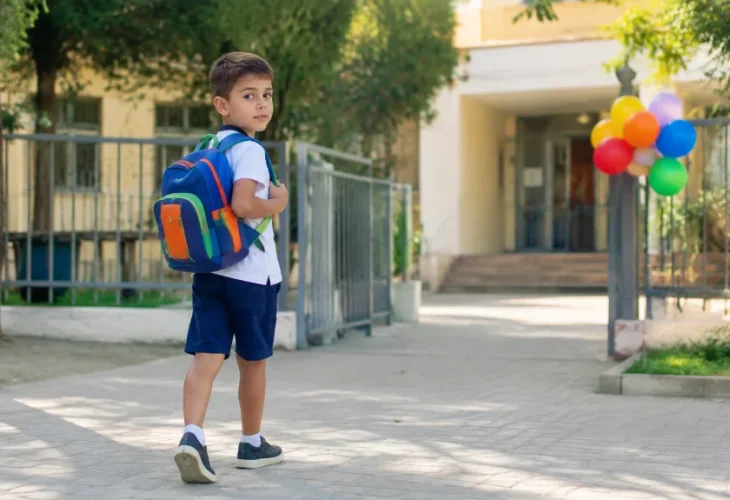
As the new school year begins and children settle back into their routines, we all want to see our kids thrive, both academically and socially.
But children respond to change in very different ways. One child may be excited, another may become unusually quiet, while someone else may suddenly complain of a stomachache every morning before school.
When children are nervous, our instinct may be to reassure them that everything will be fine. But rather than dismissing their worries or promising that nothing will go wrong, a few simple, honest phrases can help them feel understood, secure, and better prepared for whatever the new school year brings.
1. “It’s Natural to Be Excited and a Little Worried, Too”
This lets your child know that there is nothing wrong with what they are feeling. They do not have to pretend to be completely happy, confident, or brave.
Excitement and nervousness can exist at the same time. When children know their feelings are normal, they may find it easier to talk openly about what is worrying them.
2. “You Don’t Have to Know Everyone on the First Day”
Children may feel pressure to make friends immediately and find their place in the class as quickly as possible.
Remind them that friendships usually develop gradually. They do not need to find a best friend on the first day. Saying hello to one child, having a short conversation, or choosing someone to sit beside can already be a good start.
3. “Other Children in the Class Probably Feel the Same Way You Do”
Knowing they are not the only ones feeling nervous can help reduce a child’s sense of loneliness.
Remind them that even children who appear completely confident on the outside may be wondering who they will sit with, whether they will make friends, or what their new teacher will be like.
Sometimes simply realizing, “It’s not just me,” can make a new situation feel much less intimidating.
4. “If Things Feel Hard, There Is Always an Adult You Can Turn To”
Children should know that asking for help is always an option.
Before school begins, remind your child whom they can approach if they do not understand something, feel lonely, have a problem with another child, or simply need some support. It might be their homeroom teacher, Judaic studies teacher, counselor, or another staff member they know and trust.
Knowing exactly whom to turn to can make an unfamiliar environment feel much safer.
5. “You Don’t Have to Be Like Everyone Else for People to Like You”
In a new class or social environment, children can feel pressure to change themselves in order to fit in.
This is an opportunity to remind your child that their personality, interests, talents, and quirks are part of who they are. They do not need to hide those things or become someone else to earn friendship and acceptance.
6. “Not Every Day Will Be Perfect, and That Doesn’t Mean the Whole Year Will Be Hard”
A disappointing first day can feel enormous to a child. Maybe no one sat beside them at lunch. Perhaps they argued with someone at recess, felt left out, or came home convinced that they do not like their new teacher.
Help them put that experience into perspective.
One difficult day does not predict the entire school year. Friendships change, routines become familiar, and children gradually find their place. A bad day is just one day, not a sign that everything ahead will be difficult.
7. “No Matter How Your Day Goes, When You Come Home, I’m Here for You”
This may be the most important message of all.
A child cannot control everything that happens at school. But knowing there is a safe place waiting for them at home can provide a steady anchor amid all that uncertainty.
They need to know there is someone who will listen without immediately judging, criticizing, or trying to solve every problem.
And when your child does come home, try not to interrogate them the moment they walk through the door. Instead of repeatedly asking, “How was school?” give them a little time to decompress. Offer them something to eat, let them rest, and create an opportunity for conversation later when they are ready.
A child’s confidence is not built by promising that they will never face difficulties. It is built by helping them understand that when challenges do arise, they will not have to face them alone.

