

Home Styling
School Is Back: 6 Ways to Get Your Home Organized
Backpacks by the door, papers on the counter, and lunch boxes everywhere? These simple organizing systems can make your home work better all school year.
- Orit Groskot
- | Updated
The start of a new school year brings that unmistakable feeling of a fresh start, along with the scents of Rosh Hashanah cooking and brand-new books. Priceless.
Amid all those wonderful smells, there’s one thing I genuinely love to do at the start of the year: organize all the practical areas of the house. Suddenly, backpacks are back by the door, lunch boxes and water bottles are taking over the counter, and permission slips, contact sheets, notebooks, and schedules seem to be everywhere. All the things that disappeared, were neglected, or simply didn’t matter over the summer are back.
The best way I’ve found to deal with them is Cassandra Aarssen’s organizing method, which I’ve written about many times in this column and in the “Home Management” column. The basic idea is simple: organize according to the kind of organizer you actually are, rather than trying to recreate a system that looks beautiful in a photo.
According to Aarssen, there is no one-size-fits-all approach to organization. Different people need different systems depending on whether they prefer to see their belongings or keep them out of sight, and whether they like detailed organization or broad, simple categories.
Combine that approach with thoughtful home styling, and you can create a home that is both beautiful and realistically organized.
First, Figure Out What Kind of Organizer You Are
Before organizing anything, think about the people who will actually be using the system. Aarssen divides organizing styles into four types:
Butterfly: Needs to see things out in the open but prefers simple, broad categories. One large basket for craft supplies will work better than 10 small boxes. Many young children are classic Butterflies.
Bee: Also likes to see belongings, but prefers more detailed categories. Markers, pencils, glue, and scissors can each have their own designated spot.
Ladybug: Likes a clean, uncluttered look but needs an organizing system that is quick and simple. One large drawer or a basket inside a cabinet can work beautifully.
Cricket: Prefers both a clean look and detailed organization behind closed doors. Dividers, compartments, and precise labels work particularly well.
The important thing is that you don’t have to choose one “type” for the entire family. One child may need a hook right out in the open, while you may want every backpack neatly tucked away in a closet.
Instead of trying to teach everyone to organize exactly the way you do, create a system that even the least organized person in the house can realistically maintain.
Start at the Entrance
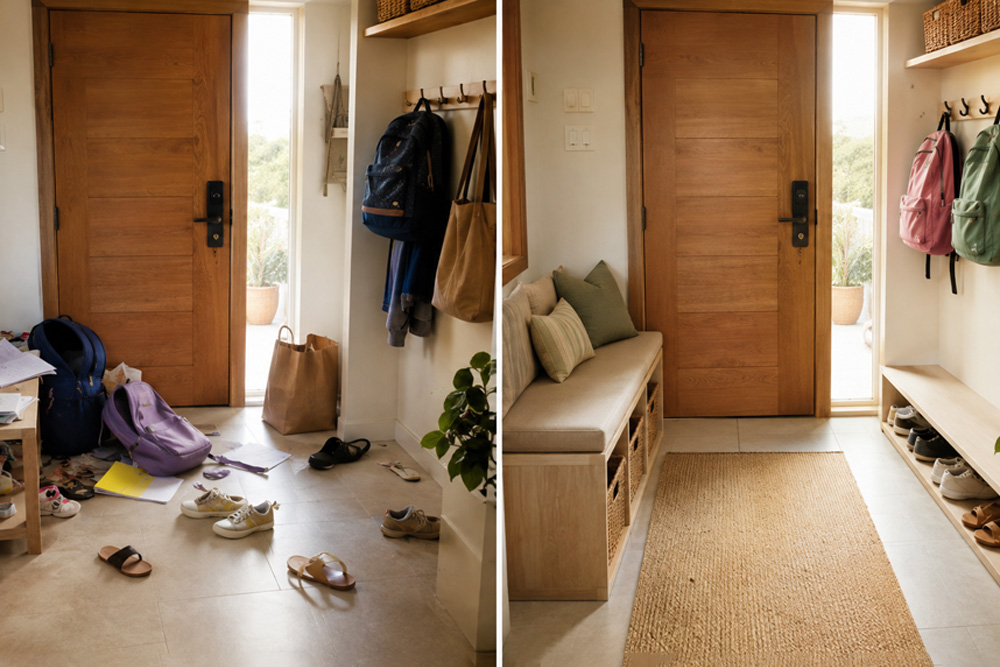
Backpacks, shoes, water bottles, coats, and anything else the kids need in the morning should all be kept in one place: a kind of “launch station.”
And don’t tell me, “There’s no room.” Even a three-foot-wide stretch of wall can be enough.
Add a bench or shoe cabinet, a hook for each child’s coat and backpack, a basket for smaller items such as gloves and scarves, and one designated spot for anything that needs to leave the house the next morning.
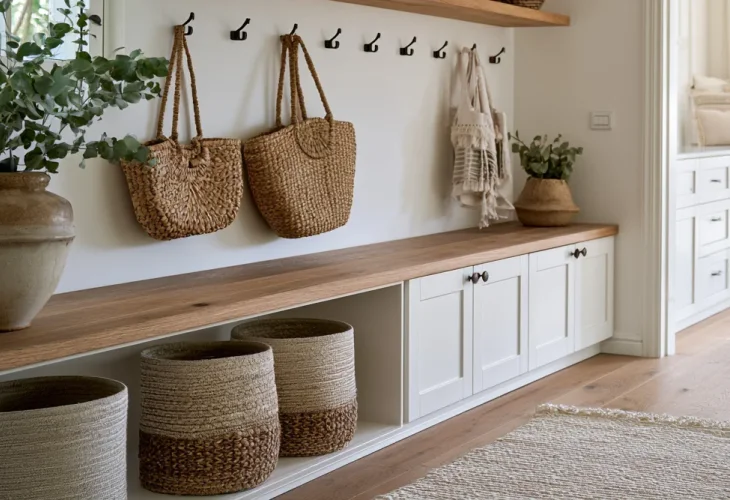
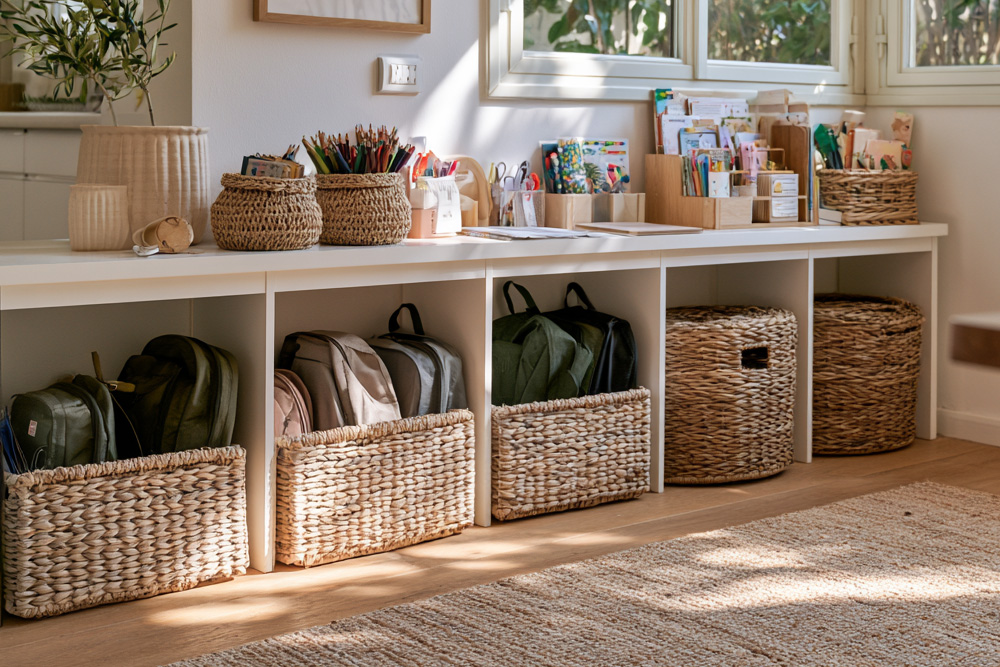
Of course, make it beautiful too, so you’ll enjoy looking at it every day. Choose one overall style: light wood and woven baskets, white with touches of olive green, or even a dark wall with light-colored hooks. Don’t try to do too much at once. Pick a look and stick with it.
And here’s an important tip about school backpacks. Want your kids to stop throwing them on the living room floor? It may sound strange, but spend a few days noticing where they naturally put them down. By the door? Next to the dining table? In the hallway?
One of Aarssen’s principles is to organize around the way you actually use your home rather than trying to force everyday life into an idealized system. If all the kids naturally drop their backpacks near the kitchen, a hook near the kitchen may work much better than an elaborate storage unit in their bedrooms.
The Study Space: Do You Even Need One?
Before filling your child’s desk with boxes, pencil holders, and organizers, ask yourself one simple question: What kind of child will actually be using this space?
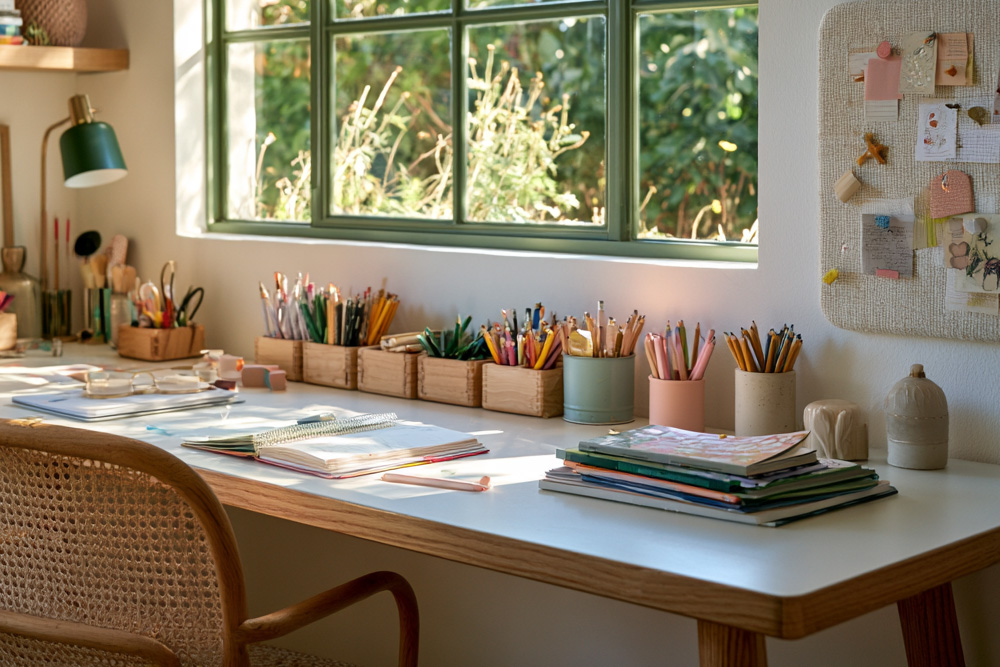
A Butterfly child may completely forget about something once it’s out of sight. For them, try attractive pencil cups, a pegboard, or open baskets.
A Bee child may prefer a more detailed but still visible system, with writing supplies separated by category, a shelf for notebooks, and a designated place for papers.
For a Ladybug child, it’s better to keep the desktop clear and store supplies in one or two drawers divided into simple categories.
And a Cricket? They may be happiest with a drawer where every item has its own precise compartment.
This way, the study area doesn’t just look organized; it actually works for the child who uses it.
On the other hand, if your children don’t use their desks at all, like my daughters, consider getting rid of them. After the desk in my daughters’ room repeatedly turned into a dumping ground for tights, school shirts, and toys, I simply removed it. My daughters prefer doing their homework at the dining table with everyone else anyway.
Win the Paper War
The school year brings an enormous amount of paper from day one: health forms, permission slips, notices, worksheets, rules, contact sheets, drawings, tests, and who knows what else.
Within days, it can take over the kitchen counter or cover the refrigerator door.
The solution can be surprisingly simple. Place one tray on a sideboard or hang a wall file organizer. Every paper that comes home goes there. Once a week, go through the pile.
Needs action? Deal with it.
Needs to be saved? File it.
No longer needed? Out it goes.
There’s a design benefit too: instead of a messy pile of papers scattered around the house, everything is contained in one tidy place.
Create a “Morning Drawer”
Want to make school mornings a little easier? Create a morning drawer.
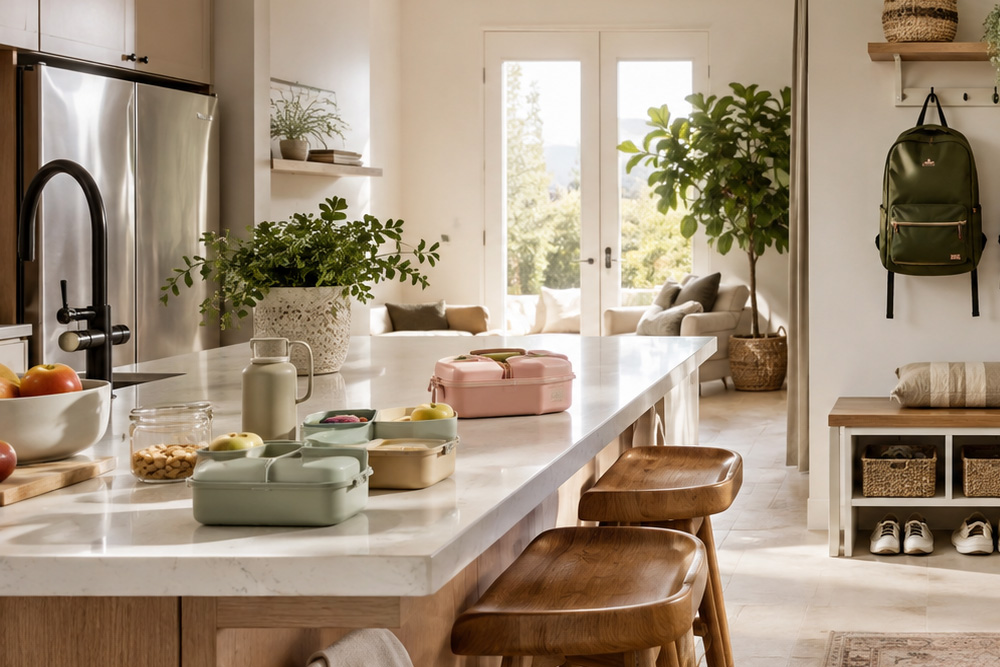
Choose a drawer, basket, or shelf near the kitchen and fill it with the things you reach for every morning: lunch boxes or bags, napkins, water bottles, and whatever else your children regularly take to school.
The key is to keep everything as close as possible to where you actually use it. The fewer steps involved, the more likely everyone is to stick with the system.
Turn Organization Into Design
Now comes the fun part.
Choose two or three materials or finishes and repeat them throughout the space. For example, wood, wicker, and metal, or white, light wood, and textiles in a soft neutral shade. Choose baskets that work well together, matching hooks, and labels with a consistent look.
Consistency creates visual calm, even when you’re dealing with a lot of belongings and a lot of children.
If members of your household need to see things in order to remember them, don’t fight it. Make visible storage attractive instead. Try a pegboard, open shelving, matching baskets, or a tray that groups several smaller items together.
If your family prefers less visual clutter, focus on what happens behind closed doors: large baskets inside closets and drawers that are easy to open, use, and close again.
That’s when home styling starts working with you rather than against you.
Don’t Create a System You Won’t Maintain
And perhaps the most important rule of all: Don’t create an elaborate system, no matter how beautiful it looks, that requires you to be more organized than you really are.
It’s easy to get excited at the beginning of the school year and create an impressive setup with labels, dividers, colors, tiny boxes, and individual compartments for every eraser and paper clip.
But if putting something away means opening a cabinet, pulling out a basket, removing a lid, and finding the right little compartment, there’s a good chance that item will simply stay on the counter.
As the school year gets underway, ask yourself three questions: Where do we actually use these things? Where do we naturally tend to leave them? And what would make putting them away almost effortless?
Once you have those answers, organization becomes part of the way your home works rather than another chore to keep up with. And that gives your carefully organized home a much better chance of surviving all those rushed school mornings ahead.
Good luck!

