

Magazine
From India to Judaism: Ran Rishon’s Journey of Teshuvah, Music, and Self-Discovery
The singer and therapist shares how a search for authenticity led him back to Judaism and taught him to redefine success and self-worth
- Avner Shaki
- | Updated
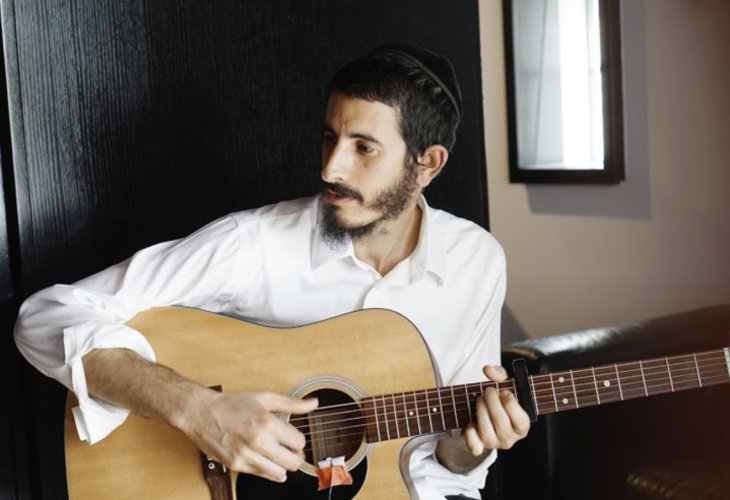 Ran Rishon (Photo: Asaf Antman)
“Listen, it’s amazing how it all eventually happened,” Ran Rishon told me at one of the high points of our conversation. “So many times I had heard people say that you never know where it will come from, that Hashem sent them a great light precisely when they least expected it. And yet, when it happened to me, I was completely surprised.
“For many years I played music and dreamed of succeeding as an artist, but something about the process of teshuvah opened that up even more. Especially during difficult times, I would write and compose songs as a way of coping. At the same time, and perhaps this sounds strange, becoming religious also pushed music out of my mind. I planned to become a Torah student and had more or less given up on music.
“One completely ordinary evening, I attended the hilula of a certain tzaddik. Toward the end of the evening, they asked me to come up and sing two songs. I sang, and as soon as I stepped down, a man I didn’t know approached me and said, ‘Listen, you have to do something with this. You have good, unique material.’ I could see that he was very enthusiastic, and I also realized that he knew the field. So I told him, ‘I’m heading in the direction of becoming a Torah student, but if you believe in me and you’re willing to take this journey with me, I’m in.’ Shortly afterward, I discovered that the man who had approached me was Natan Neufeld, a longtime baal teshuvah and a highly talented, well-known producer in the industry.
“From there, things just took off,” Rishon says. “Within two weeks, we recorded nearly 30 demos of my songs. Natan brought several of his friends to the recording sessions, and everyone was very enthusiastic and impressed. Natan is connected to many artists. He sent the demos to several producers and also to Rabbi Ofer Gisin, who was enthusiastic about them as well. He sent them to Evyatar Banai, who, thank God, also liked them.
“The reactions were good, so we decided to record an album. We thought about talented artists who might be a good fit to participate, and among the names that came up were Ishay Ribo and Evyatar Banai, both of whom eventually took part. Not long afterward, while I was studying at the Ziv yeshiva in Jerusalem, I began learning in chavruta with Evyatar Banai, who was also studying there, and we became very close friends.”
The Mysterious Dream, the Car Dealer, and the Tefillin
From a distance, the life of Rishon, married, a father, and a resident of Yad Binyamin, seems like a unique, fascinating, almost impossible combination. Rishon released an intriguing album that received enthusiastic reviews and included collaborations with some of Israel’s leading artists. He has performed at sought-after festivals including InDNegev, Yearot Menashe, and Cinema South. He spent several years living as a Torah student on the secular Kibbutz Revadim, teaches qigong, studies psychotherapy, and works as an emotional therapist, including with struggling Haredi youth.
In addition, for an extended period Rishon studied in a group with Rabbi Uri Zohar, Rabbi Dan Tiomkin, and Evyatar Banai, as well as in individual chavruta partnerships with Evyatar Banai, Aharon Razel, Ishay Ribo, and other artists. And all of this is without mentioning the intensive work he has invested in preparing his album and performing throughout Israel.
“I was born in Yavne,” he says, “to a family that was somewhat traditional. Basically, we observed Passover and Yom Kippur at home. As I grew older, unfortunately there were years when I didn’t even observe those two. As for tefillin, after putting them on for my bar mitzvah, I didn’t touch them for many years, until, thank God, I returned to them as part of my teshuvah. Today, thank God, my parents are religious. When I began drawing closer to Judaism, my sister also began that journey, so the situation today is completely different.
“I grew up in a neighborhood populated by career military families, a kind of upper-middle-class neighborhood, most of them Ashkenazi. I remember being embarrassed that I was Persian and Yemenite. As a result, I can say that I became fairly ‘Ashkenazified.’ I hid my roots even from myself.
“In the Mussaf prayer on Shabbat we ask, ‘Plant us within our own borders.’ That is extremely important. Every person needs to be rooted, and not simply rooted, but rooted within his own boundaries, specifically within his own strengths and abilities, rather than those of someone else. Our first and easiest tendency is to imitate the people around us. It is comfortable because it frees us from having to think deeply, look inside ourselves, and listen to what is being said there. It takes courage and faith to be willing to know myself and not go grazing in other people’s fields.
“Unfortunately, the world today is full of this. Almost everyone is trying to make everyone else jealous, and very often they succeed: ‘Look at me in my new car. Look at me skiing in Switzerland. Look at my successful business.’ Constantly looking at other people uproots us from ourselves and leaves us with the painful feeling that everyone else has something and I don’t. That is one of the most terrible lies of our generation.”
According to Rishon, the religious world is not immune to this problem. “It happens in the religious world too, sometimes in exactly the same way and sometimes in a slightly different form. Someone became a baal teshuvah five minutes ago, and suddenly he is already observing all kinds of stringencies or Kabbalistic practices. Those things can be beautiful and important in themselves, but they still shouldn’t cause a person to become full of himself. I look back at myself and remember how I used to be like that. To me, it looks exactly like my son dressing up as a pilot and believing that because he is wearing the costume, he really is a pilot. A person needs to be connected to himself, with simplicity and truth.”
Speaking of connection and truth, how did the sense of alienation you described affect you?
“It definitely wasn’t easy. When I look back, I understand that the sense of alienation that followed me through high school, the army, and afterward largely came from this. It was as though I had two different voices inside me. One voice, the one most of the world agrees with, told me, ‘Winning and succeeding are the most important things. It doesn’t matter if you cheated a little or stepped on someone along the way.’ The other voice told me, ‘It is better to lose money and fail than to deceive another person.’
“In any case, after I was discharged from the army, I understood that something had to change. So I flew to the United States, and for the first time in my life I was able to give myself space. A few days after arriving, I had a strange dream. I heard a clear, powerful voice telling me to put on tefillin. I woke up, and the dream wouldn’t leave me.
“I told my landlady, who was Jewish, about the dream. She became very excited and told me that I had to put on tefillin. I didn’t have tefillin with me, and I didn’t know anyone who did. So she called a car dealer she knew who occasionally put on tefillin. We drove to him, I put on tefillin, and something inside me became calmer and quieter. Then I asked for my own tefillin to be sent to me, the pair I hadn’t touched since my bar mitzvah. Even after they arrived, I still didn’t put them on, but wherever I went, I carried them with me almost like a protective charm. That was how my relationship with tefillin slowly began to form again.
“After I had been in the United States for some time, during one of the Christian holidays, I wanted to buy a present for a friend. I was looking for something to give him, and eventually I bought a book by a famous Indian guru. While I was still in the store, I began reading it. It spoke about the inner world, the soul, awareness. I was stunned. It was the first time I had encountered material like that, and I was completely drawn into it.
“When I originally flew to America, my plan was to leave and not come back. Today I understand that I was really running away from Israel. I didn’t have the courage to live in Israel, face all the expectations people had of me, work hard, and succeed. The book I mentioned contained a great deal about the importance of courage. It completely changed me. In a single moment of realization, I found courage. I hit the table and decided to return to Israel.”
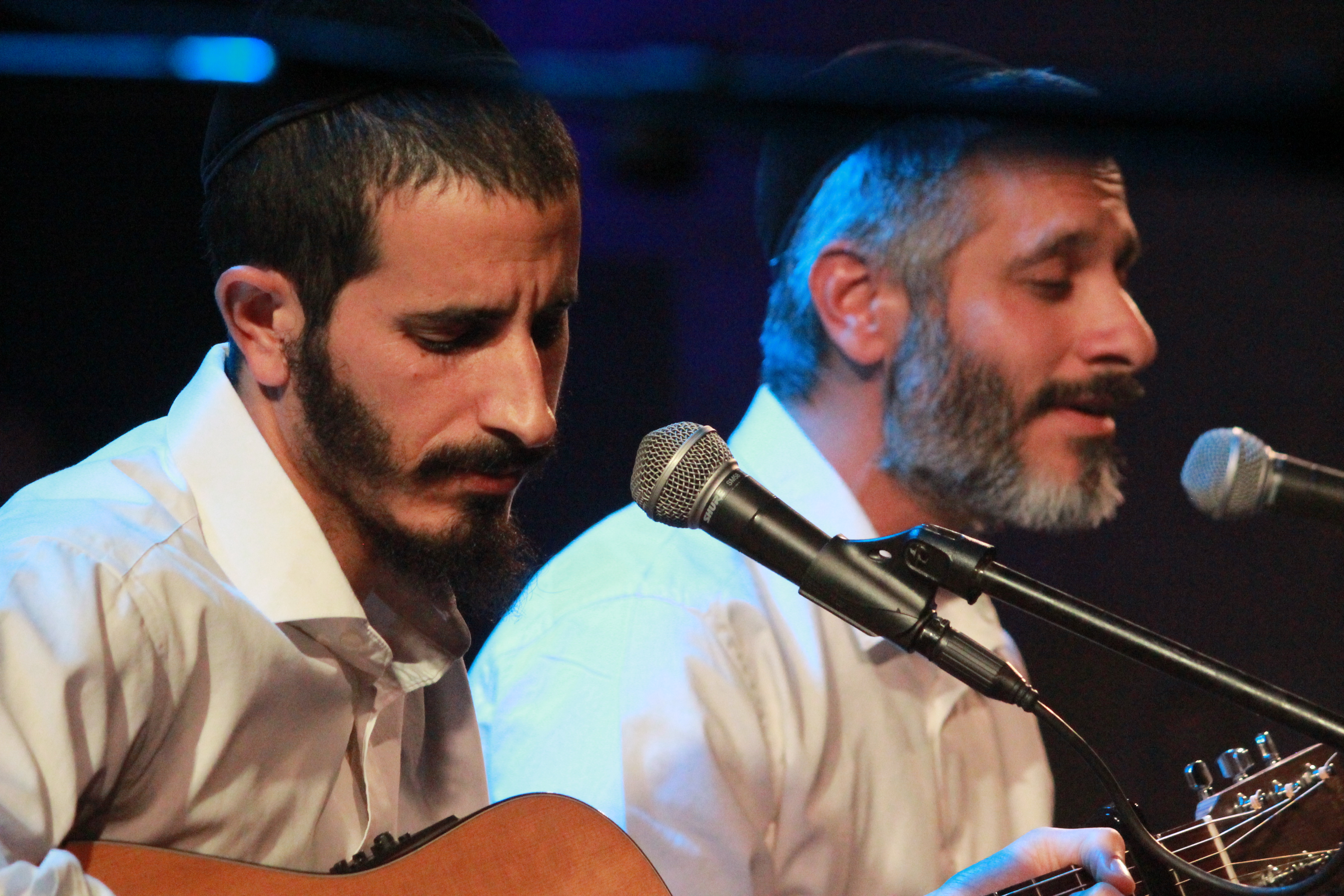 Photo: Asaf Antman
The ideas you read about in that book exist in Judaism, in their purest form. Had you never heard about them before?
“No. I was completely disconnected. I believed everything television showed me about the Torah and its sages. That was how Judaism had always been portrayed to me, simply as a collection of laws and restrictions that had nothing to do with my soul or anyone else’s. Apparently, this was how Hashem wanted the spiritual dimension within me to be revealed, and afterward I would purify it through Judaism.
“The ideas in that book made a strong impression on me. Because the author was Indian, I traveled to India to learn more about his teachings. In India, I studied yoga, connected with myself, and attended many workshops. The thing that influenced me most was a book about reincarnation. I read it, and it became very clear to me that there was such a thing as reincarnation. Once I absorbed that idea, I began asking myself, ‘Where do I come from? Where was I born? Into what nation? Into what religion?’ I assumed that if that was where I had been born, then that was probably where my soul’s mission was.
“As a result, I decided that I needed to study Judaism. But I was so disconnected that I didn’t even know where to begin. Today this sounds unbelievable to me, but this is really what happened: I was walking down a street in Tel Aviv and saw someone wearing a kippah. I approached him and asked him what interesting books there were about Judaism. He recommended Pirkei Avot and Mesillat Yesharim and continued on his way.
“It took me a few days, but eventually I got hold of Pirkei Avot. I started reading, and I have no other words to describe it except that I went through an overwhelming mystical spiritual experience. I felt as though every word I read entered my body and spread light through it. Suddenly the Hebrew language and the Torah revealed themselves to me. That was the real turning point in my life. That was where I discovered the world of Jewish thought. Later I began reading passages from the prayers and chapters of Tehillim, spending long minutes on each chapter.
“At the time, I was living in Florentin in Tel Aviv, so I began going to the neighborhood synagogue, where a young rabbi gave a regular class. The people who usually listened to him were a recovering drug addict who had opened a barbershop in the neighborhood and an older carpenter who worked nearby. Every evening we would sit together and learn. At the time, I was managing a warehouse for an American fashion chain, and I felt that I couldn’t show my Judaism outwardly. I would tell people that I put on tefillin, and they would think I was crazy. But I wanted to express my Judaism openly, without being ashamed, so I moved to Kadita.”
That is quite a dramatic move, all the way from central Israel to a semi-official settlement in the Galilee mountains.
“Yes, it was extremely dramatic. Kadita is a semi-official settlement near Meron. I lived there in a cabin without electricity and began studying Chinese medicine in the nearby community of Or HaGanuz. Spiritually, I was flying very high.
“At a stage like that, Torah reveals itself to you in all its glory. You understand that the Torah is absolute truth and everything else is false. But at the same time, you can become extremely judgmental. That is what happened to me. I found it difficult to love the people around me. I thought I knew everything and everyone else was wrong. But you cannot continue like that for very long. Reality eventually confronts you. Suddenly you realize that reality is far more complicated. And only then did my real process of teshuvah begin. After that realization, I didn’t dare criticize anyone for several years, and I still try to avoid doing so today.”
Suddenly, Time Stood Still
After Rishon became more settled in the world of teshuvah, he began searching for his life partner and going on shidduch dates.
“The shidduch period was a nightmare for me,” Rishon admits. “I simply couldn’t handle the whole system. You arrive on a date, and within five minutes you know whether there is any potential or not, but you still have to remain there for two hours. Slowly, it becomes exhausting. And that is without even mentioning how often people try to introduce you to someone simply because you are religious and she is religious.
“After quite some time, I became exhausted and discouraged. I realized that this wasn’t my place. Then a cry came out of me to Hashem: ‘Master of the Universe, I wasn’t raised this way. I’m not built for this. Please bring me my wife in a way that suits me.’ I felt that my prayer was accepted. Not long afterward, I met my wife through mutual acquaintances.
“When I arrived at her apartment, one of the things that amazed me was the abundance of candles burning there. It deeply affected me because my cabin in Kadita also had no electricity, so I was always lighting candles, and I loved them. The idea that you could create a place in the heart of Tel Aviv where time and its frantic pace simply stopped was incredible to me. My wife taught me a lesson without saying a word: you don’t always have to travel far away in order to find yourself. Wherever you are right now, you can find yourself there too.
“The match itself, in some ways, wasn’t natural or easy. My wife is five years older than I am, and in order to marry her I had to do the work of letting go of some of my fantasies and expectations. Thank God, I did that work and succeeded. Incidentally, I think that is one of the difficulties many single men and women face: developing the ability to let go of fantasies. Not in the sense of surrendering like a loser or someone to be pitied, but from the understanding that the peel comes before the fruit, yet the fruit is what really matters.
“Thank God, we married. After the wedding we lived in Tel Aviv for a year and then moved to Kibbutz Revadim, where her parents lived. I was a religious Tel Avivian, and I had no idea what I had to do with this kibbutz. Beyond that, I had no idea what I was going to do for work. Then, through extraordinary Divine providence, on the very day we moved into our home on the kibbutz, I received an offer to study at a yeshiva in Jerusalem and receive a generous stipend for doing so. We were simply stunned. A huge dream of ours had come true.”
The Power of a Shattering Realization
Things began falling into place in Rishon’s life. Not long after entering the yeshiva in Jerusalem, where he met several artists who were also studying there, he began working intensively on his first album, Et Lizroa (“A Time to Sow”). Reviews of the album noted, with good reason, that Rishon’s writing was deep and moving and that he had succeeded in beautifully blending East and West, incorporating ethnic instruments, with excellent musical production by Yehu Yaron.
The album also included two songs released as singles featuring Ishay Ribo and Evyatar Banai, resulting in two outstanding duets.
Despite all the investment in the album and the expectations surrounding it, it seems that commercially it was not especially successful.
“The question ‘What is success?’ is the million-dollar question. If you ask almost anyone what success means in the music industry, they will probably answer: being played on Galgalatz, millions of views, and lots of Facebook likes. If you continue and ask, ‘Why do you need to succeed in the first place?’ they will probably answer, ‘Because success brings respect, money, and self-fulfillment.’ And if you dig a little deeper and ask, ‘Why do you need all of those things?’ they will probably say that those things make you feel good. So ultimately, on the deepest and most truthful level, success is really about my desire to feel good about myself.
“I have to admit that while making and releasing the album, I learned that lesson very deeply. If you forget the original point, that ultimately I simply want to feel good and everything else is only a means toward that end, then what is secondary becomes primary, and what is primary becomes secondary. When the album didn’t take off in terms of radio play and so on, I suddenly discovered that my love for myself was conditional. In other words, if people played my music, then I was good and I loved myself. If they didn’t, then I was terrible. That is simply a distorted way of thinking that destroys everything healthy in a person’s inner world. Yes, one of the most important moments in my teshuvah process was realizing that my love for myself was conditional.”
According to Rishon, this insight appears repeatedly in Jewish teachings, and it is worth paying attention to its message and internalizing it.
“This idea repeats itself throughout the Torah. For example, in Rabbi Nachman’s story The Lost Princess, he tells of a princess who became lost. In the story, the ‘Not Good’ takes her away, and the entire journey is about rescuing and finding her, freeing her from the ‘Not Good.’ That is the struggle all of us face: escaping from the long arms of the ‘Not Good’ that keeps chattering inside our heads and flashing across our screens.
“And it is a shattering realization to discover that my love for myself is controlled by conditions. I want and need to love myself and my creativity without conditions, just as Hashem loves me without conditions. When I began to understand that, abundance and success also began to arrive. Things started happening. Performances took place. Interesting collaborations developed. Suddenly I found my own place and my own stage within the music industry.
“Right now, among other things, that is expressed through a musical performance I have created. It naturally includes my songs, but it also includes simple conversation and honest sharing from the heart. It works for intimate home performances, seminaries, yeshivot, ulpanot, gatherings of friends, events, and audiences from every community and subcommunity.
“I am happy to say that the home performances I give are very special. People invite me and their friends, prepare warm soup, fill the room with candles and intention, and an intimate performance begins. There is no glittering figure on a stage with changing lights. Instead, space opens up for honesty, simplicity, and a unifying human encounter. That honesty penetrates people’s hearts regardless of their level of religious observance or the unique way each individual serves Hashem.
“I think there is a stage in the teshuvah process, usually at the beginning, when you are comfortable with people not identifying you as religious because then you don’t feel pressured. But there comes a stage when the outward signs of Judaism emerge from you, and you can no longer hide them. On the one hand, that can feel intimidating and demanding. On the other hand, if you are dressed in black and white with a black kippah, people already know not to offer you things that are inappropriate for you, not to speak improperly around you, women know not to offer a handshake, and so on.
“In addition to all of this, during the early years of our religious life we lived on a kibbutz, which made that outward identity even more necessary. The kibbutz was extremely secular. There was no synagogue, no mikveh, no eruv, nothing. With our first two young children, we managed on Shabbat and were able to leave the house with them without carrying. But with the third child it became much more difficult, so we could no longer go out together on Shabbat.
“After a few months, we submitted a request to the kibbutz to install an eruv. It caused an enormous uproar. There were committees, votes, and approvals. We heard people who learned about our request saying, ‘Today it’s an eruv. Tomorrow you’ll separate men and women at the swimming pool. The day after that you’ll throw stones at us when we drive through the kibbutz on Shabbat.’ And as if that wasn’t enough, people began circulating a petition opposing our request.
“We saw the turmoil and conflict it had created, and we decided to leave the kibbutz. Today we live in Yad Binyamin, which is a religious community. As a result, that opposing force is no longer awakened within us. Things have calmed down and become more stable.
“If there is one thing I have learned in life, it is that the Holy One, blessed be He, leads you wherever He wants, whenever He wants, according to what is best for you and for the entire world. All you have to do is hold on to Him with all your strength and refuse to let go, even when your hands seem almost to be slipping on their own.”

