

Rosh Hashanah
Don’t Know the Words? 7 Ways to Connect With Rosh Hashanah Prayer
You don’t have to understand every word of the machzor to have meaningful prayer. Here are seven ways to connect more deeply this Rosh Hashanah.
- Yonatan HaLevi
- | Updated
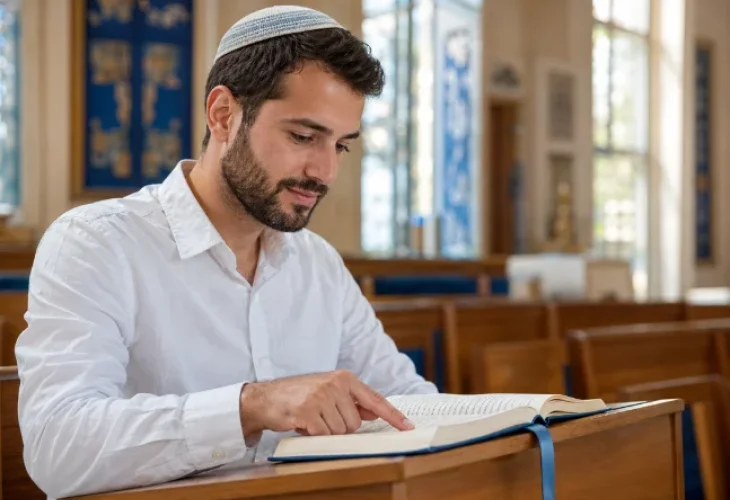
Rosh Hashanah prayers were written and shaped over generations, and every word carries meaning. The piyyutim, liturgical poems woven throughout the service, add layers of emotion, imagery, and profound ideas. So if you open the machzor and find that you do not understand everything, you are certainly not alone.
The goal does not have to be understanding every word at once. A little preparation can make the prayers feel far more familiar and meaningful. Here are seven simple ways to connect more deeply with the words of the Rosh Hashanah service.
1. Get Familiar With the Overall Structure of the Service
Before the holiday, take a few minutes to familiarize yourself with the general flow of the service. Find where the Amidah, Torah reading, shofar blasts, Musaf, and central piyyutim appear.
Having a basic sense of the order frees your mind from wondering, “Where is everyone?” and allows you to focus on the more important question: “What are we saying now?”
You can also mark key pages ahead of time. A few bookmarks can save you from a long, frustrating search in the middle of the service.
2. Choose One Passage and Get to Know It Well
You do not need to understand the entire machzor in one day. Instead, choose one passage that speaks to you, such as “Avinu Malkeinu,” “Hayom Harat Olam,” “HaOkeid, HaNe’akad VehaMizbe’ach,” or “Unetaneh Tokef.” Read an explanation before the holiday and take some time to understand what the words are saying.
Focusing on one passage does not diminish the importance of the rest of the service. On the contrary, it gives you a way in. Sometimes one sentence you truly understand can open your heart to words that are still unfamiliar.
3. Use a Machzor With a Clear Commentary
An annotated machzor is not only for beginners. Even people who have been praying from the same machzor for decades can discover meanings they never noticed before.
Look for one with easy-to-read print, a clear layout, and accessible explanations alongside the prayers. This allows you to move comfortably between the original text and its meaning without constantly losing your place.
4. Prepare a Few Key Lines in Advance
The Shulchan Aruch (Orach Chaim 98:1) emphasizes the importance of focusing on the meaning of the words during prayer and remembering that one is standing before the Divine Presence.
During a long Rosh Hashanah service, maintaining that level of concentration for every word can be difficult, particularly if much of the liturgy is still unfamiliar. Instead, choose two or three lines in advance, learn what they mean, and look forward to reaching them.
When those words arrive during the service, they will no longer be unfamiliar lines in the machzor. They will be words you have been waiting to say.
And if you are unsure which passages are recited or when, ask before the holiday. As our sages teach, “The shy person does not learn” (Pirkei Avot 2:5). One quick question beforehand can prevent a great deal of confusion during the service.
5. Listen to the Chazzan and the Piyyutim
Sometimes a melody, the voice of the congregation, or a familiar piyyut can help us feel the significance of the moment even before we understand every phrase.
Of course, melody is not a substitute for understanding the words. It can, however, provide a way into them. If a particular passage moves you, mark the page and read its explanation later. The next time you hear that melody, the words will carry even more meaning.
6. Speak to Hashem in Your Own Words
Alongside the prayers established by our sages, make room for sincere, personal words as well. Before or after the service, speak to Hashem about what is on your mind: what you regret, whom you are worried about, what you are grateful for, and what you hope for in the coming year.
Personal prayer does not replace the established liturgy. Rather, it can help bring your own life into the experience of prayer.
There is no need for impressive language. What matters is sincerity and turning to Hashem with an open heart.
7. Don’t Measure Yourself by Everyone Else’s Pace
In synagogue, people pray side by side, but they may be in very different places. Some have known the liturgy since childhood, while others are encountering much of it for the first time.
Do not measure the quality of your prayer by the pace or knowledge of the person sitting next to you. Try to follow the service, but do not let the pressure to keep up erase your concentration. If you did not understand one passage, that does not mean the entire prayer is lost. Simply reconnect with the next sentence.
Tehillim (145:18) says, “Hashem is close to all who call upon Him, to all who call upon Him in truth.” Closeness is not reserved for those who understand every word and commentary. It begins with sincerely turning to Hashem.
You do not have to leave Rosh Hashanah understanding the entire machzor. If one piyyut becomes clearer, one familiar line takes on new meaning, or one moment of prayer feels more genuine than it did last year, that itself is meaningful progress. With a little preparation each year, the machzor can gradually become less like a book you are trying to keep up with and more like a prayer you truly understand and feel.

