

World News
Indonesia in Chaos as Volcano Erupts: 1,500 Flights Canceled, 170,000 Passengers Stranded
A powerful volcanic eruption in Indonesia has caused widespread aviation disruptions, with more than 1,500 flights canceled. Footage from the region shows lava jets and enormous ash clouds rising as high as roughly 49,000 feet.
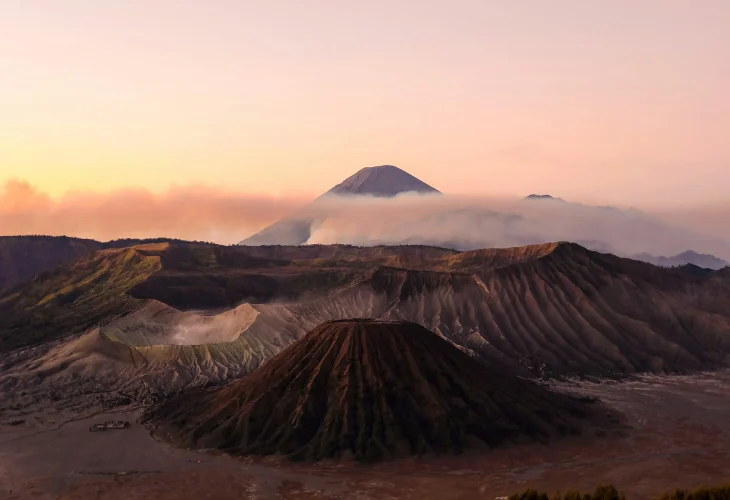 A volcano in Indonesia
A powerful eruption of Indonesia’s Anak Krakatau volcano continues to disrupt daily life across the country: eight airports have been closed, more than 1,500 flights have been delayed or canceled, and about 170,000 passengers have been left stranded. Meanwhile, volcanic ash spreading over long distances has caused severe air pollution and prompted schools to shift to remote learning.
The eruption began on Friday, and since then volcanic ash has blanketed the capital, Jakarta, and nearby areas. According to the country’s meteorological service, the ash cloud reached a height of about 6,000 meters on the Java side and up to roughly 15,000 meters on the Sumatra side and in parts of Banten Province.
After volcanic particles were detected in the airspace near Jakarta’s Soekarno-Hatta International Airport, flights there were suspended. In total, eight airports were closed, including two serving the capital. Indonesia’s transportation minister, Dudy Purwagandhi, made clear that it is difficult to estimate when normal operations can resume: "We cannot determine when this will end because of the dynamic weather."
During Shabbat, eruptions were recorded with lava jets and booming explosions heard hundreds of kilometers away. Volcanic activity continued yesterday in another series of eruptions, the latest of which was recorded at 8:23 p.m. Today, the volcano monitoring agency warned that "the probability of further eruptions in the near future remains high."
The ash also reached the city of Bandar Lampung at the southern tip of Sumatra, where it covered roads and vehicles and became a health hazard. The disaster management agency urged residents to wear masks when outside in order to reduce inhalation of the particles. Because of the health risk, schools across Jakarta and Lampung Province have shifted to remote learning.
Indonesia’s Geological Agency chief, Lenny Saria, warned the public not to approach the mountain because of the danger posed by materials being emitted within the exclusion zone. At the same time, she said that geologically, the current eruptions do not have the potential to cause a tsunami as a result of the mountain collapsing.

