

Personal Stories
From Tel Aviv to Faith: The Journey That Changed Chava Sharon’s Life
From grief and spiritual searching to motherhood and extraordinary challenges, Chava Sharon Okashi shares how the most difficult moments of her life led her to discover a deeper connection to Hashem
- Miri Ben-David Levy
- | Updated
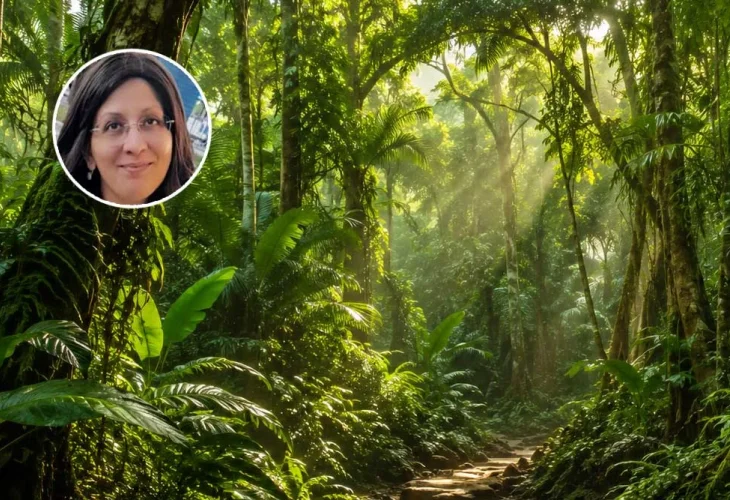 Inset: Chava Sharon Okashi
When Chava Sharon Okashi, 54, walked into her Tel Aviv apartment that day, she was met by the sight of an entire kitchen cabinet shattered across the floor. Broken glass, smashed dishes, oil and sauce were scattered everywhere. A short time earlier, she had been visiting her father in rehabilitation. The strong, sturdy man who had always been her anchor was growing weaker before her eyes following a stroke, and she felt as though her own life was beginning to fall apart as well.
She looked at the scene and realized that it was an exact reflection of what was happening inside her.
“I looked at that mess and understood that this was exactly, absolutely exactly, how my soul felt at that moment,” she recalls. “On the one hand, I was a Tel Aviv woman who went out, had fun and lived life to the fullest. On the other, I was suddenly confronting the most painful reality: life cannot be taken for granted, and none of us knows when everything might change in a single moment.
“A year later, my father passed away. Then, in the midst of my grief, questions began surfacing that would not leave me alone: What is life, really? Where am I going with my life? What is the purpose of all of this?”
The Girl Who Refused to Follow the Expected Path
Chava Sharon was born in Ness Ziona to a traditional family of Yemenite and Iraqi heritage. Her home was happy, noisy and warm.
“On Fridays there was singing, there were always guests, jachnun on Shabbat and a strong sense of family. But alongside all that warmth, there were also difficulties. I was a curious child with a rich inner world and attention and concentration difficulties that were not diagnosed in those days. The main message I received at home was that I should find a steady job and make my way in life.
“Even then, I felt that I thought differently. I struggled to fit in during high school and did not complete my matriculation exams, but it was actually in the working world that my abilities began to emerge. After the army, I worked nine to five office jobs until I realized that I needed something that would challenge me and keep me from becoming bored. I studied event management and production and began working on large budget productions.”
A year after her father’s death, when she was 30, Chava Sharon felt that she had to stop. After months of intense work during which she had never truly allowed herself to process her loss, she decided to spend a month in Thailand.
“I was looking for air, quiet and healing. I met a new friend there, and we traveled together. We laughed, enjoyed the beaches and markets, and one day we were persuaded to hike to a hidden lagoon.”
While they were at the lagoon, however, it began to rain. The trail leading out became muddy, slippery and dangerous. The other travelers began making their way out, but Chava Sharon struggled to climb and was left behind.
“I was terrified. I found myself alone in the jungle, far from home, my family and everything familiar. In the middle of my fear, I noticed a red string I had tied around my wrist a few days earlier during a visit to a Buddhist monastery. Suddenly, a cry burst out of me: I’m Jewish. What does this string from a monastery have to do with me?”
At that moment, she says, something inside her changed.
“In the middle of that enormous fear, I suddenly felt a sense of calm and protection. I began speaking to the Creator of the world and asking Him to help me get out of there. I also spoke to my father, who had passed away, and I knew he could hear me.
“Looking back, that was my first experience of hitbodedut, personal prayer and conversation with Hashem, although at the time I did not yet know what to call it. I was at the edge of the world, surrounded by fear and mud, and that was where I discovered that I was not alone.”
A Thai rescue team eventually arrived, and Chava Sharon emerged from the lagoon covered in mud from head to toe. Her friends, Australians and Israelis, were waiting anxiously for her on the beach.
“I remember that one of the travelers, the son of a Christian pastor, listened to my story and gave me a very deep look. In retrospect, he had already understood something that it would take me another decade to understand consciously.”
“I was terrified. I found myself alone in the jungle, far from home, my family and everything familiar.”
From Tel Aviv to Bnei Brak
Life in Tel Aviv continued at a fast pace. Chava Sharon’s career flourished, but alongside her success, she felt lonely and empty.
“During that period, I began encountering Jewish content and listening to classes given by rabbis,” she recalls.
Becoming religious was not a decision she made in a single day. It was a gradual process involving learning, classes, Shabbat, community and a great deal of inner work.
“Suddenly I saw what life in a religious home looked like. A father, a mother, calm, respect and listening. Something in my soul recognized that this was truth. Good people I met along the way guided me so that I would not move too quickly and would take everything gradually.”
After years of spiritual searching, she also found her husband.
“I came to a class on Shabbat Mevarchim, dressed modestly, and that was where I met Ronit Mashiach, the community matchmaker. Ronit asked me how old I was and immediately began putting together a match. She suggested someone a year and a half younger than me, and I told her that I had no intention of lying about my age.”
Her connection with Dan Yaakov was immediate and felt right. “We met after Passover and were already married by Elul.”
After their wedding, the couple moved to Bnei Brak, where they still live today. They became part of the community and began building their home while pursuing their next great dream of becoming parents.
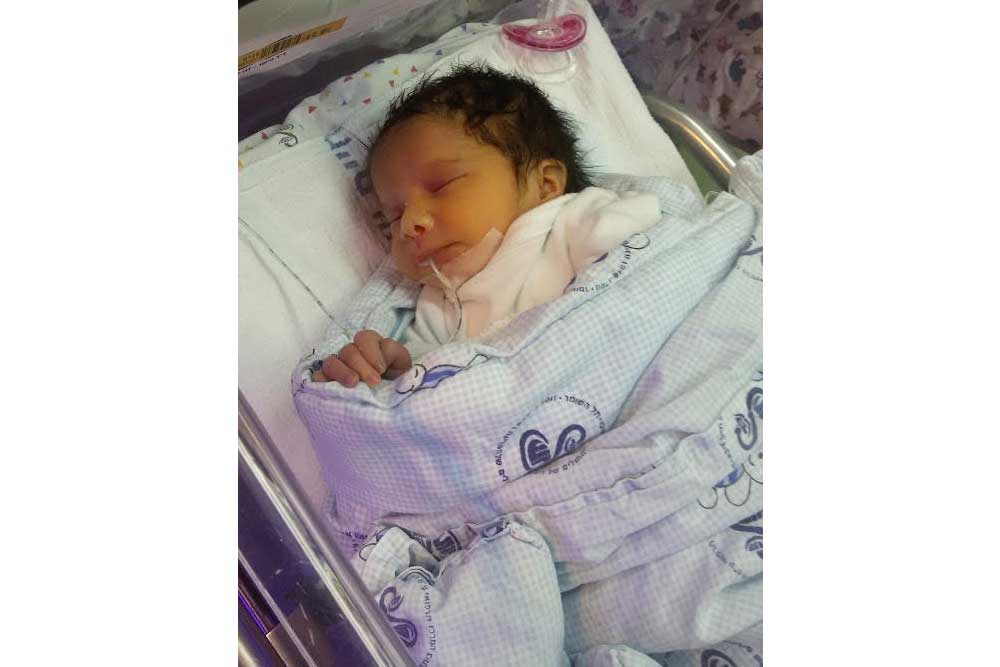 Chayale during her hospitalization
Four Years of Fertility Treatments
During the first year of their marriage, Chava Sharon became pregnant naturally, but the pregnancy ended in miscarriage. That marked the beginning of an exhausting four year journey of fertility treatments.
“It was an emotional and hormonal roller coaster that demanded tremendous inner strength. I suffered a great deal. It was very difficult, and I experienced resistance and many fears. During the treatments, my study of the Yemima Method and my inner spiritual connection became my anchor.
“Music is also a lifeline for me. When I want to reconnect with the Divine part within me, I put on headphones and listen to songs I love. They always open my heart.”
Gradually, she learned to loosen her need to control everything and to listen to her inner voice.
“The turning point came when I felt that I needed to let go of my absolute dependence on doctors and tests. I understood that only Hashem could make it happen. I gave space to my desire and to my prayer to the Creator of the world that I should merit becoming pregnant without treatment.”
And then it happened. “I became pregnant naturally. That pregnancy was not easy either. There was concern about a heart defect, and I was placed under strict medical supervision. After about two weeks in the high risk pregnancy ward, labor began at 36 weeks.
“The medical team was concerned about a low fetal heart rate and prepared me for a cesarean section. I was alone. I was terrified. But as I lay on the bed at the entrance to the operating room, the doors opened and I understood that this was it. There was nothing left for me to do but let go. At that moment, I understood with absolute clarity: Ein od milvado – There is nothing besides Him.”
Chayale was born weighing 1.920 kilograms and was rushed to the neonatal intensive care unit. She underwent numerous tests and was eventually transferred to a step down unit, as other babies were. But the calm did not last long.
“During one feeding, I noticed that she was extremely weak and could not eat. I told the staff, and they said they would feed her. I went outside for a little air, and when I came back, I realized that she was no longer there. They had transferred her back to intensive care.
“We quickly understood that this was an emergency and that she needed surgery. They discovered air in her abdominal cavity. Apparently, the heart defect that had not been identified had caused damage to her intestine because of impaired blood flow.”
Chayale’s condition became more complicated. She struggled to recover, and her condition required urgent heart surgery. She underwent a complex procedure to close the patent ductus arteriosus, but the heart defect was not fully corrected during the operation, leaving her in pediatric cardiac intensive care for a long time.
“We were around her 24 hours a day, completely overwhelmed with anxiety, barely able to breathe. She needed another operation, which, thank God, was successful. They found a solution that prevented the need for another operation in the future, but meanwhile we had to deal with other medical challenges.
“One Friday night, I felt that something was wrong and insisted that the doctors examine her. The surgeons were called in from their homes, and Chayale was taken into emergency intestinal surgery again.
“We couldn’t call anyone because it was Shabbat. We sat and cried, recited Tehillim and cried out to Hashem. The surgery was complex and difficult. Chayale lost a great deal of blood, and they had to remove a large portion of her colon. The operation was successful.”
Chava Sharon, who was still recovering from her own cesarean section, felt as though she was operating entirely in survival mode.
“I have no idea where I found the strength, resourcefulness and resilience. It came only from the Creator of the world, who carried us through miracle after miracle.
“At the same time, a large community of baalei teshuvah was praying constantly. People took on additional prayers and mitzvot. My sisters became stronger in their Jewish observance because of what happened, and to this day my brother-in-law continues to pray and put on tefillin in Chayale’s merit.
“My husband would play melodies of the Baal Shem Tov for her and recite Tehillim beside her bed. I think the experience added another dimension to our marriage. A crisis and struggle like this can, God forbid, tear a relationship apart, especially when it involves baalei teshuvah who married later in life.
“This will always be part of our journey. It reminds us that our daughter is a gift from the Creator, and for her sake we work together to do the very best we can.”
Her Personal Journey Became a Mission
After approximately three months in the hospital, the family finally went home with a tiny, weak and frightened baby, but one with enormous eyes that captivated everyone who looked at her.
“The hospitalizations were not over. For two years, Chayale had a complicated medical condition, with pneumonia, digestive problems, ongoing monitoring and repeated hospital stays.
“I myself went through an extremely difficult emotional period. Every time we were in the hospital, I felt as though I were in prison. I felt as if I were in another dimension. I cried out to Hashem and wept before Him day and night.”
When Chayale was two years old, something changed. “She entered a rehabilitation daycare center in Bnei Brak, and that was where her rehabilitation journey officially began. She started walking, developing and flourishing.”
Step by step, she grew and developed into the lively nine year old girl she is today.
“She is a wonderful child who feels deeply connected to Shabbat, prayer and mitzvot, and she has tremendous joy for life. Every step in her development gives us another reason to thank Hashem. We never take her for granted.
“Every year on her birthday, we celebrate with many children and see the celebration as a seudat hoda’ah, a meal of thanksgiving for the gift we received.”
From this place, Chava Sharon transformed her personal journey into a mission. Today, she guides women, mothers and business owners through processes of inner connection, confidence, self worth and faith.
“I know both worlds, and because of that, I see myself as someone who can build bridges between people and between different worlds. And perhaps, precisely because of everything I have been through, I understand better than ever the answer to the question that began my journey all those years ago, during the shiva for my father.
“I learned that the place where a person feels most alone is sometimes the very place where they discover that they were never alone at all.”

