

Interesting
Why Do Apples Turn Brown After Cutting?
Discover what causes sliced apples to turn brown and easy ways to slow the process using lemon juice, salt water, refrigeration, and proper storage
- Tehila Cohen
- | Updated
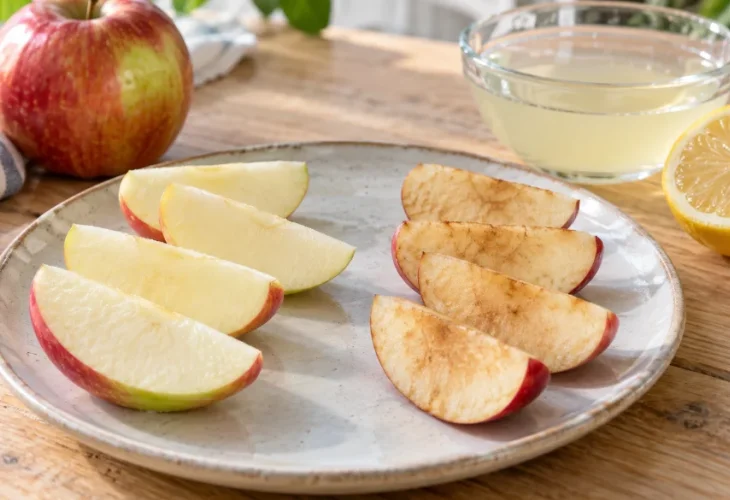
Have you ever cut an apple, placed it on a plate, and noticed that just a short time later it had already changed color and looked less appetizing? This rapid browning is not caused by dirt or spoilage, but by a natural chemical process. While it cannot be prevented indefinitely, there are several simple ways to slow it down using ingredients found in almost every kitchen.
Inside an apple’s cells are enzymes and plant compounds that remain separated while the fruit is intact. Cutting the apple damages the cells, allowing these substances to mix and exposing them to oxygen in the air.
One of the enzymes involved is polyphenol oxidase. When it comes into contact with oxygen, it triggers reactions that gradually produce brown pigments. This process is known as enzymatic browning, and it also occurs in other fruits and vegetables, including pears, bananas, avocados, and potatoes.
Is a Brown Apple Still Safe to Eat?
In most cases, yes. Browning alone does not mean that an apple has spoiled or is unsafe to eat. Its texture and flavor may change slightly, but it is generally still perfectly edible.
However, an apple with an unusual smell, slimy texture, mold, or other signs of decay should not be eaten. It is important to distinguish between the natural discoloration that occurs after cutting and actual spoilage.
How Can You Slow Down Browning?
One of the best known methods is to drizzle a small amount of lemon juice over the apple slices and gently toss them. The acidity reduces the activity of the enzyme responsible for browning, while the vitamin C in lemon juice also helps slow the reaction.
There is no need to soak the apples in lemon juice. A small amount, just enough to lightly coat the fruit, is sufficient. If you are concerned about a sour taste, dilute the lemon juice with a little water.
Another option is to dissolve about half a teaspoon of salt in two cups of water and soak the apple slices for three to five minutes.
Drain them afterward and give them a quick rinse with clean water so that they do not taste salty. The salt solution can slow the enzyme’s activity and delay browning. Use only a moderate amount of salt and avoid leaving the apples in the solution for too long.
Soaking Apples in Water Reduces Exposure to Air
Apple slices can also be placed in a bowl of cold water for a short time. The water creates a barrier between the surface of the fruit and the oxygen in the air, slowing the browning process.
This method is particularly useful when the apples will be served soon. Prolonged soaking can affect their flavor and texture, so drain and dry the slices before serving.
After treating the apples, place them in an airtight container and refrigerate them. The cold temperature slows enzyme activity, while the sealed container reduces exposure to oxygen.
You can also press plastic wrap directly against the apples or place them in a sealed bag and gently remove as much air as possible. Combining refrigeration with reduced exposure to oxygen is more effective than leaving sliced apples uncovered on a plate.
Which Method Is Best for a Child’s Lunchbox?
For a school lunchbox, diluted lemon juice or a brief soak in salt water can work well. Afterward, dry the apple slices thoroughly and pack them in a small airtight container. Keep them refrigerated until it is time to leave home. If your child is sensitive to sour or salty flavors, experiment with the different methods to see which one is least noticeable.
The speed at which apples turn brown varies between different varieties. It is also affected by ripeness, storage conditions, and the amount of enzymes and plant compounds naturally present in the fruit.
Even the way you cut an apple can make a difference. The more of the fruit’s interior that is exposed to air, the faster browning can occur. A sharp knife damages fewer cells than a dull one and may therefore help slow the process slightly, although it cannot prevent browning altogether.

